Follow Us on Google
From Adesuwa Tsan, Abuja
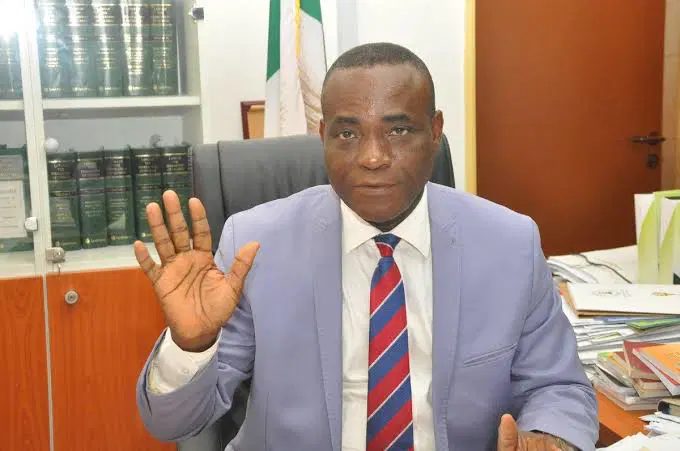
A former lawmaker and ex-presidential aide, Senator Ita Enang, has cautioned the Federal Government and officials against unguarded responses in reaction to the United States’ decision to list Nigeria as a “Country of Particular Concern.”
He explained that hasty and uncoordinated comments by individuals in sensitive positions could be interpreted internationally as Nigeria’s official position, thereby escalating diplomatic tensions.
Enang, who is a former Special Adviser to ex-President Muhammadu Buhari on National Assembly Matters (Senate), said this while speaking with journalists in Abuja on Wednesday.
He urged the Senate and House of Representatives to adopt a joint position with that of the Presidency, Ministry of Foreign Affairs and the National Intelligence Agency.
“This is a diplomatic matter that must be treated with utmost caution,” he stated, adding, “Not every government official should make statements capable of inflaming the situation or misrepresenting the country’s position.”
This is just as the former lawmaker expressed concern over the federal government’s dwindling resources, while states and local governments are benefitting from increased allocations.
According to him, the current revenue allocation formula is outdated and unfair, because it leaves the centre with little to perform its constitutional responsibilities, including national security, foreign affairs, and infrastructure development.
Other News
“The truth is that the federal government is broke. It cannot meet its constitutional obligations because its share of the national revenue is too small relative to its responsibilities.
State governments are celebrating improved allocations, but the federal government that generates and disburses these funds is borrowing just to feed its children.”
“Today, the federal government funds the army, police, DSS, civil defence, road safety, and several other agencies, yet it receives just about half of the national revenue. It makes no fiscal or moral sense.”
He also took a swipe at the Budget Office and Ministry of Finance for using projected revenues for a new fiscal year to fund outstanding deficits from the previous year.
“When a budget year ends, the books should close. Any uncompleted project should be rolled over into the next year and funded as such,” he said.
On Nigeria’s skyrocketing debt profile, he maintained that loans are okay when used for productive, revenue-generating infrastructure, not for recurrent or consumption purposes.