Follow Us on Google
From Fred Ezeh, Abuja
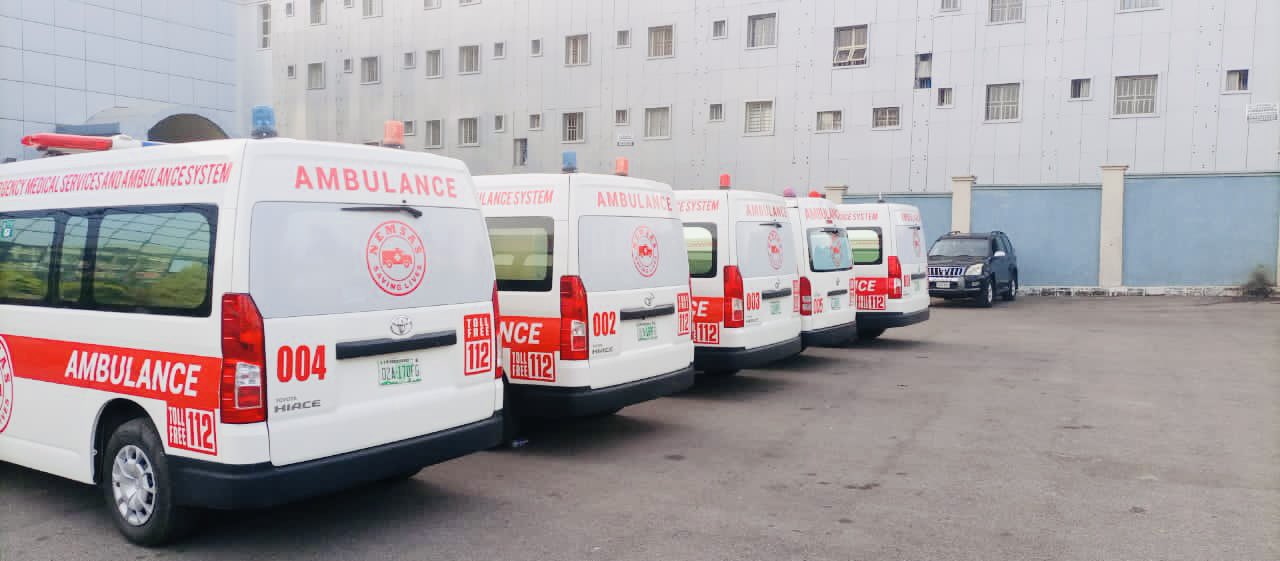
The National Emergency Medical Services and Ambulance System (NEMSAS) has strengthened its partnership with the civil society and the media to strengthen advocacy and enlightenment on the emergency ambulance services in Nigeria.
It, thus, inaugurated the NEMSAS Media Cell in Abuja, to help streamline its engagement with the media on the best way to propagate the messages and the activities of NEMSAS.
NEMSAS stated that emergency ambulance service is a critical component of healthcare service delivery, hence, the reinvigorated effort and attention being provided by the federal government through the Federal Ministry of Health and Social Welfare.
NEMSAS National Programmes Manager, Dr. Emuren Doubra, explained that the initiative aims to create a unified, standardised, and accessible system for emergency response nationwide.
He said: “In Nigeria, we have fragmented emergency medical services, private, community-based, NGOs, and without a structured system, we experience leakages and non-standard emergency care.
“What NEMSAS has come to do is to create standards and ensure that vulnerable patients receive these services without having to bear the cost of immediate payment. Poor communication has been identified as the most pressing challenge in emergency response, particularly the inefficiency of the 1-1-2 emergency number operated by the Nigerian Communications Commission (NCC).
“If you are not able to call or get across your emergency to a response agency, you can’t get served. The 1-1-2 toll-free number works well in some areas but poorly in most states. To this end, we are engaging the NCC to improve its functionality because Nigerians seriously need that number to work effectively. Inadequate communication coverage, geographical barriers, and shortage of health workers were hampering timely responses.”
Programmes Manager of the FCT Emergency Medical Service and Ambulance System, Dr. Ozi Okonuha, said that efficient emergency ambulance service is one of the lifesaving steps in healthcare delivery.
“Every second counts. Nigerians should stop recording videos during accidents. Instead, call the emergency number, so ambulances can be dispatched quickly. In FCT, we have expanded our services to all area councils and worked closely with FRSC, police, and emergency teams.”
Director General, National Blood Service Commission (NBSC) and member of the National Emergency Technical Committee, Prof. Saleh Yuguda, reaffirmed the commitment of the federal government to provide all Nigerians free emergency medical treatment within the first 48 hours of any emergency, regardless of location or socioeconomic status.
He said: “NEMSAS was established to cater for emergencies nationwide, and the major role is to take care of the patient of anybody anywhere in the country. Whenever you have any emergency, the federal government will take care of the treatment within the first 48 hours free of charge, and that’s the main goal of MEMSA.
“We want Nigerians to know about this programme and take advantage of it. The services are available in both public and private hospitals nationwide.”
Co-founder and CEO of Emergency Response Africa, Folake Owodunni, who represents the private sector, commended the initiative, describing it as a major step toward bridging Nigeria’s emergency care gap.
“Emergencies can affect anybody at any time and, often, they are not appropriately addressed. Our goal in the private sector is to work alongside the public sector to expand capacity and ensure that everyone, not just those who can pay, gets the help they need when they need it.”
She added that Emergency Response Africa serves as a connection between the hospitals and ambulance providers nationwide to improve response time and patient outcomes.
Chairman of the Forum of CEOs of State Social Insurance Agencies, Dr. Simeon Onyemechi, said the NEMSAS programme was transforming access to critical care.
“This ensures that individuals, whether insured or not, have access to emergency care at no cost within the first 48 hours. We vet hospital claims promptly and are working toward e-payment systems to make reimbursements faster and keep providers motivated,” he said.
Dr. Francis Nwachukwu of the World Health Organization (WHO) said the programme’s success depends on sustainable financing.
“It will be difficult to achieve the objectives of NEMSAS without appropriate financing. The Coordinating Minister’s reforms and the National Health Sector Renewal Investment Programme (NHSRIP) funding through the Basic Health Care Provision Fund (BHCPF) have strengthened the system. What is now needed is for NEMSAS to be fully functional in all 36 states.”
Media advocate, Moji Makanjuola, Executive Director of the International Society of Media in Public Health (ISMPH), urged journalists to help raise public awareness of the service.
“Until people know that such a service exists, they cannot make the best use of it,” she said.
“The media must see itself as a partner in progress to ensure that emergency care is available and to reduce mortality caused by lack of timely intervention.”