Follow Us on Google

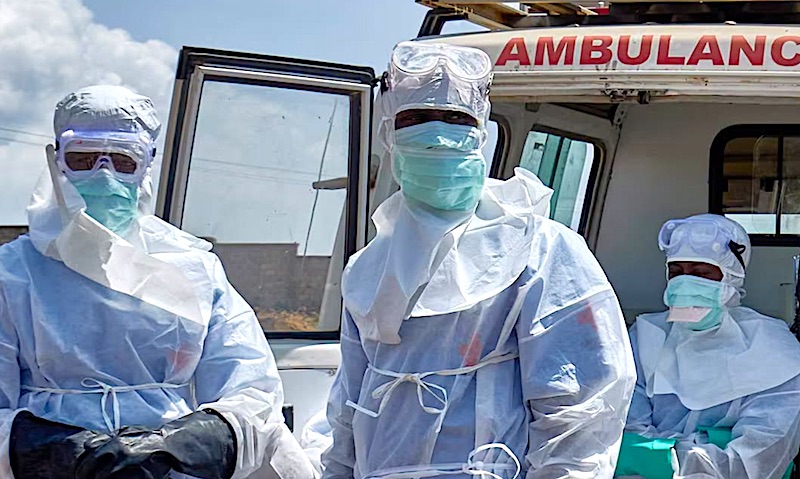
index patient recovers in Switzerland
The Nigeria Centre for Disease Control and Prevention (NCDC) has announced that all 62 contacts linked to the country’s imported case of Bundibugyo Virus Disease, a form of Ebola disease, have completed the mandatory 21-day monitoring period without developing the infection.
NCDC said the development means Nigeria has recorded no secondary transmission from the index case, which was confirmed in the Federal Capital Territory on October 20, 2026.
The Director-General of NCDC, Dr Jide Idris, who disclosed this at a press conference in Abuja, on Friday, said the last contact was discharged from monitoring on November 13, marking a significant milestone in the country’s response to the imported case.
He also announced that the index patient, who was medically evacuated to Switzerland for further treatment, had recovered, tested negative for the virus and was successfully discharged from hospital.
Idris explained that although the patient received initial clinical care in Nigeria, she was later evacuated to Switzerland on October 26 for further management. “Laboratory tests conducted upon her arrival in Switzerland confirmed that she was still positive for Bundibugyo Virus Disease.
“However, following further treatment and medical care, the patient recovered and subsequently tested negative for the virus before being discharged,” he said.
Providing details of the contact monitoring exercise, the NCDC boss said 62 contacts were identified, placed in quarantine and monitored by public health teams throughout the 21-day period.
He disclosed that 13 of the contacts reported fever or other non-specific symptoms during the monitoring period, but laboratory tests conducted on all of them returned negative for the disease.
“Similarly, seven alerts reported across Adamawa, Rivers, Borno, Lagos and Ekiti states within the past three weeks were investigated, with all seven testing negative for Bundibugyo Virus Disease,” he added.
Idris, however, cautioned that the completion of contact monitoring did not automatically amount to a formal declaration that the outbreak was over, noting that such a determination must be based on established public health criteria and findings from ongoing surveillance.
He attributed the successful outcome to early detection, prompt investigation, effective public health measures and cooperation between health authorities and affected communities.
He maintained that the index case was detected following an alert raised by healthcare workers through NCDC’s event-based surveillance system, which enabled the agency, working with FCT health authorities, to promptly initiate investigations.
He said the National Emergency Operations Centre was activated under the leadership of the Coordinating Minister of Health and Social Welfare, Professor Muhammad Ali Pate, while an Incident Management System was established to coordinate the national response.
“The response included contact tracing, clinical care, strengthened infection prevention and control measures in healthcare facilities, healthcare worker training and the provision of personal protective equipment and other response supplies.
“Despite the successful completion of contact monitoring, Nigeria would maintain heightened surveillance, particularly because of the continued occurrence of Ebola virus disease in the Democratic Republic of Congo,” he said.
He disclosed that the National Emergency Operations Centre remained activated, with the Incident Management System operating at Level 3, the highest response level for Ebola virus disease.
He said the country would continue investigating alerts, strengthening infection prevention and control in healthcare facilities and working with Port Health Services to maintain appropriate public health measures at international points of entry.
With increased movement of people expected during the December festive season, the NCDC director-general urged Nigerians and international visitors to seek medical attention promptly whenever they became unwell.
He warned against assuming that every fever was malaria, particularly among people with recent travel history or possible exposure to infectious diseases, urging them to disclose such information to healthcare workers.
He also advised the public to avoid unprotected contact with the blood and other body fluids of persons suspected of having Ebola, while urging identified contacts to cooperate fully with public health authorities.
Idris further called on organisers of religious gatherings, political rallies, concerts, festivals and sporting activities to provide adequate sanitation, safe drinking water and medical assistance, as well as arrangements for promptly reporting suspected infectious illnesses.
He reassured Nigerians that there was no reason for panic, stressing that continued vigilance, early reporting and cooperation with public health authorities remained essential.