Follow Us on Google

Tessy Igomu
The year 2019 was dotted by a number of disasters and emergency situations that claimed lives. As Nigerians bid the year goodbye, many are hopeful that such calamitous incidents would not occur in the new year.
Year of rains and floods
The year started on a wet note, with flooding in cities like Lagos, Port Harcourt and Onishta on January 20, 21 and 23, respectively. Usually, the rainy season is expected to commence around March and peak in June and July. But 2019 was a departure from the norm.
Many were happy when a cloudy atmosphere and heavy wind swept through the cities, taking over weeks of searing heat that was a torment during the Yuletide. They were later taken aback when the rain descended with fury. The accompanying floods wreaked unquantifiable havoc on homes and businesses and also caused unprecedented gridlocks.
Nigeria was to later experience devastating flooding at various times within the year. Communities were inundated, leaving homes, farmlands and other sources of income destroyed.
Some residents in states like Lagos, Yobe, Borno, Anambra, Ogun, Adamawa, Benue, Niger, Kogi, Delta, Edo, Rivers and Bayelsa were rendered homeless by the rampaging floods.
There had been earlier warnings by the National Emergency Management Agency (NEMA) and the Nigeria Hydrological Services Agency (NIHSA) that 74 local government areas in 30 states would be severely flooded, while 279 local government areas would experience minimum flooding.
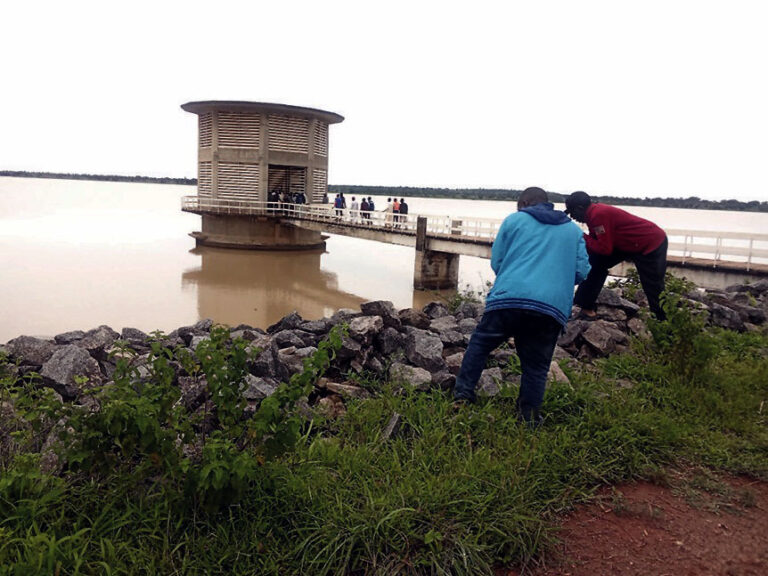
Among the casualties of the 2019 deluge were four students of the Abubakar Tafawa Balewa University (ATBU) who were swept away. In the Federal Capital Territory, several roads and buildings were damaged, while nine persons were swept away.
In Jigawa State, over 50 houses were destroyed by flood, while about 200 persons were displaced in Yalleman and Dakayyawa towns in Kaugama Local Government Area. Parts of Adamawa State were also ravaged by flood and reports indicated that seven persons were killed.
Collapse of buildings
On March 13, the country was thrown into mourning when a three-storey commercial-cum-residential building collapsed on 14, Massey Street, Ita Faji, Lagos, killing 20 and injuring 43 people. Most of those that lost their lives were children attending classes on the second floor.
The distressed building, which had been marked several times for demolition, caved in just after 10 a.m. Residents of the area said around 100 children attended the school.
In apprehension, families and onlookers watched as rescuers and emergency responders clawed through hills of debris with bare hands, hammers and heavy equipment to rescue those trapped as well as recover bodies of the dead. As the operation dragged into days, schoolbags, clothes and toys were among the piles of rubble excavated by bulldozers from the collapse site.
Earlier, on February 26, residents of Old Express, off Sameck Junction, by Faulks Road, Aba, Abia State, were shocked when a three-storey building collapsed, killing an occupant. The incident followed the collapse of a three-storey building under construction at Park Road by East, after a downpour. Most of the menial workers sustained various degrees of injuries.
Scores were trapped when a three-storey building collapsed in the Sogoye area of Molete, Ibadan, Oyo State, on March 16. The building under construction suddenly collapsed when bricklayers and other artisans on site were rounding off the day’s work. No death was recorded.
In October, a two-storey building on Rufai Street, Ojuelegba, Lagos, collapsed, injuring four persons.
Friday, November 1, witnessed the collapse of a two-storey structure under construction at Glover Court, Ikoyi, Lagos. It claimed the life of a labourer and injured four others.
Gas explosions
On Wednesday, November 27, Aduke Street, off Ojo Road, Ajegunle, in Ajeromi-Ifelodun Local Government Area of Lagos State, was rocked by a gas explosion that left people scampering to safety. By the time emergency responders succeeded in putting out flames that engulfed houses, seven persons had been burnt to death, while 21 others sustained multiple burn injuries. Investigations revealed that the explosion occurred when a yet-to-be-identified resident made a phone call near a gas refill shop.
Barely a week after, the highbrow Victoria Island, Lagos, was thrown into panic when a gas cylinder exploded at Four Points By Sheraton Hotel. The incident occurred as artisans were carrying out welding work on the hotel premises. Aside from several people being injured, the explosion caused extensive damage to vehicles and property.
On December 14, a gas explosion in Dan Musa, the headquarters of the Danmusan Local Government Area of Kastina State, left eight members of a family dead. A cylinder reportedly exploded when one of the victims was cooking.
Tanker fires
On January 12, an overturned petrol tanker exploded in Odukpani, Cross River State, killing scores of people that were scooping fuel that had leaked into the drainage. Police said at least 12 people were killed, even though some eyewitnesses estimated that the dead might be up to 60.
Another fully loaded tanker overturned and caught fire on Thursday, April 18, claiming two lives at Iwo Road, Ibadan, Oyo State. Four vehicles were also burnt.
On July 2, about 45 persons were burnt to death and 100 others injured when a petrol tanker lost control while trying to dodge a pothole in Ahumbe village, Benue State. Those trapped in the explosion that occurred minutes later were busy scooping fuel at the crash scene.
Two persons were also confirmed dead and six others injured on Thursday, November 14, after a petrol tanker fell, spilling its contents into the drainage channel at Bible College Bus Stop, along the Lagos-Abeokuta Expressway. Seventeen vehicles were burnt in the accident.
On October 10, a fuel tanker driving towards Berger spilled its contents, causing an accident that injured four people. Two days later, what would have turned into a major catastrophe was averted by the Lagos State Emergency Management Agency (LASEMA) after a tanker laden with petroleum products fell on the Otedola Bridge.
Two petrol tankers, on Wednesday, December 25, crashed into each other at the Sagamu interchange end of the Lagos-Ibadan expressway. The impact led to an explosion that burnt the two tankers to their metal frames. No life was lost in the accident.
Pipeline explosions
A pipeline explosion rocked Nembe Kingdom on March 2, causing panic and massive oil spillage.
In the early hours of Thursday, July 4, hell literally visited Ijegun, a community in Igando-Ikotun Local Council Development Area of Lagos State, when a ruptured pipeline of the Nigeria National Petroleum Corporation (NNPC) exploded. The monumental inferno it triggered killed 10. The fire started following illegal bunkering activities that caused fuel to spill into a drainage that snaked through the community. Over 30 vehicles, shops and buildings were consumed in the inferno. A part of Ijegun Comprehensive High School and a fuel station, Abamat Oil Nigeria Limited, were also affected.
On December 5, a pipeline explosion at Gloryland Estate, Isheri Olofin, Egbe-Idimu Local Council Development Area of Lagos State, claimed a life and left another with severe burns. The unidentified man was reportedly caught up in the inferno while having a spiritual bath around a stream in the area. The pastor conducting the cleansing was, however, lucky. He escaped unscathed.
The inferno also razed the only wooden bridge linking Idowu-Egba to the Ayobo area of the state, forcing motorists to take long, alternative routes. The early morning fire, which affected parts of Diamond Estate, was caused by suspected vandals who ruptured the NNPC pipeline in the area in a bid to scoop fuel. Residents fled to safety when they discovered that the entire community had been enveloped by thick smoke billowing from the fire scene.
Boat mishaps
A boat mishap at the Ipakan Boat Jetty, Egbin, Ikorodu, Lagos, on June 29, left many missing. The boat conveying 26 people capsized after it was hit by high waves in the night. Three people, however, survived the incident.
On July 2, eight persons lost their lives after an unmarked 20-seater passenger boat capsized mid-sea after it was hit by strong waves along the Badore-Ijede waterways in Ikorodu. Investigations revealed that the incident was caused by poor visibility. It was also discovered that the passengers were not wearing life jackets.
On August 14, a head-on collision between two passenger speed boats along the creeks of Ojo Local Government Area of Lagos State claimed three lives. Thirteen passengers were rescued by fishermen and emergency responders. The boats were from Ojo Jetty and Irewe community.
On August 30, three people died in a boat mishap on River Kaduna near Wuya community, along the Bida-Mokwa Road. They were said to be returning from their farm settlements.
Another boat mishap on October 9 killed 38 people near Kuna village in Kirfi Local Government Area of Bauchi State. The victims, all farmers, were going to their farms when the incident occurred.
Container accidents
On September 16, a fallen container from a truck crushed two people and injured several others at Agric Bus Stop, Ikorodu. Investigations at the accident scene showed that a truck bearing a loaded 20-foot container developed brake failure while speeding. It subsequently lost control and tumbled on a Toyota Camry with registration number FKJ-732FS and three motorcycles.
Many Nigerians are hoping that such disasters would expire with 2019.