Follow Us on Google
They throng the streets of South Africa carrying heavy wooden clubs topped with large, rounded knobs, commonly called the Knobkierie (Wisa) among the Zulu warriors, they go in large numbers from shop to shop, house to house, hunting for non-South Africans whom they accused of entering the country illegally.
They are non-state actors, especially as they are not South African immigration officials, but they go house to house, shop to shop confronting foreigners and coercing them to leave the country.

The offence of these foreigners according to the members of the March-to-March Movement were that the foreigners were taking their jobs, taking what belongs to them and most importantly taking their women.

The mass protest against foreign nationals in the country gained significant momentum in April 2026 and driven by vigilante groups like “March and March” and “Operation Dudula”. These groups gave undocumented foreigners ultimatums to leave the country by June 30, 2026.
For decades, South Africa has been regarded as the land of opportunity on the African continent—a nation whose struggle against apartheid inspired millions across the world and earned the solidarity of fellow African countries. Yet, that image continues to be undermined by recurring attacks on foreign nationals, particularly migrants from other African countries, in a disturbing cycle of xenophobic violence that has once again gripped the Rainbow Nation.

The latest wave of anti-foreigner attacks has left communities living in fear, businesses destroyed, families displaced and diplomatic relations strained. Thousands of migrants have fled their homes, while several African governments, including Nigeria, have begun assisting their citizens to return home amid growing security concerns. Reports indicate that multiple deaths have been recorded, with law enforcement agencies making hundreds of arrests following violent protests in several provinces.
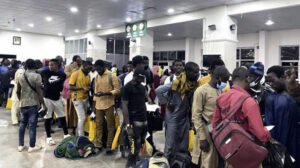
The recent violence follows nationwide anti-immigration protests in which demonstrators demanded the expulsion of undocumented migrants, accusing foreigners of taking jobs, increasing crime and placing pressure on public services.
Although many protests remained peaceful, others descended into looting, intimidation and violent attacks targeting migrant-owned businesses and residential areas. Security forces were deployed in several provinces, including Gauteng and KwaZulu-Natal, to contain the unrest as fears mounted of a repeat of previous xenophobic outbreaks.
Foreign nationals—many from Nigeria, Zimbabwe, Malawi, Mozambique, Ethiopia, the Democratic Republic of Congo and Somalia—have reported being forced from their homes, assaulted or threatened despite possessing valid immigration documents. Thousands have sought temporary shelters or crossed borders to escape the violence.
Xenophobic violence is not new in South Africa.
The country has experienced repeated outbreaks since the end of apartheid, with major attacks recorded in 2008, 2015, 2019 and again in the early 2020s. Each episode has followed a familiar pattern: economic hardship fuels resentment, migrants become convenient scapegoats, and isolated incidents quickly escalate into widespread violence.
The 2008 attacks shocked Africa after more than 60 people were killed and tens of thousands displaced. Similar violence erupted in 2015, forcing several African governments to evacuate their citizens while images of burning shops and brutal assaults dominated international headlines.
Despite repeated promises by successive governments to tackle xenophobia, analysts say the underlying social and economic conditions remain largely unresolved.
South Africa faces one of the highest unemployment rates in the world, particularly among young people. Rising living costs, inequality and sluggish economic growth have deepened frustration in many communities.
For some South Africans, migrants have become easy targets for their anger.
Yet available research tells a more complex story.
Other News
Studies indicate that migrants account for only a small proportion of South Africa’s population and that they often create businesses that generate employment rather than take jobs from locals. Data also challenges the widespread perception that foreign nationals are responsible for disproportionately high levels of crime. Analysts argue that corruption, weak governance, inadequate public services and economic stagnation—not immigration—are the principal drivers of public dissatisfaction.
Behind every statistic is a personal tragedy.
Many migrants living in South Africa fled wars, political instability and economic collapse in their home countries, hoping to rebuild their lives.
Instead, many now find themselves displaced once again.
Families have abandoned businesses built over many years. Children have been withdrawn from schools. Workers have lost employment after employers dismissed foreign nationals out of fear of reprisals.
Some migrants describe spending nights in makeshift shelters, uncertain whether they will ever return to their homes safely. Others have been separated from family members during hurried evacuations.
Lukman Adebayo a returnee from Lagos said he had been in South Africa for 12 years trying to eke out a living, but all the effort have come to naught.
“South Africa is not a country, I have been there for 12 years and now I have lost everything, my job, my money, my property, my wife and my son,” he lamented.
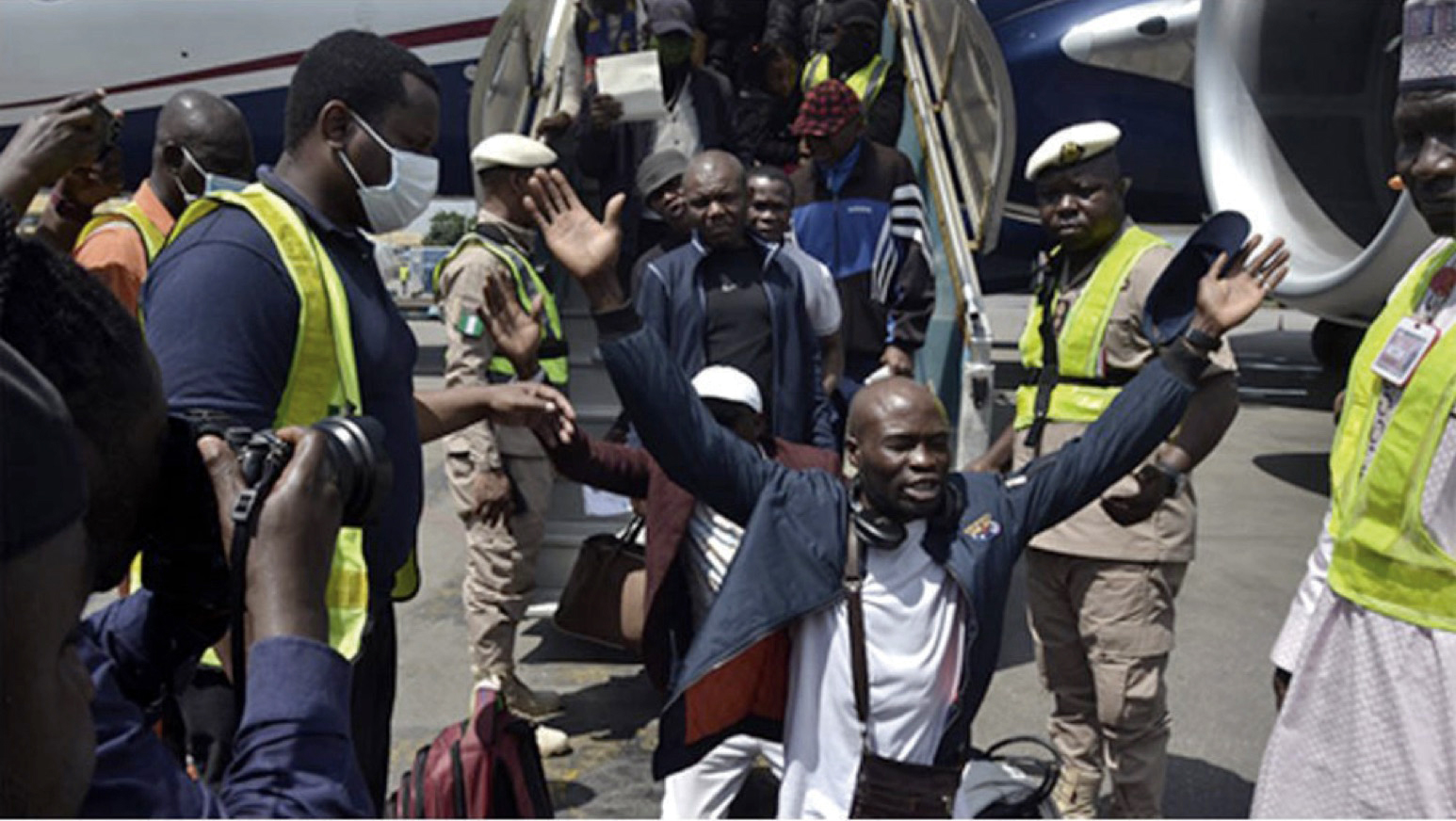
Like Adebayo, other Nigerian returnees evacuated from South Africa have described harrowing experiences of xenophobic violence, extortion, and targeted harassment. Arriving in Lagos aboard chartered flights, they recounted losing their businesses, being treated like slaves, and being forced to flee their homes as violent anti-migrant protests escalated.
Another returnee, identified as Babatunde Oladeji said: “I lived in South Africa for two decades. Every foreign national experiences xenophobia. If it is not traumatising, it leaves you with nothing. Many people have lost their homes, properties and everything they worked for. I don’t think it is xenophobia; it is Afrophobia. They only have problems with African migrants. I saw Americans who were there on visits, but they never had such experiences. It is always Africans.
“I didn’t like what I saw. My purpose for going to South Africa was never realised because everything was shattered. I lost my business. I lost everything. I ran a security and cleaning company, which was hijacked. I lost more than 1.5 million rand. They looted me and used my details for fraudulent purposes. At the end of the day, I found myself living in poverty. The perception they have of Nigerians is terrible; they see every Nigerian as a criminal. I was not an illegal immigrant, but we were all painted with the same brush. I don’t know where I will go with my family now that I am back. I have to start all over again.”
Also telling his ordeal in the hands of South Africans is Fola Kester who said: “I have been in South Africa since I was four. I’m now 21. I haven’t been able to get my papers. I made an initial application, but it was lost in the system. And once you have applied without getting a response, you can’t apply again. My dad tried to reach the Department of Home Affairs, but there was no response. I was in university and completed my first year, but I could not register for subsequent years because of my papers.
“After exhausting all my options, including hiring lawyers and sending emails to Home Affairs, I had to leave because I didn’t have a life in South Africa. I couldn’t live like a normal person because I had no access to anything. There has been nothing but silence from Home Affairs. I was fortunate not to live in areas where xenophobic attacks occurred, but I heard about such experiences.”
The renewed attacks have sparked strong reactions across Africa.
Nigeria has condemned the violence and initiated efforts to repatriate affected citizens. Other African governments, including Ghana, Malawi and Zimbabwe, have also advised their nationals to exercise caution or return home.
Regional human rights organisations have criticised the attacks, describing them as inconsistent with the ideals of African unity and solidarity that supported South Africa during the anti-apartheid struggle.
International organisations have similarly urged South African authorities to strengthen protection for migrants and ensure those responsible for attacks are brought to justice.
President Cyril Ramaphosa has appealed for calm while acknowledging challenges associated with illegal immigration and border management. At the same time, his administration has stressed that violence and vigilantism cannot be justified under any circumstance.
Police have intensified operations against criminal activity and immigration violations, while increasing security in areas considered vulnerable to further unrest. However, critics argue that stronger enforcement alone cannot eliminate xenophobia without addressing the country’s deeper economic and social problems.
The resurgence of xenophobic violence raises broader questions about Africa’s commitment to regional integration under the African Continental Free Trade Area (AfCFTA) and the long-standing vision of a united continent.
South Africa remains one of Africa’s largest economies and an important destination for labour migration. However, repeated attacks on fellow Africans risk weakening investor confidence, damaging tourism and undermining the country’s international standing.
More importantly, they challenge the ideals of Ubuntu—the belief in shared humanity—that South Africa has long celebrated.
Experts believe the solution extends beyond policing.
Addressing unemployment, improving governance, strengthening immigration management, combating misinformation and promoting community dialogue are widely viewed as essential steps toward reducing tensions.
Equally important is ensuring accountability for perpetrators of violence while protecting the rights of both citizens and lawful migrants.
As Africa pursues greater economic integration and freedom of movement, the continent’s largest democracies will increasingly be judged not only by the strength of their economies but by their willingness to protect the dignity and safety of every African regardless of nationality.
Until then, the promise of an Africa without borders will remain overshadowed by fear, suspicion and recurring cycles of violence that continue to tarnish one of the continent’s most influential nations.