Follow Us on Google
• Lists cuisine, music, movies, football as tools to attract global respect
• Country’s reputation has improved under Tinubu – information minister
• NIPR scores Nigeria’s reputation ‘poor’ at 35.2%, debunks defending FG’s $9m US lobby deal
_________________________________
From Juliana Taiwo-Obalonye, Abuja
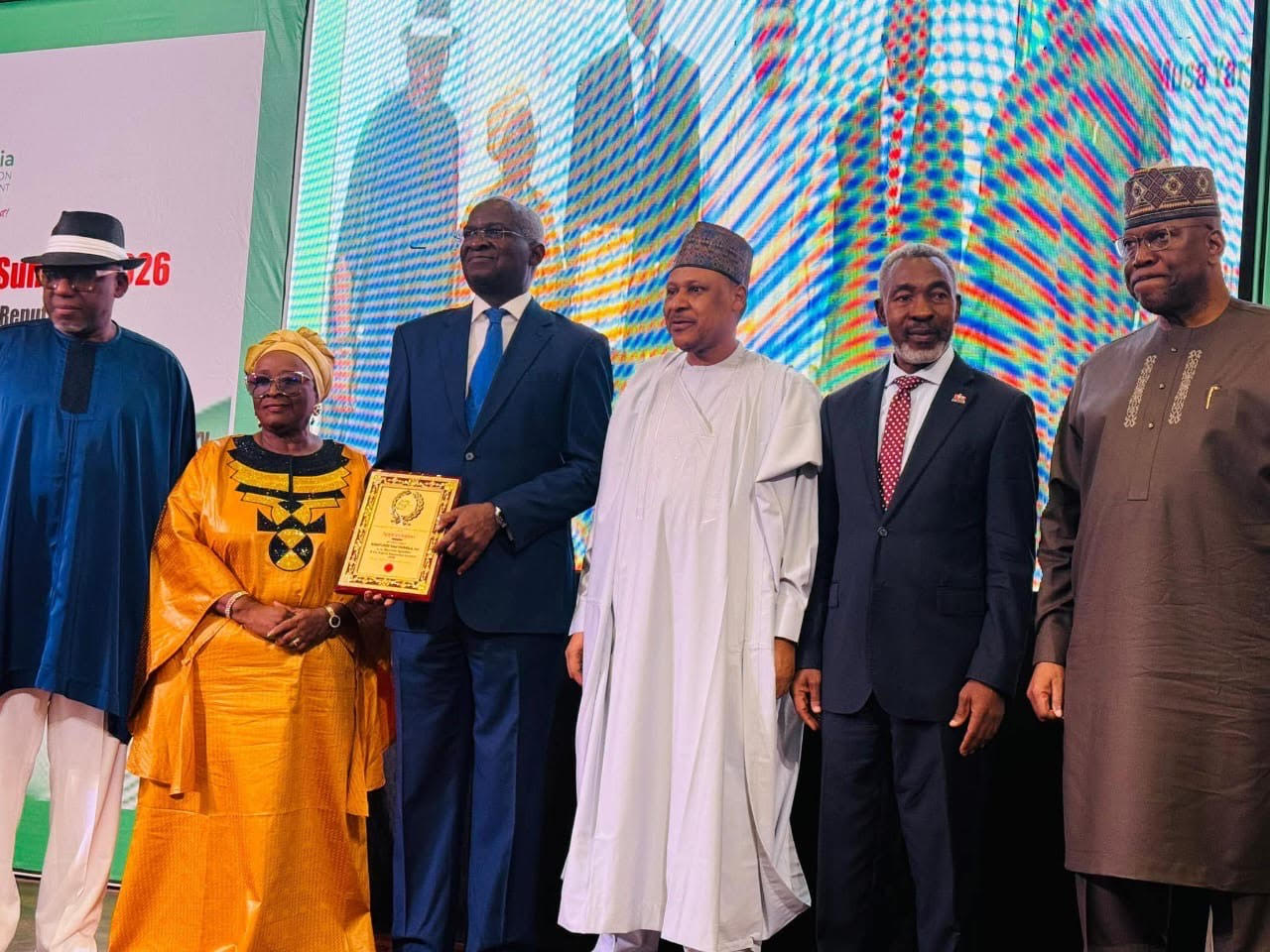
Former Lagos State Governor and ex-Minister of Works Babatunde Fashola, in a thought-provoking keynote at the inaugural Nigeria Reputation Summit 2026, urged Nigerians to aggressively defend the country’s image abroad rather than beg for acceptance.
Speaking at the summit held at the Shehu Musa Yar’Adua Centre in Abuja, hosted by the Nigerian Institute of Public Relations (NIPR) through its Nigeria Reputation Management Group (NRMG), Fashola challenged leaders from government, the private sector and civil society to chart strategies for elevating Nigeria’s global brand.
In a no-holds-barred address, Fashola recounted confronting representatives of a country that had barred Nigerians: “I remember when one country asked us not to come to their country, so I met some of their representatives in another country, they asked how it can be resolved. They said we’ve seen 30% drop in economy attributable to us not coming. So you know what I did? I dug in deeper… I said we are moving that money to your neighbours. He said how do we solve this problem? I said go and tell your bosses in your country, I didn’t make the decision. But that was me standing up for my country, I wasn’t going to beg.”
Fashola praised Nigeria’s “non-appointed ambassadors” – sports stars, musicians, fashion icons and cultural exports – for organically boosting the nation’s soft power. He highlighted the global allure of Nigerian cuisine, sharing a Cancun encounter: “I met this lawyer… from Oklahoma… The first thing he asked me was, how can he order amala and gbegiri with ewedu online? He said he came to Ogun State for work, ate the food and fell in love with it.”
He declared that a “renaissance has started”, with the world hooked on Afrobeats, Nollywood and Nigerian jollof rice: “Those pretenders to our fame who contest our unrepentant rights to jollof rice have lost the war… The Nigerian jollof rice, it is or it isn’t.”
Turning to national symbols, Fashola called on the Minister of Information and National Orientation, Mohammed Idris, through the National Orientation Agency, to begin to pay attention to how the Nigerian colours are used to build on the nation’s reputation: “Honourable Minister, I think that we should also pay very serious attention now to our colours. All of those colours on our flag have a specific code… Green must not be dark green. Green must not be olive green. It must be our green… Because it is emblematic of our identities.”
Fashola used the occasion to lambast underprepared diplomats, drawing from personal experience: “I visited an African country as minister, and I was received by our ambassador… I shared with him the purpose of my visit… Ultimately, it turned out that the ambassador had no clue what Nigeria’s position on those matters were.”
His recommendation was immediate and actionable: “Preparatory to posting, high-level, intense sharing of policy positions. What’s our fiscal position, our tax laws, incentives for investments… How long does it take to register a business in Nigeria? They must know that… Honourable Minister, I think I have the mandate of the conveners to ask you to reach out to your colleague in foreign affairs to start that process from today.”
He revealed a controversial habit during his ministerial tenure – shredding invitations from Nigerian envoys abroad. “Very often, I will get letters… from our many ambassadors abroad, asking us to come and visit the countries where they were posted… Most, if not all, of those letters ended up in my shredder. The reason is this: if there was a problem of development at all, it was here, not there. What am I going to do there? Those who want to do business with me must come and see where I live.”
Fashola advocated flipping the script through MICE – meetings, incentives, conventions and exhibitions: “Our ambassadors must invite people to come and visit Nigeria, not the other way around… We have the facilities, we have the hotels… That’s what explodes the myths… People will leave us with their real experience, and when they tell them, ‘Don’t come to Nigeria,’ they will say, ‘I’m going back. I enjoyed myself the last time I went.’”
Capping his address, Fashola pinpointed law and order as Nigeria’s ultimate brand: “If it was left to me… the one reputation that I would love Nigeria to have would be people say that place is a law-abiding country. Contracts are enforced. Law enforcement works. Life is predictable… Do they obey their courts? Do they stop at traffic lights? Why did we buy them (traffic lights) if we won’t use them?” He commended the summit’s punctuality – starting “on or about” 10 a.m. – as a reputational win.
Acknowledging governance challenges, Fashola quoted his book, Nigerian Public Discourse: The Interplay of Empirical Evidence and Hyperbole: “We must understand that government is different from country. We must criticise government and politicians without throwing our country under the bus. This is possible, because governments will change. Politicians will come and go, but the territory of the Federal Republic of Nigeria will outlive us.”
Minister of Information and National Orientation, Idris, in his remarks, called on Nigerians, professionals, institutions and the private sector to take shared responsibility for building and protecting the country’s reputation through honest communication and visible progress.
He described the unveiling of Nigeria’s first National Reputation Perception Index by the NIPR as a significant step in understanding how the country is perceived, both domestically and internationally. “The report is not a verdict on Nigeria. It is a mirror. And as a responsible nation, we must have the courage to look into that mirror and act,” he said.
Other News
He commended the NIPR, the Nigeria Reputation Management Group and its leadership for producing the index after several years of research, noting that reputation-building is a long-term national effort that requires discipline and consistency.
He acknowledged that while the report places Nigeria in a low-trust category, significant progress has been made in the last two years under President Bola Tinubu’s administration. “We are not where we used to be. While perception often lags behind reality, real progress is being made, and it must be communicated clearly, consistently and honestly,” he said.
He highlighted Nigeria’s democratic stability, noting that the country has enjoyed 27 uninterrupted years of democracy, with open political participation and one of the freest media environments globally. “These are not small achievements. They speak directly to leadership, credibility and trust, which are at the heart of national reputation,” the minister stated.
On governance and the economy, he pointed to reforms aimed at strengthening local government autonomy, improving security through community-focused initiatives and restoring fiscal discipline through the removal of fuel subsidy and the unification of the foreign exchange system. “Difficult decisions were taken, but they were necessary decisions. Today, inflation is easing, growth is stabilising, and our foreign reserves are improving,” he said.
The minister also highlighted ongoing investments in infrastructure, healthcare, education, agriculture and youth-focused innovation programmes, including student loans and venture funding for young entrepreneurs.
Addressing recent negative narratives about Nigeria, particularly claims of religious intolerance, he said such reports do not reflect the true character of the country. “Nigeria is not a nation of intolerance. We are actively correcting false narratives through diplomacy, stronger security efforts, and continued engagement with our partners,” he said.
He stressed that the government alone cannot shape Nigeria’s reputation. “Reputation is earned through action, not slogans. It is built when policy meets purpose and when communication reflects truth,” the minister said. “This is a national task, and every Nigerian has a role to play.”
He urged communication professionals and citizens alike to promote unity, reject false narratives and project Nigeria with confidence and clarity.
President of the Nigerian Institute of Public Relations, Ike Neliaku, highlighted the Nigeria Reputation Perception Index (NRPI) 2025, scoring Nigeria 35.2/100 – “poor” with a “high potential, low trust” paradox. Culture led at 49.4, driven by creativity, music and resilience, but other pillars lagged: leadership (37.6), social equity (37.3), communication (33.7), innovation (33.1), performance (32.3), credibility (30.7).
“Craft alone cannot carry the weight of a nation,” he warned, quoting his vice president: “Culture can only open the door, but cannot keep the door open.”
He clarified that a Punch Newspapers headline misrepresented his stance on the Federal Government’s reported $9m US lobbying contract. “My attention was drawn… to a story in Punch Newspapers of January 16, 2026, with the headline, ‘NIPR defends FG $9m US lobbying deal’. While the body of the story is substantially what I said, the headline is contextually misleading,” Neliaku stated.
He outlined three reasons he could not defend the deal: “First, I couldn’t defend a deal I do not have any details of; second, I couldn’t have defended the cost of $9m when I do not know what the cost actually covers nor determine if appropriate pricing mechanisms were used; three, I couldn’t have defended a deal I do not even know who the dealers are, their competence, their credibility, their character, their track record, nor the KPIs.”
Neliaku affirmed NIPR’s position that “lobbying is a public relations function, and does not amount to a criminal offence.” However, he stressed concerns over “the appropriateness and competence of the vendors, the process and the method of hiring them,” adding a sharp “Baabu!” to dismiss any defence of specifics.
Neliaku issued a five-point plan: deepen leadership, protect equity, boost innovation, unify communication and leverage culture economically. Quoting Dr Celestine Achi, he said: “We are transitioning from a country of ‘potential’ to a country of performance.”
Some notable dignitaries at the event included former Minister of Women Affairs, Pauline Tallen; Director General, Advertising Regulatory Council of Nigeria (ARCON), Olalekan Fadolapo; and Director General, Voice of Nigeria (VON), Jibrin Baba-Ndace, amongst other dignitaries.