Follow Us on Google
By Chukwuma Umeorah
Domestic investors account for about 72 per cent of the funds raised by Nigerian banks under the ongoing recapitalisation programme as financial institutions move to meet the March 31, 2026 deadline. The CBN disclosed that banks have continued to approach the capital market through different fundraising channels to strengthen their capital base, including rights issues, initial public offerings and private placements.
The apex bank said that as of February, 2026, banks had raised a total of N4.05 trillion in verified and approved capital.
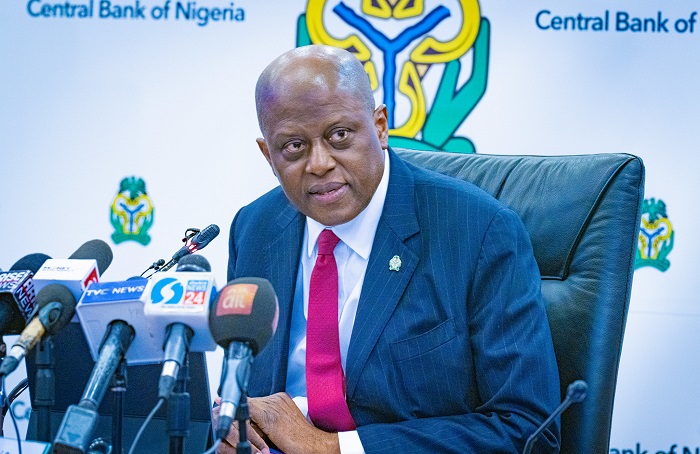
The Governor of the Central Bank of Nigeria, Olayemi Cardoso, said N2.90 trillion of the total capital raised so far came from domestic investors, while N1.15 trillion, representing about 28 per cent, was sourced from foreign participation. Stakeholders say that this reflects stronger participation from local investors in the capital strengthening exercise across the banking industry.
“In summary, 71.67 per cent is domestic mobilisation and 28.33 per cent is foreign participation. This balance, in my view, represents a mix of domestic and foreign, which signals broad investor engagement and confidence in the sector,” Cardoso said.
The CBN also indicate that a significant number of banks have already complied with the new requirements as the deadline approaches. In a statement by the Acting Director of Corporate Communications at the CBN, Hakama Sidi-Ali, the apex bank said thirty banks had met the new minimum capital requirements applicable to their respective licence authorisations under the programme.
The statement noted that banks have continued to approach the capital market through different fundraising channels to strengthen their capital base, including rights issues, initial public offerings and private placements.
“As of March 6, 2026, the recapitalisation exercise is progressing steadily. Thirty (30) banks have met the new minimum capital requirements applicable to their respective licence authorisations. In total, thirty-three (33) banks have raised additional capital through rights issues, initial public offerings, and private placements as part of the programme,” the CBN said.
The central bank explained that the capital positions of the remaining banks are currently undergoing routine verification as part of regulatory oversight before final confirmation of compliance within the stipulated timeline.
According to the regulator, the verification process forms part of its supervisory responsibilities aimed at ensuring that capital raised by financial institutions complies with regulatory standards and prudential requirements.
“The capital positions of the remaining banks are currently undergoing the Central Bank’s routine verification process ahead of final confirmation of compliance within the recapitalisation timeline,” the statement added.
Industry observers note that the capital mobilisation drive has triggered increased activity in Nigeria’s capital market since the programme was announced, with many banks returning to the market to raise funds from existing shareholders and new investors.
Several lenders have undertaken rights issues targeted at current shareholders, while others have opted for public offers and private placements to broaden their investor base and strengthen their balance sheets.
Other News
The recapitalisation requirement applies across different categories of banks, with minimum capital thresholds varying depending on the scope of operations and licence authorisation granted by the regulator.
The CBN had explained when the policy was introduced that the capital increase was designed to position banks to better withstand economic shocks, improve risk absorption capacity and support long-term financing for businesses and households.
Stakeholders have also maintained that stronger capital buffers will enhance the stability of the financial system and enable banks to expand credit to key sectors of the economy.
The recapitalisation programme, introduced in 2024, requires banks to raise fresh capital to meet revised minimum thresholds based on the category of their operating licences as part of regulatory efforts to strengthen the resilience of Nigeria’s banking sector and expand the capacity of lenders to support economic growth.
The programme represents one of the most significant capital strengthening exercises in Nigeria’s banking sector since the last major recapitalisation implemented in 2005, which reduced the number of banks through a wave of mergers and acquisitions.
While the current exercise has so far been driven largely by capital raising rather than consolidation, some institutions have undertaken corporate restructuring and strategic adjustments to align with the new requirements.
Market analysts say the level of domestic participation recorded so far reflects the increasing depth of Nigeria’s capital market and the ability of local institutional investors to support large-scale fundraising initiatives.
Institutional investors, including pension funds, asset managers and other investment vehicles, are believed to have played a significant role in the domestic capital mobilisation recorded by banks.
The CBN has, however, maintained that the recapitalisation process is being closely monitored to ensure transparency, regulatory compliance and the protection of depositors and investors.
“The CBN reiterates that the Nigerian banking system remains stable and sound. The recapitalisation programme remains firmly on track and will further strengthen the capacity of the banking sector to support households, businesses, and sustainable economic growth,” the statement said.
The regulator added that it will continue to maintain supervisory engagement with financial institutions throughout the recapitalisation period to ensure full compliance with prudential standards.
“The Central Bank of Nigeria will continue to maintain close supervisory engagement with regulated institutions to ensure full compliance with prudential and capital requirements.”