Follow Us on Google
From Fred Itua, Abuja
The recent conclusion of candidate selection exercises across Nigeria’s major political parties has fundamentally reshaped the national electoral landscape, validating the long-held political maxim that primary contests dictate the ultimate trajectory of general elections. Across the 36 states of the federation and the Federal Capital Territory, the intense internal rivalries that characterised these exercises have resulted in unprecedented structural disruptions.

These developments have altered power dynamics within both the ruling and opposition platforms, leaving party administrators with the complex task of managing widespread internal dissent ahead of the upcoming general elections. In the Nigerian political system, primaries function as the true clearing house for ambitions. It is within these internal contests that carefully managed coalitions either solidify or fracture under the weight of localised interests.
The internal selection processes have been concluded, but they have left in their wake a fragmented political terrain where traditional power brokers find their influence openly challenged by emerging factions. The institutional fallout across the political spectrum underscores a growing tension between centralised party directives and the democratic aspirations of grassroots party structures.
The All Progressives Congress (APC) faced significant internal frictions across several state chapters, with public disputes emerging regarding the transparency and administrative equity of the selection process. In Ekiti State, a sitting federal lawmaker openly criticised the conduct of the legislative primaries, publicly describing the exercise as a total rape of democracy. The legislator alleged widespread irregularities during an interactive briefing with journalists, stating that results were manufactured at desks by individuals while no actual voting took place on the ground, and a supervising Independent National Electoral Commission (INEC) official was improperly removed from the venue by an administrative aide.
These localised disputes were mirrored by broader structural realignments within the party’s legislative caucus. The selection process led to a substantial turnover within the National Assembly, with over 60 sitting federal lawmakers failing to secure return tickets to the legislature. Among those affected was House Majority Leader Julius Ihonvbere, who lost the ticket for the Owan Federal Constituency in Edo State.
Administrative reports indicate that Ihonvbere secured 1,005 votes, placing third behind Andrew Ijegbai, who won the ticket with 3,695 votes. This turnover was driven in part by institutional shifts and localised zoning arrangements, demonstrating that legislative incumbency offers minimal protection when local party executives alter internal rules.
The administrative consequences extended to the executive arm of government. Several cabinet ministers who had resigned their portfolios to contest gubernatorial and legislative tickets discovered that national visibility does not automatically translate into internal delegate support. Bayo Adelabu in Oyo State, Saidu Alkali in Gombe State, and Yusuf Maitama Tuggar in Bauchi State all failed to secure the necessary delegate majorities required to clinch their respective tickets.
Following the announcement of the official results, former Deputy Senate President Ovie Omo-Agege formally tendered his resignation from the APC, citing structural irregularities within the state chapter’s management framework. The scale of the internal discontent has forced the national leadership of the ruling party to shift its focus toward crisis management.
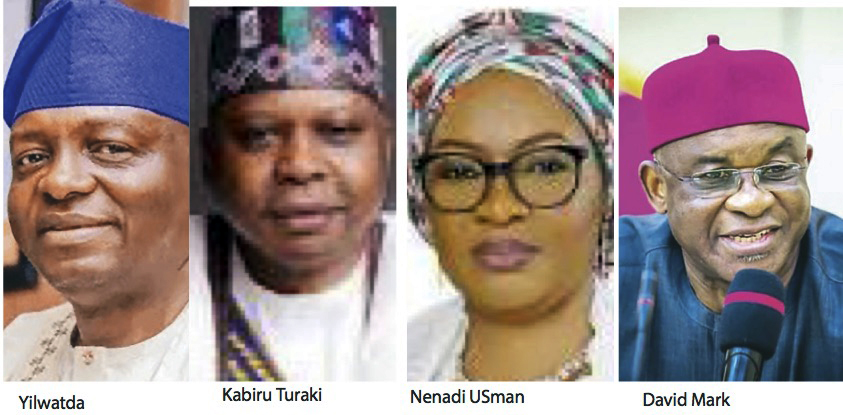
Addressing the rising tensions during an emergency meeting of the National Working Committee in Abuja, APC national chairman, Prof. Nentawe Yilwatda, issued a directive for immediate reconciliation across the affected states. Yilwatda stated that the party must urgently establish a comprehensive healing process to unite aggrieved aspirants and secure the legislative caucus before the official campaign season begins. He added that internal differences are inevitable in a large party, but institutional cohesion remains paramount for electoral success.
Within the opposition space, the newly formed Nigeria Democratic Congress (NDC) faced immediate procedural challenges regarding its foundational rules. Presidential aspirant Peter Agada initiated a formal constitutional challenge against the party’s internal zoning framework, which threatened to polarise the platform along regional lines. Presenting his argument to legal practitioners and reporters in Abuja, Agada noted that the current zoning arrangement lacks any legal or institutional foundation under the party’s constitution, as it has never been formally presented to or ratified by a National Executive Committee convention. Agada argued that adopting unratified guidelines undermines the party’s commitment to rule-based internal governance.
The institutional challenges within the NDC were further complicated by localised leadership dynamics in the North West zone. In the Kano State chapter, deep seated rivalries regarding candidate selection required direct arbitration from former Governor Rabiu Kwankwaso to prevent a total fracture of the state executive structure. Kwankwaso’s direct personal intervention was necessary to resolve competing ticket ambitions and ultimately affirm Aminu Abdulsalam Gwarzo as the party’s consensus governorship candidate.
Other News
While this intervention stabilised the local chapter, political analysts observe that relying on individual arbiters highlights the structural vulnerability of political institutions that have not yet fully institutionalized their conflict resolution mechanisms.
Concurrently, the African Democratic Congress (ADC) confronted severe leadership disputes and parallel claims to administrative legitimacy. In Rivers State, two separate factions declared different candidates as the legitimate gubernatorial flagbearer following parallel primary exercises conducted at separate venues. This administrative confusion prompted the national leadership to intervene.
The ADC national chairman issued a public statement reassuring members and the public that the national leadership remains fully committed to absolute transparency and legal adherence, asserting that only the primary supervised by the national secretariat would be recognized.
In the Oyo State chapter of the ADC, the internal frictions led to high profile withdrawals from the process. A retired senior police officer of considerable local credibility formally withdrew from the governorship primary, publicly citing the structural infiltration of the party by external interests and the deployment of non-state actors to destabilize the venue. The aspirant stated that the deviation from established guidelines made a fair contest impossible. These developments have raised concerns among coalition partners who had viewed the platform as a viable vehicle for a consolidated opposition front.
The Peoples Democratic Party (PDP) has similarly seen its national architecture tested by successive waves of realignments. The party entered the current primary cycle having lost thirteen governors from the previous electoral period to a combination of political defections, tactical realignments, and unresolved internal disputes. This shrinkage of executive power has placed immense pressure on the party’s national secretariat, which must now fund and coordinate a national campaign without the substantial administrative backing traditionally provided by a large bloc of incumbent state governors.
Despite these national structural challenges, localised state chapters of the PDP demonstrated distinct resilience and institutional energy during the primary season. In Benue State, the selection process concluded with the affirmation of former Attorney General of the Federation and Minister of Justice Michael Aondoakaa as the consensus governorship candidate for the party. Aondoakaa’s emergence followed extensive consultations designed to avoid an expensive and divisive primary battle among eleven initial aspirants.
Following the formal ratification of the consensus agreement, Senator Abba Moro expressed strong confidence in the party’s local standing and its capacity to mount a successful statewide campaign. Moro stated that the political ground in Benue has been meticulously prepared for a comprehensive PDP reclamation, emphasising that the party’s local structures remained unified despite the challenges observed at the national level.
The divergence between struggling national secretariats and highly motivated state chapters represents a critical factor in the evolving landscape. While state level cohesion allows parties to remain competitive in specific legislative and gubernatorial contests, the absence of a synchronized national strategy limits their capacity to project power effectively across geo-political zones.
Political analysts note that the ability of all major parties to reconcile their defeated and victorious factions at the grassroots level will serve as the primary determinant of institutional stability when the general campaign commences. The outcomes of these primary elections indicate that the internal structures of Nigerian political parties remain highly volatile. The widespread substitution of competitive voting with consensus arrangements and administrative directives has left a large constituency of aggrieved aspirants across all major platforms.
This cohort of defeated candidates represents a significant variable in the upcoming general elections, as history demonstrates that internal discontent often manifests as passive non-cooperation or tactical support for opposition candidates during the main polls.
Furthermore, the increased reliance on judicial intervention to resolve primary disputes underscores the persistent difficulty parties face in managing internal dissent through administrative means. As multiple cases head to the Federal High Courts, the final composition of the ballot remains subject to legal determinations rather than purely democratic outcomes. This legal insecurity introduces an element of volatility that complicates campaign planning and leaves voters uncertain about the definitive choices available to them.
As the political parties transition from internal candidate selection to public campaigning, the key challenge will be the authenticity of their reconciliation efforts. Voters have developed a sophisticated capacity to distinguish institutional unity from temporary electoral pacts. The parties that succeed in the upcoming general elections will likely be those that transition away from top down imposition and instead build genuine, rules-based consensus within their internal structures. The outcomes of the primaries show that the path to institutional maturity remains complex, and the management of internal democracy continues to be the true test of the nation’s political development.