Follow Us on Google

Tope Adeboboye
At his installation as Nigeria’s new leader on May 29, 2015, President Muhammadu Buhari made a number of pledges to Nigeria.
With promises to tackle slow economic growth, fight corruption and insecurity, embark on infrastructure renewal, ensure diversification of the economy and battle unemployment, among others, hopes were high that the new administration would impact Nigerians positively in diverse ways.
Five years down the line, how has Buhari fared? While opponents of the President have scored him low on some of the promises, his supporters insist Buhari has done a yeoman’s job.
Last week, the Presidency, through the Special Adviser to the President on Media and Publicity, Mr. Femi Adesina, released a fact sheet detailing some accomplishments of the Buhari administration in the past five years. The document contained the various achievements of the Federal Government in the past five years in different areas like agriculture, infrastructure, education, healthcare, job creation and security, among others.
Agriculture is one sector touted as being close to the heart of the administration. Indeed, many would agree that the sector has received tremendous attention from the government.
The Anchor Borrowers Programme (ABP) of the Central Bank of Nigeria (CBN) was launched by President Buhari on November 17, 2015. Under the programme, more than N200 billion in funding has been provided by the CBN to over 1.5 million small holder farmers in 16 different commodities. These include rice, wheat, maize, cotton, cassava, poultry, soy beans, groundnut and fish. Over 1.4 million hectares of farmland have been cultivated. Local production of rice has double between 2015 and 2019, even as more than 10 new rice mills were established in the country.
The document also noted that through the Presidential Fertilizer Initiative launched in January 2017, as a government-to-government agreement with the Kingdom of Morocco, more than a million metric tonnes of fertilizer has been produced since 2017, while 22 blending plants have been resuscitated. With that, the nation now makes subsidy savings of N50 billion annually, with price per bag reducing from between N9,000 and N11,000 to N5,500.
Infrastructure is another major area that has benefitted immensely from the Buhari administration. The fact sheet listed several rails and roads that have been fixed as well as projects that are ongoing.
The Abuja Metro Rail and the Abuja-Kaduna Rail, as well as the 327 kilometre Itakpe-Ajaokuta-Warri Rail, started in 1987, all inherited from past administrations, have been completed. The Lagos-Ibadan Rail Project, which was started in 2017, is due for completion this year.
The fact sheet also recalled the launch of the Presidential Infrastructure Development Fund (PIDF). The fund started with a seed funding of US$650 million, and is being used to fund the Second Niger Bridge, Lagos-Ibadan Expressway and the Abuja-Kaduna-Zaria-Kano Expressway, among others.
Some health infrastructural projects instituted, according to the presidency, include the world-class Cancer Treatment Centre at the Lagos University Teaching Hospital (LUTH) which cost $11 million, and two Diagnostic Centres at the Aminu Kano University Teaching Hospital and the Federal Medical Centre, Umuahia respectively
A number of light rail networks have been completed, while new airport terminals and runways are either being done or have been completed. Among these are Abuja’s Light Rail system which connects the city centre with the Airport, and the Abuja-Kaduna Railway Line. The new Abuja and Port Harcourt International Airport Terminals have also been completed, while the new Lagos and Kano International Airport Terminals are scheduled for completion this year.
The administration asserted that it completed the reconstruction of the Abuja Airport runway while the reconstruction of the Enugu International Airport Runway will be fully achieved before 2020 runs out.
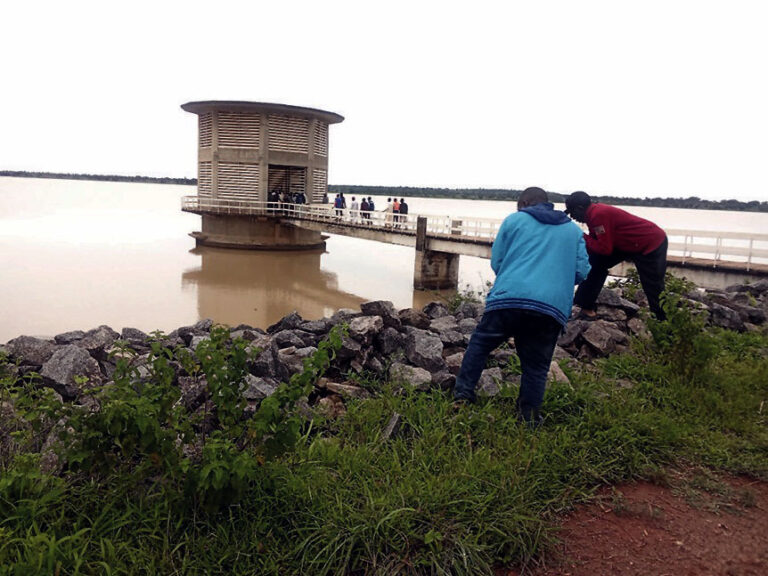
Several water supply projects, including dam and irrigation projects, have been completed in places like Bayelsa, Katsina, Edo, Taraba, Sokoto, Delta and Plateau States.
With the Sukuk bonds, the Presidency said the Federal Government is working on about 25 important road projects scattered around the country.
To grow the economy and create wealth, the Buhari administration said it launched a series of interventions in terms of funding and capacity development initiatives to support micro, small and medium enterprises (MSMEs). The new Development Bank of Nigeria (DBN), with its initial funding of $1.3 billion (N396.5 billion), has been providing medium and long-term loans to MSMEs. Since 2017, the bank has disbursed a total of N100 billion through its 27 Participating Financial Institutions (PFIs), with more than 100,000 enterprises benefitting. The Bank of Industry has also disbursed more than N400 billion in loans to large, medium, small and micro enterprises since 2016, while it established a N5 billion Fund for Artisanal Miners. It also instituted a $20 million fund to support young technology entrepreneurs.
In August 2016, Buhari established the Presidential Enabling Business Environment Council. Along with the Enabling Business Environment Secretariat (EBES), they have helped in moving the country 39 places up on the World Bank’s Ease of Doing Business rankings since 2016. And in the last three years, Nigeria has twice been adjudged one of the ten most improved economies.
Besides, some companies in e-commerce, software development, animation, music, film and TV have been granted a tax holiday of between three and five years,
With President Buhari assenting to the Finance Bill 2019, the Finance Act 2019 was the first time Nigeria would be accompanying the passage of a budget with complementary fiscal and business environment reforms legislation. And the 2020 Budget became the first time that the federal budget would be running a January-December cycle in 12 years. There are also a number of other initiatives, including the implementation of functioning Visa-on-Arrival system for business visitors and nationals of the African Union (AU).
The administration informed also that pensioners have been experiencing a new lease of life. In January 2019, President Buhari launched Nigeria’s Micro Pension Scheme. This allows self-employed persons and persons working in organisations with less than three employees to save for the provision of pension at retirement or incapacitation. Some other initiatives of the administration, according to the factsheet, include the N54 billion released to settle outstanding 33 per cent pension arrears; placement of Delta Steel Company’s 3,542 pensioners on payroll after a 13-year wait and NITEL’s 9,216 pensioners placed on payroll, after more than a decade of neglect. In October 2017, 174 Biafran police officers dismissed by the Federal Government after the civil war but pardoned by President Obasanjo in 2000 were paid N571.56 million by the Buhari government. Former staff of the defunct Nigeria Airways also got N24 billion in September 2018.
The Buhari Administration said it has expended more than N2 trillion in bailout packages to the different state governments for the payment of salaries and pensions, especially between 2015 and 2018. Such support, it was learnt, were through budget support facility (totalling N614 billion extended to different state), Paris Club refunds of $5.4 billion and infrastructure loans, among others.
Insecurity is a major issue at the centre of public discourse in the country, with Boko Haram insurgents, cattle rustlers, kidnappers, bandits and other criminal elements committing horrendous acts of violence from region to region. But the factsheet said Buhari’s interventions in that area have been tremendous.
The presidency said the Buhari administration has invested heavily in arms and weapons through government to government military deals with the United States, Russian, Chinese and Pakistani governments. In April, the first batch of 17 military vehicles (VT-4 main battle tanks, ST-1 wheeled tank destroyers, self-propelled howitzers, among others) came in from China to boost the fight against Boko Haram.
Since President Buhari took over, the Nigerian Air Force has acquired 22 brand new aircraft, even as another 16 are being expected, including 12 Super Tucanos from the United States government next year.
It was gathered that the Nigerian Navy also deployed 12 naval security stations along the nation’s coastline under its Choke Point Regime and Control operations.
The presidency said between 2015 and last month, the Nigerian Navy conducted 34 operations that have substantially boosted security in the country’s waters.
“Two dedicated operations, TSARE TEKU and CALM WATERS have resulted in reducing incidences of piracy from 51 successful attacks in 2016 to only two attacks as at May 2020,” the document said.
Activities in the power sector have been quite turbulent for decades across the country, with a persistently abysmal electricity supply that has lingered for long. But the Buhari administration maintained that the nation is experiencing a steady rebirth in the sector.
Through the Rural Electrification Agency (REA), the Federal Government’s Energizing Economies Programme, a public-private partnership, has been able to deliver stable power supply to markets and economic clusters across the country.
“The initial phase is ongoing in Ariaria Market in Aba, Abia State (32,000 shops), Sura Shopping Complex in Lagos (1,000 shops), Shomolu Printing Community in Lagos (4,000 shops) and the Sabon Gari Market in Kano (12,000 shops). The Sura Shopping Complex project was completed in August 2018, and commissioned by Vice President Yemi Osinbajo in October 2018,” the factsheet noted. Besides, several rural communities in many parts of the country now have access to clean and safe electricity, while some university campuses have also been supplied with solar power by the REA.
The Federal Government said it launched a N1.3 trillion Payment Assurance Programme designed to resolve the liquidity challenges in the power sector by guaranteeing payments to generating companies and gas suppliers. It said there are also more than 90 transmission projects completed or ongoing since 2016. And with its arrangement with Siemens in Germany, the government is optimistic that Nigerians would soon start enjoying a more stable power supply.
The various social intervention schemes of the Buhari administration, which are being enjoyed by millions of Nigerians, is also catalogued in the factsheet.
The Social Investment Scheme (SIP), for instance, is described as the largest and most ambitious social safety net programme in Nigeria’s history. Half a million people are said to be benefitting from the N-Power programme, receiving N30,000 in monthly stipends. There are the Government Enterprise and Empowerment Programme (GEEP); Home Grown School Feeding Programme (HGSFP) where about nearly 10 million Primary 1– 3 pupils in 54, 952 public primary schools in 35 states are being fed daily, and the Conditional Cash Transfer (CCT) under which more than three million poor and vulnerable households have been registered on the National Social Register. “More than one million of these families are currently benefiting from the CCT Scheme, which pays N5,000 to each household monthly,” the presidency said in the factsheet.
The president has issued a number of landmark Executive Orders. These include Executive Order (001) on Improving Efficiency in the Business Environment; Executive Order (002) on Promoting Local Procurement by Government Agencies; Executive Order (005) on Planning and Execution of Projects, Promotion of Nigerian Content in Contracts and Science, Engineering and Technology; Executive Order (008) on the Voluntary Offshore Assets Regularization Scheme (VOARS); Executive Order (007) on Road Infrastructure Development and Refurbishment Investment Tax Credit Scheme and Executive Order (010) on Implementing Financial Autonomy of State Legislature and State Judiciary.
The document also lists achievements and efforts of the Federal Government in other areas like education, healthcare, sports, science and technology, oil and gas, anti-corruption and transparency, support for the creative industry, and many more.