Follow Us on Google
From Adanna Nnamani, Abuja
For Ibrahim Musa, a 36-year-old security guard in Abuja, casual work has become like a trap he cannot escape from. He was employed by a private security company contracted to guard a federal office in the Central Business District, Abuja, and has been on a six-month renewable contract since 2019.

Despite wearing a uniform daily and working long shifts, Ibrahim earns just N60,000 monthly, with no pension, no health insurance and no allowance for overtime.
Musa lamented that even though casual security guards do the same duties as permanent staff, they, unfortunately, remain invisible when welfare issues are discussed.

He said: “I stand on my feet for 12 hours every day. Rain or sun, I’m here. If there is trouble, we are the first to face it, but at the end of the month, my salary cannot carry my family.”
According to him, the casual arrangement has destroyed his chances of building a stable life in the city as rent, transport and food prices keep rising, while his pay remains the same for years.
He added that fear keeps many casual security guards silent, as speaking out often leads to dismissal.
“I’m married with two children. Sometimes, I borrow money just to send them to school. When my child fell sick, I had to beg neighbours because there is no health cover for us.
“If you complain, your contract will not be renewed. That is how people vanish. One week you see them, the next week a new face is at the gate,” the man stated.
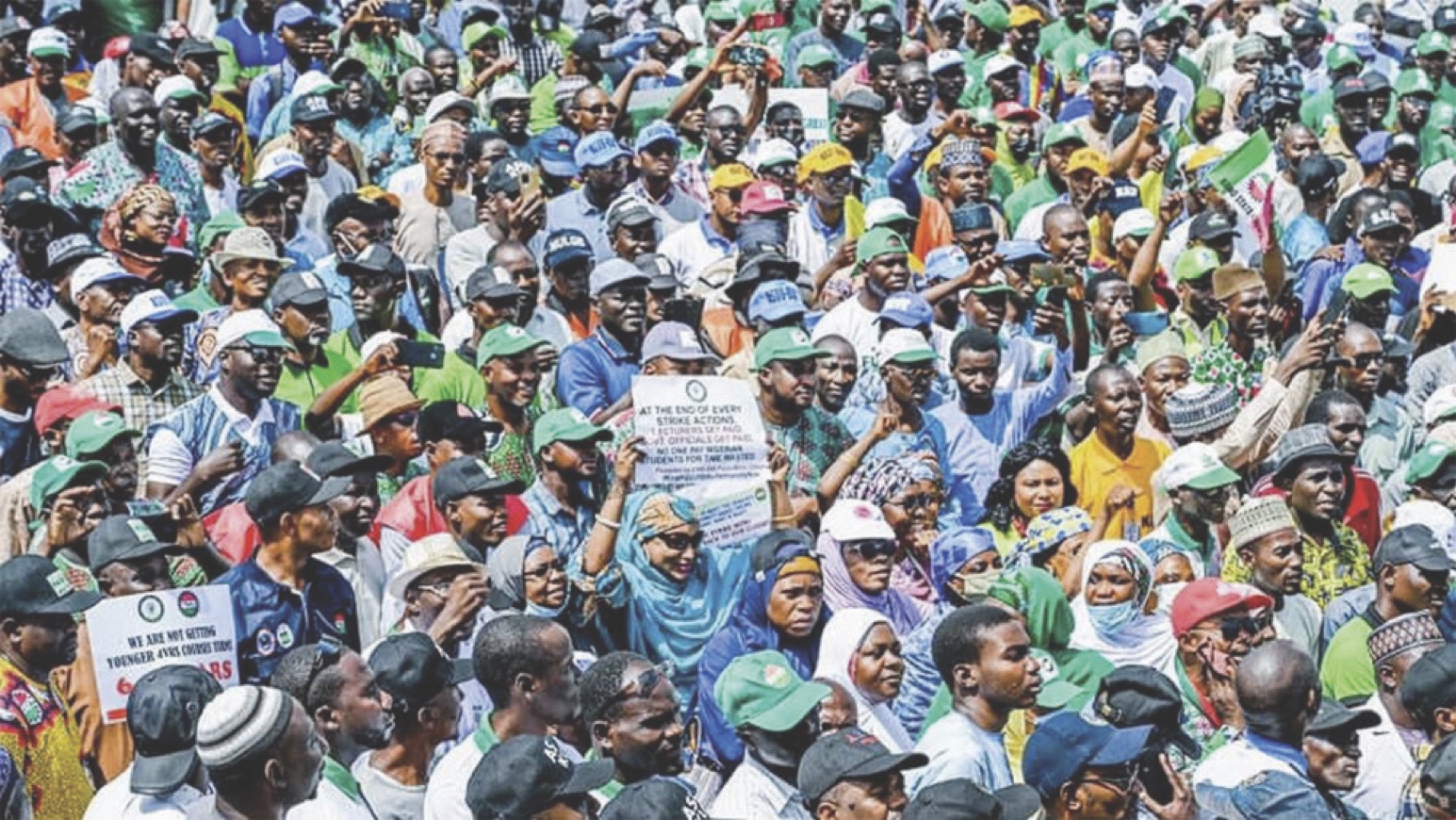
Musa’s experience is not an isolated case, as casualisation is daily becoming a common practice in Nigeria. Millions of workers in the country are now employed on short-term contracts, outsourced positions, or casual arrangements that offer little to no security. Instead of permanent jobs with benefits and career paths, employees are hired for temporary needs and discarded when no longer useful. This casualisation trend is spreading across banks, financial institutions and other major companies, leaving workers stressed, insecure and underpaid.

High unemployment rates and economic downturns force workers to accept poor conditions, while companies use it to reduce operational costs.
Commenting on the issue, president of the Nigeria Labour Congress (NLC), Joe Ajaero, said this is a deliberate strategy by employers to weaken the bargaining power of workers.
According to Ajaero, casualisation is beyond just a workplace issue but, rather, a part of a broader struggle between workers and big capitalists, designed to erode rights, limit benefits and create a disposable workforce. Ajaero noted that the problem is compounded by legislative threats that seek to further weaken worker protections and allow certain companies to operate outside national labour laws.
He called on journalists, especially labour correspondents, to help shape public opinion and defend workers’ rights. Ajaero emphasised that media coverage is critical in preventing misinformation and countering attempts by powerful companies to legitimise the casualisation trend. He warned that without awareness and action, workers’ rights in Nigeria could be permanently undermined.
He said: “Casualisation is the systematic erosion of decent work and the creation of a disposable workforce.
“We are witnessing an unholy move by some powerful companies to operate as islands of impunity, outside the known labour standards that govern our nation.
“The rights of Nigerian workers are under siege. We will resist any attempt to strip workers of their power and their patrimony with every fibre of our being.”
International Labour Organisation (ILO) country director for Nigeria, Ghana, Liberia, Sierra Leone, Vanessa Phala, blamed the growing poverty and inequality in the country to the proliferation of insecure jobs.
Phala emphasised that decent work is central to breaking the cycle of poverty, and that governments must prioritize policies and programmes that protect vulnerable workers, offer social protection, and create sustainable employment.
According to her, when governments invest strategically in the workforce, including casual and informal workers, the economy benefits as a whole.
“Poverty and inequality are not just statistics, they are lived realities for millions of Nigerians.Tackling these issues requires strategic investment, policy coherence, and a shared commitment to social justice. Decent work is the most effective route out of poverty.
Other News
“Governments must mobilize resources in ways that prioritize the needs of workers, especially those in vulnerable employment. Financing programmes for job creation, skills development, and social protection is critical,” she stated.
Former president of the Association of Senior Staff of Banks, Insurance and Financial Institutions (ASSBIFI), Olusoji Oluwole, revealed that contract staff now make up about 60 percent of operational workforces in many banks, replacing permanent clerks, supervisors and officers. While employers benefit from lower costs and increased flexibility, he said workers suffer from low pay, limited benefits and uncertain career paths.
Oluwole stressed that casualisation affects productivity and workplace morale because workers on short-term contracts may feel undervalued, which can lead to stress, depression and even unethical practices. He also noted that the economy loses when skilled employees are stuck in low-level, temporary roles without opportunities to develop or advance.
He called for regulatory enforcement and structured career paths to protect contract workers and ensure their skills are used effectively.
Oluwole noted that proper training and age-inclusive policies are essential to maximize the potential of the nation’s workforce while preventing the social consequences of widespread casualisation.
He said: “Before the advent of contract employment, most staff were permanent clerks, supervisors and officers. Today, about 60 percent of operational staff are contract workers. Contract workers often earn less than their peers, receive no pension, and have no clear career path. They live with insecurity, stress, and indignity.While casualisation may reduce costs and increase profits, it can lead to operational vulnerabilities, fraud, and lower productivity.
“Regulatory enforcement, career development for contract staff, and skill training in high-demand areas are essential. We must create opportunities and respect the experience and skills of workers, regardless of age.
Similarly, Patrick Abulu, Acting National Chairman of Labour Conference of the Labour Correspondents’ Association of Nigeria (LACAN), warned that widespread precarious employment undermines national development and prevents meaningful contributions to the economy.
Abulu opined that without fair recruitment practices, efforts to reduce poverty and inequality are futile. He added that casualisation is not just an issue of labour rights but also a threat to social stability.
He also noted that fair labour recruitment is inseparable from the broader fight for a prosperous Nigeria.
“The rampant casualisation of labour, the proliferation of unfair recruitment practices, and the erosion of workers’ rights are not just labour issues; they are primary drivers of poverty and inequality.
“How can we combat poverty when a worker can be hired and fired at will, with no benefits, no pension, and no future to plan for? The fight for fair labour recruitment is inseparable from the fight for a prosperous Nigeria,” he stated.
On his part, Minister of Labour and Employment, Muhammadu Dingyadi, admitted that casualisation is a major threat to national development because it prevents workers from planning for the future, investing in education, and participating fully in social security systems.
Dingyadi highlighted government efforts to regularize non-standard employment through labour inspections and collective bargaining mechanisms. He assured that the nation’s labour laws are being reviewed to ensure compliance with ILO conventions and to protect workers in modern forms of employment, including contract and platform-based work.
He warned that addressing casualisation is not only a matter of labour rights but also an economic necessity to ensure sustainable growth and inclusive prosperity.
Dingyadi noted that all hands must be on deck to ensure a workforce that is secure, fairly treated, and fully productive.
According to the minister, “Casualisation of labour is one of the most pressing challenges confronting the world of work in Nigeria.
“A workforce that lacks job security cannot plan for the future, invest in education or contribute meaningfully to social security systems. Addressing casualisation is central to our pursuit of social justice and inclusive growth.
“Through the Labour Inspectorate Department and the Tripartite Industrial Relations Framework, we are working to regularize non-standard employment arrangements and promote collective bargaining mechanisms that balance flexibility with fairness.
“The conversation around local content, casualisation, and fair labour migration is ultimately about the dignity of work and the future of our workforce. A just, fair, and decent world of work is not only a moral imperative,it is an economic necessity.”