Follow Us on Google
From Sola Ojo, Abuja
Following predictions by the Nigerian Meteorological Agency (NiMet) and the Nigeria Hydrological Services Agency (NIHSA) that Kaduna is among the states likely to experience severe flooding, governments, development partners and vulnerable communities are intensifying efforts to ensure the forecasts do not translate into another humanitarian disaster.
From the evacuation of solid waste blocking waterways to the desilting of drainage channels, public sensitisation campaigns and emergency simulation exercises, the emphasis has shifted from responding to disasters after they occur to preventing avoidable losses through preparedness.
Communities such as Television, Romi, Nasarawa, Rafin Guza, Bachama and several others within Kaduna metropolis have experienced the devastating consequences of flooding over the years. Lives have been lost, livestock and farmlands washed away, homes submerged and livelihoods destroyed.

Environmentalists believe that climate change, rapid urbanisation, poor waste disposal practices and encroachment on natural waterways have combined to increase flood risks across many Nigerian cities, making preparedness more critical than ever.

It is against this backdrop that Christian Aid, in collaboration with UNICEF and the Kaduna State Emergency Management Agency (KADSEMA), launched a community-based flood simulation exercise under the Enhancing Emergency Preparedness and Response (EPREP) Project.
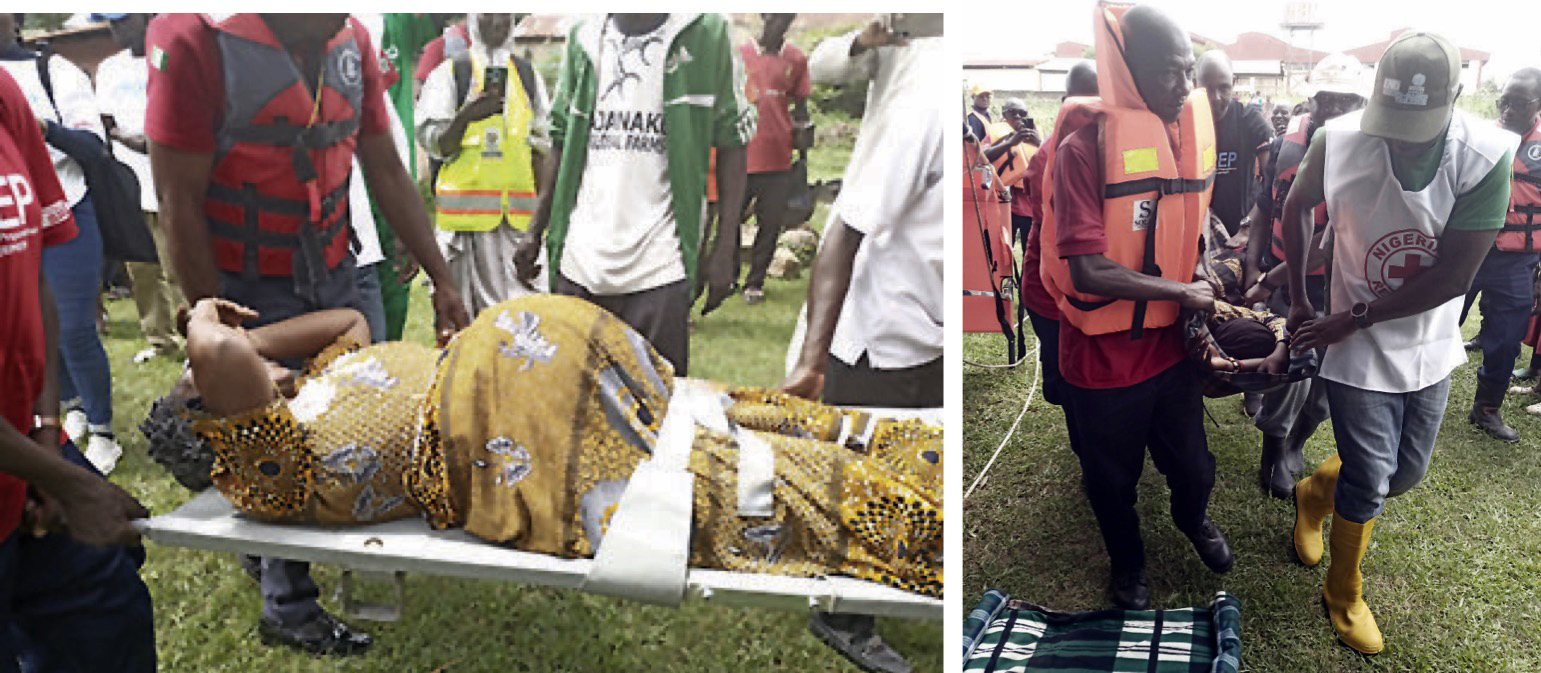
Held in flood-prone communities, including Nasarawa and Rafin Guza, the exercise brought together emergency responders, traditional leaders, local fishermen, volunteers and residents to rehearse how communities should respond before, during and after flood emergencies.

Unlike conventional awareness campaigns, the simulation recreated realistic emergency situations with community members learnt how to identify early warning signs, organise evacuations, rescue vulnerable persons and use locally available materials such as canoes, calabashes, jerrycans and inner tubes as emergency flotation devices where standard rescue equipment may not be immediately available.
For the Kaduna State Emergency Management Agency (KADSEMA), the exercise could not have come at a better time. Mohammed Shafi’i Hassan, Zonal Coordinator of KADSEMA in the Central Zone, described the simulation as both timely and necessary.
“This simulation exercise is timely and very important. We have received several flood predictions from NiMet and NIHSA, indicating that parts of Kaduna metropolis, particularly Kaduna North and the Central Zone, are at high risk of flooding,” he said.
To him, preparing communities before disaster strikes remains one of the most effective ways of reducing casualties.
“Conducting this exercise within the communities is crucial because it prepares residents to respond appropriately if flooding occurs.
“Those who participate will be better equipped to mitigate the impact of floods and reduce the loss of lives and property.”
Hassan explained that KADSEMA has continued to coordinate emergency preparedness efforts with relevant government agencies, particularly on environmental sanitation and drainage maintenance.
“As the lead agency for disaster management in Kaduna State, KADSEMA coordinates responses to all forms of disasters and hazards.
“We work closely with the Ministry of Environment on environmental issues that could increase flood risks, including the evacuation of solid waste and the clearing of blocked drainage channels.
“We remain proactive and continue to follow up with relevant agencies to ensure the necessary preventive measures are taken.
“If you move around Kaduna metropolis today, especially within the Central Zone, you will see ongoing desilting and drainage clearance activities,” he added.
His confidence reflected broader efforts by both the Federal Government and Kaduna State Government to minimise this year’s flood impact.
In recent months, the National Emergency Management Agency (NEMA) has intensified public enlightenment campaigns in flood-prone states, while the Federal Ministry of Water Resources and Sanitation has repeatedly urged states and local governments to clear blocked drainage channels, discourage indiscriminate refuse dumping and relocate residents occupying floodplains.
Kaduna State has equally stepped up environmental sanitation activities, including the evacuation of refuse, desilting of drainage channels and public awareness campaigns urging residents to take responsibility for keeping waterways free of obstructions.
For emergency responders, however, infrastructure alone cannot prevent disasters if communities are unprepared.
Adams Zamani, Deputy Director of the Kaduna State Fire and Public Safety Agency, believed knowledge as the first line of defence against flooding.
“We are here because this simulation exercise is very important. The choice of Nasarawa and Rafin Guza community is significant because they are vulnerable to flooding, making them the ideal location for this emergency preparedness exercise.”
According to Zamani, the simulation was designed to ensure residents recognise danger before it becomes too late.
“The objective is to build the capacity of community members so they can recognise early warning signs of flooding and take prompt action to protect themselves.
“With the right knowledge and early warning information, residents can evacuate in time, safeguard their families, protect their property and minimise damage to their farmlands,” he explained.
He noted that one of the greatest achievements of the programme was the enthusiasm shown by residents.
He said “The response from the community has been encouraging, from our initial assessment visit to the actual simulation exercise, the people have shown great interest and actively participated. It is clear they have been looking forward to an intervention like this.”
The Deputy Director commended Christian Aid, UNICEF and the European Union for supporting the initiative, describing it as a practical demonstration of how partnerships can strengthen community resilience.
Beyond government agencies, development partners believe disaster management becomes sustainable only when communities themselves become active participants rather than passive victims.
That philosophy forms the foundation of the EPREP Project.
Magdalene Ihenwabor, Monitoring and Evaluation Officer with Christian Aid, said the Enhancing Emergency Preparedness and Response Project (EPREP) was designed to ensure communities could protect themselves even before emergency responders arrive.
“We are doing this in Nasarawa (Kaduna South) and Rafin Guza (Kaduna North) because these are some of the communities frequently affected by flooding.
Other News
“The aim is to help residents understand how to respond effectively and evacuate safely whenever flooding occurs.
“This exercise is being carried out in collaboration with key stakeholders, including the KADSEMA, NEMA, the National Inland Waterways Authority (NIWA), the Kaduna State Fire and Public Safety Agency, community volunteers and other partners,” she mentioned.
According to her, the ultimate goal is to transfer ownership of emergency preparedness to the communities themselves, “We want the community to take ownership of the process so that residents can respond quickly and protect themselves before emergency responders arrive.”
The practical nature of the exercise was evident as local fishermen demonstrated how ordinary household items such as jerrycans, calabashes and inner tubes could serve as temporary flotation devices during emergencies.
While such materials are not substitutes for standard rescue equipment, emergency responders say they can provide critical support in the first few minutes of a flood before professional help arrives.
For residents, however, flooding is not a theoretical possibility, it is a recurring reality.
In Nasarawa Community, Chikun Local Government Area, residents say they have lived with flood threats for more than two decades.
The Maiangwa of the community, Caleb Achi, recalled how government agencies have repeatedly come to their rescue whenever floodwaters invaded the area, but insisted that prevention remains a better option than emergency response.
“Our community has been affected by flooding for more than 20 years. Whenever flooding occurs, agencies such as NEMA, KADSEMA and the Nigerian Red Cross have always responded to our calls for assistance, and we appreciate their support.
“This year’s flood preparedness programme is particularly important because it has equipped our people with the knowledge to recognise early warning signs.
“Once we notice any danger, we can quickly alert the authorities and encourage residents in vulnerable areas to move to higher ground before the situation worsens,” he said.
He appealed to government to complete ongoing river channel improvement works, “We are appealing to the government to provide additional support by completing the ongoing river channel clearance.
“The work started from the Makera axis but stopped around the Ungwan Mission Bridge. Extending the clearance further downstream would improve water flow and significantly reduce flooding in our community,” he posited.
On his part, the Maiangwa of Rafin Guza, Alhaji Musa Maigaji, narrated how the community dam, originally constructed by the late Major Hamza Abdullahi for irrigation purposes, gradually became a source of concern.
According to him, the dam was never intended as a recreational site, yet over the years several tragic incidents occurred there.
“This dam was constructed by the late Major Hamza Abdullahi for his personal use.
“He had a farm and a garden, so he built the dam to ensure a steady supply of water. After his death, the dam was left as it is today,” he said.
He recalled that some Almajiri children who attempted to swim in the dam drowned after underestimating its depth, while another incident reportedly claimed the life of a soldier.
“Because of these experiences, community members always advise people not to swim in the dam, as it can be very dangerous,” he reiterated.
Supporting emergency responders during floods are members of the Kaduna State Artisanal Fishing Cooperative Union, many of whom have spent decades navigating the state’s rivers.
Its Secretary-General, Mahmoud Ibrahim Idris, said flooding affects not only communities but also the livelihoods of thousands of fishermen across Kaduna State.
To him, “Flooding affects the livelihoods of many of our members every year, especially those living and fishing in communities along rivers.
“Because of this, we have joined efforts to help protect lives and property during flood emergencies.
“Working under the coordination of KADSEMA and in collaboration with other partners, we assist in evacuating residents and their belongings from flood-prone areas whenever the need arises.”
Drawing on more than three decades of experience as a fisherman, Idris said local knowledge of rivers often complements formal emergency response efforts.
“For rescue operations, we use canoes, calabashes, inner tubes, jerrycans and life jackets, depending on the situation and the resources available,”he said.
According to him, the cooperative now has more than 2,000 members spread across Kaduna State, many of whom are prepared to assist emergency agencies whenever disasters occur.
If communities heed early warning alerts, government sustains preventive measures, and development partners continue supporting local resilience, Kaduna may yet prove that preparedness not panic is the most effective response to the rising threat of floods.
Photos:
1) Maigaji
2) Hassan (fully kitted without wristwatch)
3) (fully kitted with wristwatch)
4)
5) Achi (in black polo shirt)
6 -7) Real live scenarios
8) Idris (in live jacket)
9)
19) (the only lady in green polo shirt)