Follow Us on Google

By Uche Usim
As Nigeria grapples with multi-layered economic challenges, the 2025 Monetary Policy Forum emerged as a critical platform for shaping the future of monetary policy.
Held in Abuja, the forum brought together top policymakers, industry leaders, financial experts and international development partners to deliberate on the theme: “Managing the Disinflation Process.”
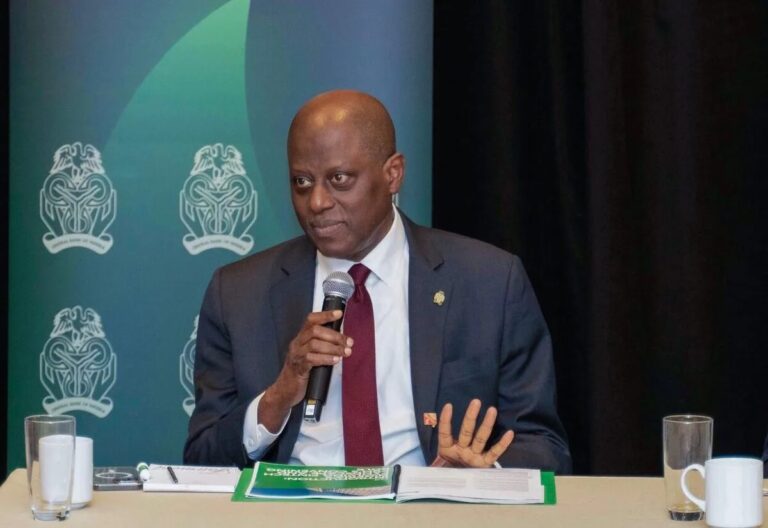
The keynote address was delivered by Mr. Olayemi Cardoso, Governor of the Central Bank of Nigeria (CBN), who laid out the apex bank’s strategic direction for price stability, inflation control and financial sector resilience.
In his opening remarks, Cardoso highlighted the CBN’s staunch commitment to restoring macroeconomic balance through orthodox monetary policies, structural reforms and coordinated fiscal strategies.
“This forum is not just a gathering; it is an opportunity to examine the effectiveness of monetary policy interventions, foster collaboration, and develop evidence-based strategies to stabilise the Nigerian economy,” he stated.
Managing the delicate mix of inflation and liquidity pressures
Cardoso began by acknowledging the complex economic landscape that Nigeria navigated in 2024. Inflationary pressures remained high, fueled by both domestic and external factors.
“The past year has presented significant challenges, with persistent inflationary pressures exacerbated by global and domestic shocks.
“Despite these headwinds, our commitment to price and monetary stability has yielded measurable progress,” he noted.
According to data from the National Bureau of Statistics (NBS), headline inflation stood at 34.80% in December 2024. While food inflation showed signs of moderation, core inflation remained elevated, driven by exchange rate pass-through effects, energy price adjustments, and structural supply constraints.
Cardoso highlighted the impact of excess liquidity in the financial system, a byproduct of unorthodox monetary policies implemented since the COVID-19 pandemic. While these interventions were designed to cushion immediate shocks, they inadvertently fueled inflationary pressures and heightened foreign exchange volatility.
“Liquidity injections intended to stimulate the economy did not translate into commensurate productivity growth,” he explained. “Instead, they contributed to demand-driven inflation, exacerbated by supply-side constraints from structural deficits.”
Shifting towards orthodox monetary policies
To curb inflation and restore stability, the CBN’s Monetary Policy Committee (MPC) embarked on an aggressive tightening cycle throughout 2024. The apex bank implemented several bold measures, including; raising the Monetary Policy Rate (MPR) by a cumulative 875 basis points to 27.50%; increasing the Cash Reserve Ratio (CRR) of Other Depository Corporations (ODCs) by 1,750 basis points to 50.00%; adjusting the asymmetric corridor around the MPR to enhance monetary policy transmission.
Cardoso emphasised that without these decisive policy actions, inflation could have surged to 42.81% by December 2024.
“Inflation erodes purchasing power, discourages investment, and widens inequality,” he warned. “Managing the disinflation process requires a careful balance of policies that mitigate short-term costs while anchoring long-term stability.”
Strengthening the banking and FX System
Beyond monetary tightening, the CBN introduced structural reforms to enhance the resilience of Nigeria’s financial system. These include; the Foreign Exchange Market reforms that entail; the unification of multiple exchange rate windows which led to a 79.4% increase in remittances through International Money Transfer Operators (IMTOs), rising to $4.18 billion in the first three quarters of 2024 (compared to $2.33 billion in the same period of 2023).
It also involves the clearing of a $7 billion FX backlog, restoring market confidence and improving foreign exchange liquidity.
Other News
Another arm of the reform is lifting of restrictions on 41 items previously banned from accessing the official FX market, a policy introduced in 2015.
The banking sector was strengthened through the introduction of new minimum capital requirements for banks, effective by March 2026, to strengthen the resilience and global competitiveness of Nigeria’s banking sector, positioning it to support the ambition of a $1 trillion economy.
It also involved financial inclusion and market integrity through the launch of the Women’s Financial Inclusion Framework (WIFI) under the National Financial Inclusion Strategy, aimed at bridging the gender gap in financial access.
There was also the introduction of the Nigeria Foreign Exchange Code, a landmark initiative designed to enhance integrity, fairness, transparency, and efficiency in the FX market.
“The Nigeria FX Code represents a binding commitment from the financial community to rebuild trust and inspire confidence,” Cardoso noted.
Optimistic but cautious outlook
Looking ahead to 2025, Cardoso expressed cautious optimism about Nigeria’s economic trajectory. “We have turned a corner, and disinflation is within reach,” he declared. “However, we must remain committed to bold, coordinated policy measures to consolidate our progress.”
He emphasised that Nigeria’s ability to attract foreign capital inflows would depend on sustained reforms and investor confidence in macroeconomic stability.
“As global economies transition toward monetary easing, Nigeria’s ability to attract capital will be contingent on demonstrating policy credibility, ensuring macroeconomic stability, and delivering positive real returns on investment,” he explained.
The governor reiterated that Nigeria’s transition from unorthodox to orthodox monetary policy is already yielding results.
“FX liquidity is improving, the naira is aligning with market fundamentals, and a more predictable environment for trade and investment is emerging,” he observed.
Collaboration
Cardoso called for greater collaboration between fiscal and monetary authorities, the private sector, and development partners.
“Managing disinflation amidst persistent shocks requires coordination to anchor inflation expectations and maintain investor confidence,” he asserted. “Our focus must remain on price stability, transitioning to an inflation-targeting framework, and implementing strategies that restore purchasing power”, he said.
He encouraged active participation from economists, financial analysts, and business leaders in shaping the future of Nigeria’s monetary policy.
“This forum is more than a dialogue; it is a commitment to ensuring that monetary policy remains forward-looking, adaptive, and resilient,” he noted.
As the 2025 Monetary Policy Forum set the stage for in-depth deliberations, stakeholders agreed that decisive monetary policies, fiscal discipline and structural reforms are critical for achieving long-term economic stability.
While challenges remain, the consensus was clear and that is the fact that Nigeria is on the path to sustainable growth, but policy discipline and stakeholder collaboration will be the determining factors in achieving success.
Experts note that with the CBN steering the ship towards price stability and macroeconomic balance, the road to a more resilient Nigerian economy appears promising, especially if all relevant stakeholders tread on a common path.