Follow Us on Google
By Damiete Braide, Lagos
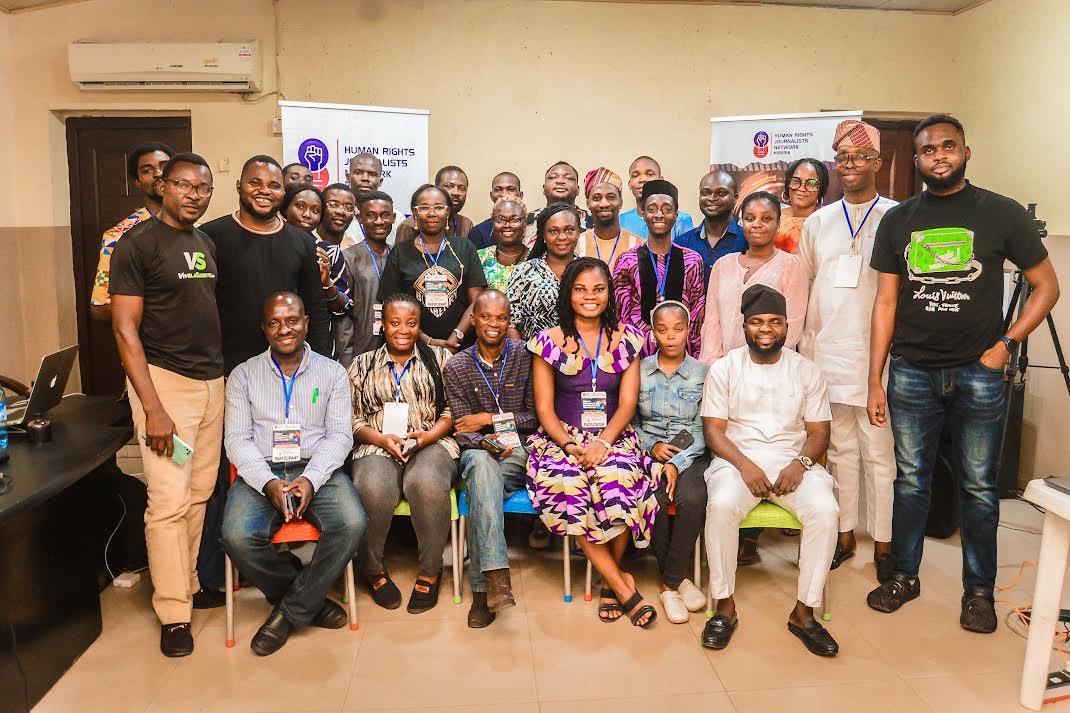
A diverse group of journalists, activists, and civil society organisations from across Africa convened in Lagos for a landmark two-day hybrid workshop organised by the Human Rights Journalists Network Nigeria (HRJN). With the rapidly evolving digital landscape presenting both opportunities and threats, the workshop, themed ‘Digital Security and Resilience’, aimed to enhance participants’ understanding of digital rights and cybersecurity practices, equipping them with the necessary tools to protect their work and themselves.
The workshop brought together a vibrant mix of participants eager to deepen their knowledge of digital security. The event kicked off with a keynote speech by Kehinde Adegboyega, the Executive Director of HRJN, who outlined the pressing need for journalists to safeguard their digital presence.
“As journalists, we are the first estate of the realm,” Adegboyega remarked. “We have seen journalists being attacked and harassed because of what they wrote. This workshop focuses on digital security and resilience, covering issues like state surveillance and how journalists can protect themselves.”
Over the course of two days, the workshop featured a series of engaging presentations and interactive sessions led by experts from various countries. One of the highlights was a lecture by Israel Olatunji Tunji, a renowned data scientist and the founder of ChatVE. Tunji’s session focused on key privacy and security principles in the digital space, as well as discussions on premium applications and other pressing cybersecurity issues. He emphasised the importance of adopting principles such as confidentiality, integrity, and availability to safeguard against digital threats.
“New threats are emerging, like zero-game vulnerabilities, where even platform owners are unaware of existing threats being exploited,” Tunji explained, stressing the need for constant vigilance and adaptation.
The workshop also delved into the practical aspects of digital security. Godstime Agho, Web and Program Digital Manager at HRJN, conducted a session on the importance of using strong passwords to protect devices, applications, social media accounts, and physical assets. He also introduced participants to Open-Source Intelligence Tools (OSINT), which can be leveraged to enhance digital security. Agho’s presentation underscored the significance of developing a comprehensive security plan, urging organisations to take proactive measures in protecting their digital assets.
Other News
Adding a layer of caution, Blessing Oladunjoye, HRJN Deputy Executive Director, shared insights on the vulnerabilities that arise from careless online activity. Through a series of demonstrations, Oladunjoye illustrated how media users can inadvertently expose themselves to risks by posting carelessly. She emphasised the importance of cautious and mindful digital behaviour, particularly for journalists who operate in high-risk environments.
Throughout the event, the participants engaged in lively discussions, sharing their experiences and challenges in navigating the digital landscape. These exchanges fostered a sense of solidarity and collective purpose, reinforcing the need for collaboration and mutual support among journalists and activists across Africa.
The workshop was made possible through the collaborative efforts of HRJN and several partner organisations, including the West African Civil Society Institute (WACSI), Citizens Gavel, Digitup TECH, ChatVE, BONews, and the Charles Stewart Mott Foundation. This partnership highlighted the shared commitment to promoting digital security and resilience in the region, providing participants with access to a wealth of resources and expertise.
At the conclusion of the workshop, feedback from the attendees was overwhelmingly positive. Seventy participants expressed that their expectations were not only met but exceeded, lauding the workshop for its practical insights and actionable strategies. Many emphasised the immediate applicability of the knowledge gained, expressing confidence in their ability to better protect themselves and their work in the digital sphere.
In a closing interview, Kehinde Adegboyega reflected on the workshop’s success, reiterating its vital role in empowering journalists to carry out their work safely and effectively. “Our goal was to help journalists understand how to protect themselves while carrying out their work, particularly in holding the government accountable,” Adegboyega stated. “We even have a partnership with an NGO that provides pro-bono support on litigation issues for journalists, reinforcing our commitment to supporting the journalistic community.”
As the workshop drew to a close, it became evident that the event was more than just a training session; it was a testament to the resilience and determination of journalists and activists dedicated to upholding the principles of freedom and accountability in an increasingly digital world. The shared insights and strengthened connections forged during the workshop promised to have a lasting impact, empowering participants to navigate the digital realm with confidence and resilience.