Follow Us on Google
By Adebowale Johnson
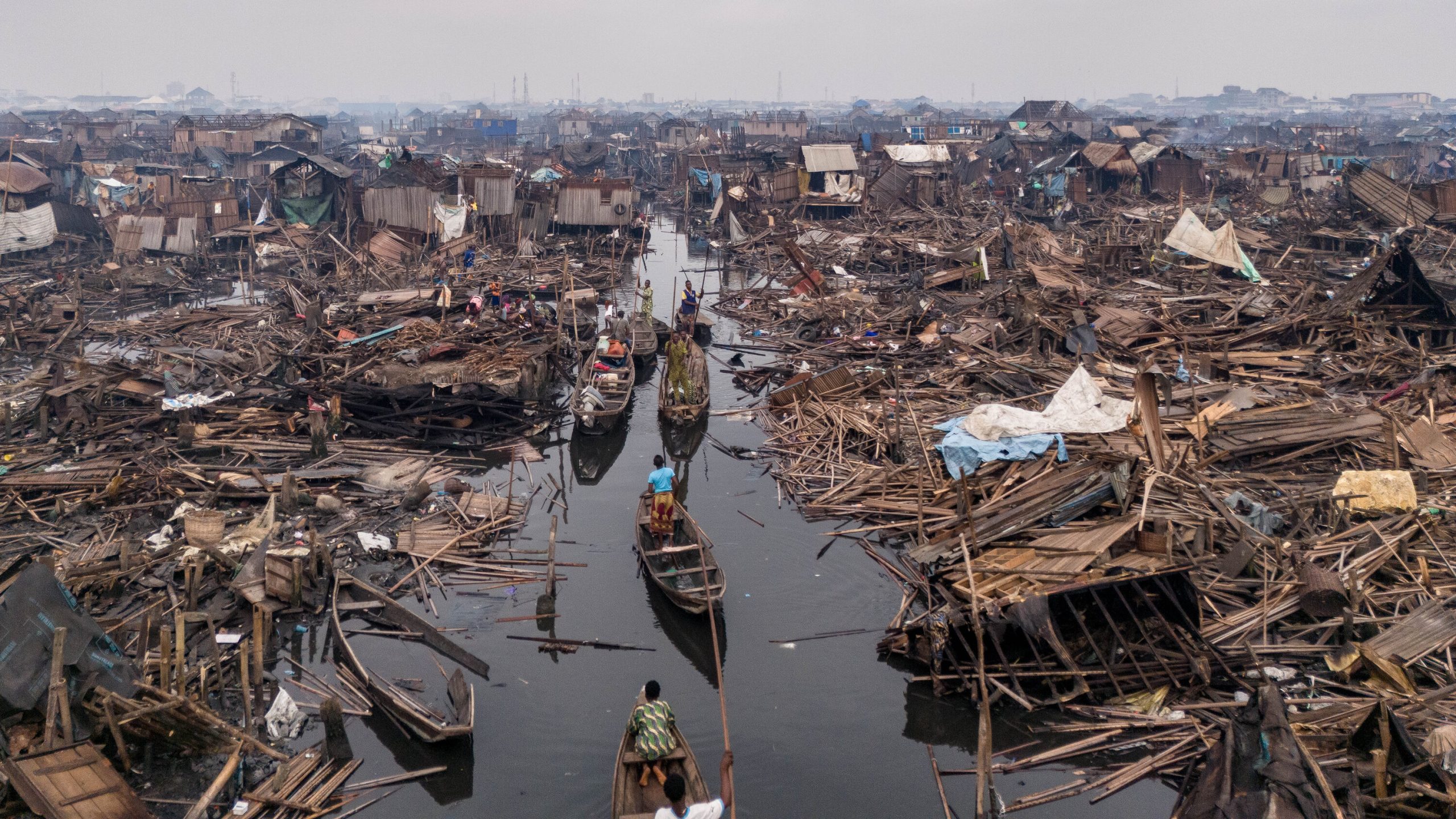
Makoko is regarded as the “Venice of Nigeria,” being one of the biggest floating settlements in the country. It is made up of houses on stilts that extend deep into the Lagos Lagoon.
But now the structures are being demolished and the residents rendered homeless after the government said there were sanitation and safety concerns. As someone noted, “the community had long existed at the intersection of survival and risk.”
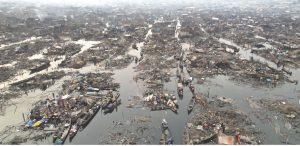
This is not the first time homes have been demolished in Makoko by the authorities in the past. The most recent was in 2017 before the bulldozers roared again two days to Christmas 2025 and continued into early 2026. As a result, thousands of residents now sleep in the open, pushing more people to the margins of society.
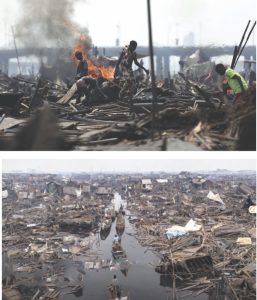

The demolition, which has been stopped, albeit temporarily, has reduced numerous stilt homes and businesses to rubble, creating widespread displacement. Images show scenes of destroyed, burnt and dismantled structures and businesses, particularly fishing and trading outfits, across the lagoon. These actions continue to raise urgent concerns regarding the future of residents and the community.
With the lagoon central to their lives, Makoko residents recently protested on the premises of the state House of Assembly against the move to force them out of the waterfront.
One of the placards they brandished during the protest was heart-touching. It stated: “We are now homeless, some are living on boats or in the ruins of our homes.”
The demolition drew the ire of many, who condemned it, particularly the allegation that the residents were teargassed. The images of displaced families and their suffering reminded one of mini-Gaza.
While critics described it as a “land-grab” by the state government to gentrify the prime waterfront in Lagos without adequate notice and proper compensation, the authorities are telling a different story. According to the state government, the issues bordered on safety, urban renewal and clearing of high-tension power lines.
Officials of the Lagos State government stated that the demolition was to curb environmental nuisance, security risks and to facilitate urban planning. They specifically mentioned inherent dangers because it was expanding near high voltage power lines, posing a major health and safety risk.
To put it differently, the officials of government insist that the intervention was not conceived as an act of hostility towards the poor nor as a prelude to elite redevelopment but as a safety-driven enforcement action tied to long-standing environmental and urban planning concerns.
At the centre of LASG’s justification for the demolition is a stark safety argument: no responsible authority can ignore settlements directly beneath high-tension electricity transmission lines or obstructing critical waterways. Sections of Makoko that were recently cleared, according to the government, fall within the statutory power-line setback corridor — a buffer zone designed to prevent catastrophic electrocution, if live cables fall or infrastructure fails. In a dense, water-based settlement where wooden structures stand over a conductive lagoon surface, the consequences of a fallen line could be mass casualties within minutes.
Government’s representatives have consistently framed the issue in these terms: prevention rather than reaction. Lagos has witnessed fatal incidents in other areas linked to electrical hazards, fallen cables, and fire outbreaks in tightly packed informal settlements where emergency response access is nearly impossible. From the state’s risk-management perspective, waiting for tragedy before acting would be indefensible.
Officials argue that Makoko was not singled out, but treated in line with broader enforcement efforts across Lagos to clear high-risk corridors. In their view, failing to act because the community is poor would amount to institutionalising a double standard in safety.
Makoko’s future has long been the subject of intense debate, with Lagos State authorities weighing options to balance urban development, public safety, and the preservation of the community’s unique way of life. Among the concepts considered were the shoreline extension, which would have pushed development further into the lagoon, and the “Water City” regeneration model, focused on upgrading the settlement in situ. Environmental assessments, however, ultimately ruled out the shoreline extension. Experts warned that extending into the lagoon could disrupt water flow, degrade fragile ecosystems, and threaten aquatic life, while international consultants cautioned against any approach that risked long-term ecological damage.
What remains is the Water City Project, a plan designed to improve Makoko from within, rather than displace it. The model prioritises upgrades to sanitation, drainage, housing quality, and access, while ensuring that the fishing-based economy that has sustained generations of residents remains intact. Government officials emphasise that the recent demolitions were strictly confined to safety corridors, with no overlap on the areas earmarked for regeneration, and reject claims that the exercise was a prelude to luxury real estate development.
Despite these assurances, skepticism persists among residents, many of whom see waterfront land as highly commercially valuable. The tension between opportunity and security is palpable. Yet, the state maintains that the Water City approach offers the only sustainable path forward: a vision that preserves Makoko’s identity while restructuring it into a safer, more resilient settlement. By addressing structural hazards, regulating waterways, and introducing incremental improvements, Lagos State presents a model that seeks to reconcile the community’s heritage with the imperatives of modern urban planning. Ultimately, the Water City Project is framed not as an erasure of Makoko but as a careful recalibration — an effort to safeguard lives, enhance living conditions, and retain the community’s cultural and economic heartbeat within the evolving landscape of Lagos.
At the heart of Lagos State’s defence of its recent interventions in Makoko is a financial commitment that underscores a stated focus on regeneration rather than demolition. Since 2021, the state government says it has earmarked $2 million for the planning and preliminary phases of Makoko’s redevelopment, with the expectation that the United Nations would contribute up to $8 million in counterpart funding. While global budgetary constraints have slowed disbursements, officials present the pledge as proof of a long-term, structured approach to transforming one of the city’s most complex settlements. The state is actively courting additional support from development partners and private organisations to bridge the funding gap, signalling that the initiative is far from ad hoc.
Central to this vision is the Water City concept, a framework that seeks to upgrade Makoko incrementally rather than displace its residents wholesale. The plan envisions structured housing layouts, safer building methods, regulated waterways, and improved sanitation and waste systems, all while safeguarding the fishing economy that underpins the community. From the government’s perspective, the recent demolitions were a painful but limited enforcement action, a precursor to a broader agenda rather than a substitute for it.
Other News
Makoko exists within a city growing by hundreds of thousands of residents each year, with formal housing supply lagging far behind demand. Informal settlements continue to expand into wetlands, waterfronts, and critical infrastructure corridors, heightening the stakes for public safety. The community’s encroachment toward the Third Mainland Bridge and major utility routes has intensified official concern, as planners warn that unregulated expansion in such zones significantly raises the risk of large-scale fires, structural collapses, electrocution incidents, flooding, water contamination, and blocked emergency access.
Government advisers argue that beyond immediate safety considerations, tolerating unsafe expansion risks complicity in preventable disasters. This tension defines the Makoko debate: balancing the right to shelter with the responsibility to prevent foreseeable, mass-casualty events. For Lagos State, the $10 million regeneration vision represents more than financial commitment; it is a statement of intent — to reimagine Makoko as a safer, more resilient, and sustainable settlement while preserving the social and economic fabric that has long defined the iconic lagoon community.
At the heart of the Lagos State Government’s justification for the recent intervention in Makoko is what officials describe as an unavoidable safety imperative. From the state’s standpoint, no responsible authority can knowingly permit human settlements to exist directly beneath high-tension electricity transmission lines or within corridors that obstruct critical waterways. The sections of Makoko affected by the demolition, the government insists, fall squarely within statutory power-line setback zones—buffers designed to prevent catastrophic loss of life in the event of infrastructure failure.
In a settlement built largely of wooden structures standing on stilts above a conductive lagoon surface, the risks are amplified. Officials warn that a fallen high-tension cable in such an environment could result in mass casualties within minutes. Advisers to Governor Babajide Sanwo-Olu have repeatedly framed the decision as an act of prevention rather than reaction, arguing that Lagos has already witnessed deadly incidents linked to fallen power lines, fires, and building collapses in other densely populated informal communities where emergency access is severely limited. From a risk-management perspective, they argue, waiting for tragedy before acting would have been indefensible.
The government also rejects claims that Makoko was singled out. According to officials, similar clearance exercises have been carried out in other parts of Lagos following fatal electrical incidents, and applying different standards because a community is poor would amount to institutionalising inequality in safety enforcement. These arguments were laid out at a press conference at the Bagauda Kaltho Press Centre, Alausa, by the Special Adviser to Governor Sanwo-Olu on eGIS and Urban Development, Dr. Olajide Babatunde.
Flanked by the Commissioner for Information and Strategy, Mr. Gbenga Omotoso, the Special Adviser on Media and Publicity, Mr. Gboyega Akosile, and other senior officials, Babatunde said the intervention was driven primarily by the need to protect lives in areas dangerously close to high-tension power infrastructure. “Clearing high-tension corridors is a safety requirement across Lagos State,” Babatunde said. “The action taken in Makoko is consistent with what has been done in other communities.” He stressed that the state remained committed to improving living conditions in vulnerable communities, while balancing development pressures with environmental protection and public safety. According to him, Makoko’s situation has been the subject of extensive planning debates for years, with multiple redevelopment options considered before the current approach emerged.
One such proposal—the shoreline extension plan—was eventually abandoned after environmental impact assessments raised red flags. Babatunde disclosed that studies conducted by technical experts, construction firms, and international partners warned that pushing development further into the lagoon could disrupt water flow, damage marine ecosystems, and degrade aquatic life. Those findings, he said, led the state to discontinue the plan entirely.
What remains, according to the government, is the Water City Project, a regeneration model designed to upgrade Makoko in situ. The project aims to improve sanitation, drainage, housing quality, and access, while preserving the fishing-based economy that defines the community. Officials insist that the recent demolitions are not linked to luxury real estate development or private commercial interests, noting that the cleared areas fall strictly within safety corridors and do not overlap with the designated footprint of the Water City scheme. “We need to do what we have to do,” Babatunde said. “If we don’t, then we are endangering the lives of the people. However, we need to do it in a systematic way. We have to do it according to international conventions.”
He revealed that the Sanwo-Olu administration committed $2 million in 2021 toward the redevelopment of the Makoko waterfront to meet international standards, with expectations of an additional $8 million in counterpart funding from the United Nations. While global funding constraints have slowed disbursements from donor agencies, Babatunde said the state was looking inward and appealing to international partners, donor organisations, and the private sector to support the project. “The United Nations delegation visited Makoko in 2021,” he said. “It is not an area we are joking with at all. It is an area where we want to do the needful and improve living standards.”
Babatunde also cited past regeneration efforts as evidence of the government’s approach. He pointed to the relocation of residents in Okobaba, Adeniji-Adele, and Dosunmu, which he said were achieved through consultation, negotiated agreements, and compensation. In Okobaba, he noted, residents were relocated to Agbowa, where the state provided hundreds of houses, large parcels of land, and equipment worth billions of naira. “We moved them without any noise,” he said. “We relocated them to a prime area and provided facilities they did not have before. This administration is very much interested in the welfare of the people.”
Beyond electricity hazards, Babatunde cited recurring fires, structural collapses, and the absence of access routes for emergency services in densely populated settlements as further justification for enforcing building codes, minimum setbacks, and land pooling in regeneration areas. Unsafe housing conditions, he argued, ultimately expose residents to greater danger. Commissioner for Information and Strategy, Mr. Gbenga Omotoso, addressed the protests that followed the demolitions, acknowledging citizens’ constitutional right to protest while cautioning against actions that infringe on public order. “Protest is a fundamental human right,” he said. “But it should not obstruct public roads or prevent people from accessing medical care or going about essential activities.” He added that emotions surrounding the Makoko issue were understandable, but urged the public to separate sentiment from facts. “People believed the demolition was anti-people,” Omotoso said. “People are entitled to their emotions, but there are facts and figures.”
The Lagos State government’s defence of its actions in Makoko also rests heavily on what it describes as a long-term financial and regeneration commitment rather than a demolition-first approach. Since 2021, officials say the state has earmarked $2 million toward planning and preparatory work for Makoko’s redevelopment, with the expectation that the United Nations would provide up to $8 million in counterpart funding. This $10 million regeneration vision, the government argues, underscores its claim that Makoko’s future is intended to be rebuilt, not erased.
That funding framework has, however, run into headwinds. Global donor priorities have shifted, and tighter budgets among multilateral agencies have slowed or stalled the anticipated inflow of international support. Even so, state officials present the initial financial commitment as evidence of intent. They insist the approach to Makoko has always been regeneration-oriented and that the state continues to engage development partners, donor agencies, and private organisations in an effort to bridge the financing gap.
Central to this vision is the Water City concept, which LASG frames as an incremental upgrade rather than wholesale displacement. The idea, according to planners, is to reorganise the settlement with safer building methods, structured housing layouts, improved sanitation and waste management systems, and regulated waterways, while preserving the fishing-based economy that sustains thousands of households. From the government’s perspective, the recent enforcement exercise is described as a painful but limited precursor to this broader upgrade agenda, not a substitute for it.
This argument unfolds against the backdrop of Lagos’ relentless population growth. The city adds hundreds of thousands of residents each year, while formal housing supply continues to lag far behind demand. In that vacuum, informal settlements inevitably expand into wetlands, waterfronts, and infrastructure corridors. Makoko’s steady growth toward the Third Mainland Bridge and major utility routes has heightened official anxiety. Urban planners within government warn that unregulated expansion in such high-risk zones dramatically increases the likelihood of large-scale fires, structural collapses, electrocution incidents, flooding, water contamination, and blocked access for emergency responders.
Government advisers argue that there is a point at which tolerance of unsafe expansion becomes complicity in a foreseeable disaster. This, they say, is the tension at the heart of the Makoko controversy: how to reconcile the right to shelter with the obligation of the state to prevent mass-casualty risks that are both visible and well documented. LASG maintains that consultations took place ahead of the intervention, involving government teams and advisers linked to international partners, including the United Nations. Community leaders and residents, however, dispute the adequacy of that engagement, arguing that warnings were either unclear or insufficient. Even where communication technically occurs, critics note that the quality, clarity, and timing of engagement often determine whether people feel respected or ambushed. In Makoko’s case, many residents say they received little notice and insufficient time to salvage belongings, reinforcing perceptions of official indifference.
Significantly, state lawmakers have acknowledged these procedural gaps. The Lagos State House of Assembly has since ordered a temporary halt to further demolitions in Makoko and neighbouring communities, calling for structured dialogue, transparency around enforcement taskforces, and a clear framework for compensation. That legislative intervention suggests an internal recognition within government that process matters as much as policy, particularly in communities with deep social and economic vulnerabilities.
On compensation, LASG says affected residents will receive financial relief and assistance, although details around enumeration, verification, and payment mechanisms are still being worked out. Officials point to previous regeneration and relocation exercises — including Okobaba, Adeniji-Adele, Dosunmu, and Pelewura — as precedents where negotiated resettlement and compensation were implemented. In Okobaba, for instance, sawmill operators were relocated to Agbowa, with housing, land, and operational facilities reportedly provided.
By highlighting these cases, the state seeks to counter the narrative that clearance equates to abandonment. Critics, however, caution that Makoko’s size, density, and water-based geography make any compensation or relocation exercise far more complex than past projects. Ultimately, the credibility of LASG’s position may rest less on official assurances and more on how transparently, fairly, and humanely compensation and regeneration commitments are carried out on the ground.
Following a stakeholders’ meeting at the Lagos State House of Assembly, the Leader of the House, Mr. Adams, announced a temporary halt to further demolitions in Makoko, Oko-Agbon, and Shogunro communities, pending further review. Reading out the Assembly’s resolution, he assured residents that compensation would be paid and that community representatives would be involved in subsequent processes. “So are you satisfied with the committee’s work?” Adams asked the gathering. The response, according to those present, was a thunderous chorus of “We are satisfied.”