Follow Us on Google

By Adewale Sanyaolu
President Bola Tinubu’s directive for the Nigerian National Petroleum Company Limited (NNPCL) to sell crude oil for local refining in naira has been lauded as a pivotal move by industry experts. The policy shift is seen as a bold step towards reinforcing the local economy and reducing Nigeria’s dependence on foreign exchange for essential resources.
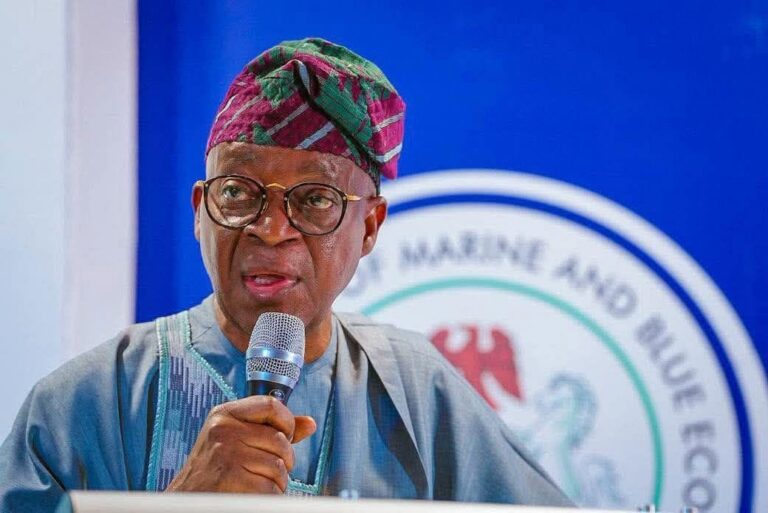
Anong those applauding Tinubu is a lawyer and energy consultant, Mr. Liborous Oshoma.
He charged Dangote Refinery to ensure refined petroleum products are supplied to the local markets in naira, if truly the country is to cut back on the humongous foreign exchange spend on importing products for local consumption.
Oshoma’s position was further reinforced by revelations made last week by the Minister of Finance and Coordinating Minister of the Economy, Wale Edun, that Nigeria currently spends $600 million monthly on fuel imports.
Like other experts, he believes the enormous expenditure has been a significant drain on the nation’s economy, exacerbating the pressure on foreign reserves and contributing to the naira’s ongoing depreciation.
In this interview, Oshoma said Dangote Refinery should equally give a soft landing to depot owners and other marketers by selling fuel to them in local currency in order to ease forex pressure.
Recent controversies in the petroleum sector
I think what is basically playing out here is like two friends quarreling over a pot of soup. You have a government that has been overly protective of Dangote but now feels he (Dangote) should play by the books, and then the man feels the government does not want to protect his $20bn investment in a country where others are stealing and taking the money away. Well, I believe that every government should be protective of its local industries. But at the same time, those industries should not be overly protected to the detriment of the smaller players. If the government is waking up now, kudos to them. We don’t want to create a monopoly. The government is not saying that they don’t want to protect Dangote, but they are saying the terms of business should not be the one that will create a monopoly. I have had the course to weigh the two and I asked, why is the government saying Dangote is creating a monopoly? In my research as a consultant to the energy sector, I know that no government would ever put its energy security in the hands of one man or one company. They try to create a balance. Unfortunately, Nigerian society is one with a herd mentality, where we like to support any person we feel is being deprived by the government because the government has consistently punished us. The same people abused Dangote months ago when a former CBN Governor, Godwin Emefiele, was arrested, but today, the tables have turned; the same Dangote is the darling of the people now. The people feel the regulators want to kill a local investment like Dangote Refinery. The government has said it doesn’t want to kill it. What it wants to do is to ensure that the same way we have Dangote, it also wants to have other people who have invested trillions of naira in the downstream sector, like members of the Depot and Petroleum Products Marketers Association of Nigeria and IPMAN. These are distributors and marketers, they are depot owners, and they should also survive alongside Dangote. If you put all of them under Dangote, that means you are putting your energy security in the hands of one man. What if the man wakes up one day and says I don’t have to give?
Depot owners, marketers ready to buy fuel from Dangote
Yes, but one would want to ask what’s stopping them from buying from him? Is it the Federal Government that is dictating to them to stop buying from Dangote? No! In June, for example, they (depot owners) met with Dangote, saying that it would be cheaper for them to buy products from Dangote Refinery, but the business model has to be competitive. They requested that the price disparity also be favourable for them because it would be cheaper than the imported product. Also, they talked about trucking or using vessels, and then they talked about foreign exchange. If you’re selling diesel in Nigeria, they have to be buying in naira, after all, they buy from the NNPC in naira. All of these issues were discussed, and Dangote agreed. But in the long run, it became business as usual; they had to source for forex if they wanted to buy diesel from Dangote. The issue of having to truck the product is there. For somebody that has a depot in Calabar, for example, how do you expect that person to truck 15,000 metric tonnes of fuel with about 606 trucks? This is something a small vessel can carry at once and take through the sea almost at next to nothing. Where are the roads that these 606 trucks will pass through? So, these are the challenges that the depot owners have raised, and that’s what led to this crisis.
And so, they complained because the Nigerian Midstream and Downstream Petroleum Regulatory Authority (NMDPRA) had stopped everybody from importing, saying they should go to Dangote. It was the complaint of DAPPMAN raising these challenges that led to the cancellation of that instruction. If Dangote’s product is competitive, naturally, the marketers will gravitate towards Dangote, and Nigeria will be better for it. But if the regulator says everybody should queue behind Dangote, what you’re doing is you’re also frustrating other people’s investments. You are enhancing Dangote’s business to the detriment of the depot owners.
Dangote investing in pipelines
I am not aware that Dangote is building pipelines. The question is, what is Dangote’s investment in pipelines before the refinery? How do you build a 650,000 barrels per day refinery without thinking of where you are going to get your crude from? We know that Dangote is using VLCC (very large crude carrier) to carry crude to his refinery. These are what commodity traders also use. Go and check, the world over, if you build a refinery, you should be able to pipe crude to the refinery; not just piping crude, you should also be able to pipe out refined products. How come today the people who are building refineries in Nigeria do not have a facility for piping? In Dangote’s case, you have to carry the crude oil from Niger Delta through the vessels because there are no pipelines. To take out the products also, there are no pipelines. So, what you have is everybody will come and truck. Dangote Refinery has a gantry that can load 3,000 trucks per day, which ordinarily should accommodate our national daily consumption. But the challenge for this national consumption is, how are you going to evacuate 3,000 trucks per day? Who fixes the roads? If you fix the road to the refinery, are you going to fix the one to Calabar, Abuja or Port Harcourt? The essence of all of this is to allow both the big players and the small players to play.
Monopoly allegation
I am not a regulator, but if the NMDPRA said the man wants to turn himself into a monopolist, we should find out why they are saying so. How will it be possible without the connivance of the NMDPRA? The regulator said Dangote is requesting the 450,000 crude oil available for local consumption and that he also wants to stop the issuance of import licences to depot owners. But the regulator said if it stopped issuing licences, that would naturally eliminate competition in the markets; that means the marketers wouldn’t have an alternative. So, they will be tied to the terms and conditions of Dangote. But if they have an alternative to import, they will negotiate with Dangote from a position of strength, not a position of weakness. That’s why the regulator is saying we don’t want you to turn to a monopolist. I truly believe that no regulator should allow a player to become a monopolist, especially in the energy sector, However, the idea of whether it’s 45 per cent complete, I don’t agree with the regulator on that.
Shortfall in crude oil supply
Remember the $3.3bn loan that we took from AFREXIM Bank? 90,000 barrels per day were tied to it. Mind you, we lie to ourselves; NNPC said oil production had increased to 1.7mbpd, and some said we are hovering between 1.2mbpd and 1.3mbpd. But in actual sense, if you do your research, we are likely hovering between 700bpd and 800bpd or maybe 1mbpd. As for the international oil companies, there is a sharing formula. So, you cannot compel them to sell their share of the oil. From the government share, after deducting the one meant for local consumption, whatever is left is where the government sources the forex from. So, if you now put the one meant for local consumption in the hands of Dangote refinery that is in a free trade zone, can you compel him to sell to the locals? Can you also control his price? What if he says his cost of production is higher than the government’s price? Are we not going to end up paying a subsidy to one man?
But marketers already said the landing cost of petrol is now N1,117 per litre, yes, but we are still paying subsidies; nobody should be deceived.
Is it possible to sell below the cost of production?
I’m not talking about PMS now; we’re talking about diesel. Dangote is producing in Nigeria, yet he’s not selling to the marketers in naira; he’s selling to them in dollars. I have spoken to some of them; apart from a very few buying in naira, others will have to source for forex. That is one of the points of disagreement between Dangote and DAPPMAN. Another area of disagreement is the costs of selling for exports and the cost of selling for local companies. These are the disparities.
Other News
Allegation of NNPC trying to stifle competition
This statement is laughable, or at best, ridiculous. How can the NNPC stifle any competitor in the refining business or any other sector when it is the major advocate for the revamp of local refining? While NNPC was rehabilitating its refineries in Port Harcourt, Warri, and Kaduna, it made a deliberate commercial decision to invest in the Dangote Refinery. The same people who criticised NNPC’s decision at the time are now supporting Dangote. NNPC borrowed $1bn paid directly to Dangote refinery. We can reliably confirm that NNPC has allocated over 35 cargoes of crude to the Dangote refinery. Dangote has received about 23, rejected 2 based on pricing, and is currently negotiating pricing on at least nine cargoes. The Dangote refinery has received a discount of close to $1 per barrel, saving up to $30m in discounts. What else does he want? Is he selling cheaper to Nigerians? The answer is no. He wants to underprice the crude and overprice the product.
NNPC’s effort
Like I know, the NNPC has entered into several partnerships with private companies to enhance in-country refining. One of such partnership is our stake in the Dangote refinery. We have also signed a contract with African Refinery Port Harcourt Limited to build a 100,000 barrels per day refinery within the Port Harcourt Refinery and Petrochemical Complex in Rivers State. There are several other agreements with other private and modular refineries. Once these partnerships materialise, we are confident that Nigeria will become a net exporter of petroleum products.
Meeting depot owners, marketers
Yes, because before the war, there was a table, and after the war, there will always be a table. So, I think for it to be a win-win situation for all of them, some people should come down from their high horses. It is going to be a win for Dangote because whether you like it or not, he will soon start producing PMS and the refinery has the world as a market. It will be detrimental to him to start fighting his local regulators now, and that will give the international companies an edge. But if he sits down with his local distributors, marketers and the local regulators and if he fine-tunes his business model and there is a meeting point, it will be good for all. Dangote should consistently engage depot owners and marketers. He should touch up his business model. He should give concessions to some of them to buy in naira. And then, this idea of everybody trucking can’t work. Some people will have to use smaller vessels. He will have to make allowances for all of that. And this idea of saying that everybody should import is not going to work also.
Importing alongside Dangote Refinery
Let me tell you, with the magnitude of investment put in place by Dangote refinery, if he has crude to run the refinery at 100 per cent capacity, there will be a market for it. And if the price is right, people will naturally gravitate to him. You won’t force people to go do it. As a trader, for example, you buy from where it’s cheap and comfortable for you so that you can also make money; but in a situation where you force everybody to go to Dangote because the investment is huge, and then you get there, you create another set of middlemen who sell at higher prices, that will not be good.
Although I salute Dangote’s business ambitions. But for a 650,000 barrels per day refinery in a Lagos environment where you do not have crude oil, there are no pipelines to run crude to that refinery, it is ambitious. And then, if you’re going to get crude to run the refinery, you don’t force people. It has to be a give-and-take. From what I gathered, the government said it had supplied Dangote with about 36 cargoes of crude oil. We are discussing energy in Nigeria; we’re not discussing it at the surface level; this is information you can fact-check and verify. The allegation is that the cost of sale to Dangote is at a discount because the government also wants to encourage him. So, what I expect Dangote to do is to tailor his business model to adapt it to the local environment, and gradually, it will begin to gravitate, and before you know it, he will control the market in West Africa. Once you start to control the market, the monopoly that they are accusing you of, you end up in it, but it has to be a gradual process. You can’t flog and browbeat everybody into supporting and buying or selling to you at the price that you will determine, which is what the IOCs are saying that their price must be at their terms.
Does Nigeria want an end to fuel importation?
If the government did want an end to fuel importation, the Federal Government would not have supported the Dangote refinery in the first place. It’s a notorious fact that the Federal Government even invested in it. My problem is, why will the government invest N1.7bn in a private refinery when the government refinery is not working? So, another question is, who is making the government refinery not work? If you search very well, they are the people who would benefit if the refinery is not working; I don’t want to call names. I like this fight between Dangote and the Federal Government because the romance is over, and a lot of things said in the bedroom where our commonwealth was used for dinner and lunch will be revealed. So, the first step should be that the government needs to conduct a forensic audit of Dangote, NNPC and CBN transactions. It is when we start this that names will come up, and Nigerians will know the truth.
The way out
The thing is, every country protects their indigenous investors. They will create laws to protect them, no matter how big or small. So, you can’t protect the big ones to the detriment of the small ones. The way out of this is for the government to protect Dangote, the depot owners and the marketers. There should be an agreement to agree and an agreement to disagree. People should be ready to give concessions. If the market is not competitive, there should be a window for importation, but if the market is competitive, even if that window for importation is there, people would rather go buy locally because it will save costs. So, let’s leave that window until the market is ripe. You don’t just start a refinery and then immediately ask the entire country to shut down and face you. It is not done. The way out of this is to let everybody shift their grounds and let the regulator be firm. If they have been giving concessions before now to one man, let them extend the concessions to everybody.
Dangote’s allegation of IOCs sabotage
The crude legally belongs to the IOCs. It’s based on the profit-sharing arrangement between them and the government through joint ventures. So, whatever they produce, the government cannot force them to sell to Dangote. Even though there are price benchmarks, the government cannot force the IOCs to sell. The fact that the government is also selling at a particular price does not mean that the IOCs will sell at that price.
But there is a domestic crude supply obligation that gives priority to local refineries
Yes, but the domestic supply obligation does not mean that you should sell it at the giveaway price or below the cost price.
IOCs using middlemen
Is the Dangote refinery not using a trading agent? Is he not selling AGO through MRS? Is that not a middleman? In the same vein, these IOCs also have trading agents or companies that are making trillions of dollars. This problem we are having is because the crude is not enough. Saudi Aramco is making up to 10mbpd. We are struggling with one million, that’s why there are complaints. If we have enough crude, there will be no need for all of these long stories.
Advice
Whatever goes up must come down. Parties should sheath their sword. The government should also find a way of meeting both parties at a middle ground or parties should meet and agree on the ways to move forward in the interest of their businesses. Dangote should also have it at the back of his mind that he has pumped money into that business, and he’s at the end of the day, head or tail, win or lose, he would be the better for it. There are some things you won’t tolerate as a businessman, but you should take them now because you have an investment on the ground. The Federal Government should have it at the back of its mind that Dangote is a big businessman here. So, in protecting him and while ensuring a level playing ground for all parties, they should also give him some little form of concessions. You can’t give him the same terms they are giving to the depot owners. The regulator should also stand firm and should not throw caution into the wind, which is what they’re presently doing. It shouldn’t be so.