Follow Us on Google

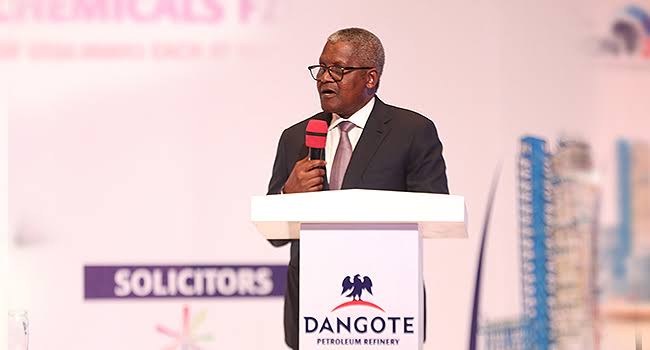
The marketing of Dangote Refinery shares in markets, bus stops and other public spaces has raised questions about investor education, the conduct of promoters and the risks facing Nigerians who may be buying shares for the first time.
Although the approach is not entirely new, it has drawn renewed attention during the ongoing initial public offering (IPO) of Dangote Refinery. Marketers have been sighted using vans to promote the share offer around Tejuosho Market and other commercial centres and public spaces. While the strategy could broaden awareness of the capital market and attract first-time investors, it also raises concerns about the adequacy of investor education, public understanding of investment risks and the need to ensure that subscriptions are made only through authorised channels.
National Coordinator of the Pragmatic Shareholders Association, Bisi Bakare, however, sees the campaign as an opportunity to rebuild investor confidence and expand participation in the market.
“As a shareholder, I believe this type of marketing demonstrates the desire to bring back lost investors’ confidence in the market, make the offer more inclusive in nature and broaden the shareholder base beyond Nigeria while targeting over new 10 million retail investors into the market. This no doubt is wholesome, innovative & a test run for more investors education, and social media creativity,” she said.
David Adonri, President of HighCap Securities, explained that responsibility for marketing public offers rests principally with the issuing house, while receiving agents handle distribution, with sub-agents helping to reach more prospective investors. “The marketing of Public Issues like Dangote Refinery IPO is principally the responsibility of the Issuing House while the distribution is the responsibility of the receiving agents. Sub-Agents also assist Agents to reach the investing public,” he said.
His explanation provides context for the use of multiple channels to promote the offer, including public spaces. However, the involvement of intermediaries also raises questions about how prospective investors can establish whether those approaching them are authorised to market the shares and whether the information they provide is accurate.
Adonri said investors had several channels through which they could verify information about the offer and obtain guidance before making investment decisions. “They can contact their Stockbrokers, SEC, NGX and the Issuing House for clarifications and guidance,” he said.
Boniface Okezie of the Progressive Shareholders Association of Nigeria questioned the circumstances surrounding the marketing strategy and pointed to the financial difficulties facing many Nigerians.
Okezie said he was unsure of the reasoning behind the strategy, which he described as a departure from conventional approaches to marketing shares in Nigeria.
“I don’t know what inform such marketing strategy best known to the issuing house, but for me it is new to the system,” he said, adding that the public interest in the refinery and the offer might have influenced the decision to take the campaign to public spaces.
He also questioned whether the level of interest had translated into sufficient participation, citing the extension of the offer period and the financial pressures confronting households.
“If that is good enough there will be no need to extend the offer from the initial closure of its early announcement,” he said.
Okezie added that many Nigerians were struggling to meet basic needs and might prioritise feeding their families over investing in shares.
The President of Dangote Group, Aliko Dangote, however, had clarified that the extension was aimed at widening participation across the continent rather than raising additional funds.
“We will extend the closing date because we want more of our African brothers and sisters to participate. Following our discussions with the Nairobi Stock Exchange, we have identified what we believe is the best way to facilitate participation. We are now trying to replicate that arrangement with other African exchanges to ensure wider participation. So, it is not about the amount of money. It is about the number of people who will have the opportunity to participate in this offer. That means quite a lot to us,” he said.
Other News
Shares represent ownership in a company, but their prices can rise or fall depending on the company’s performance, market conditions and investors’ expectations. Dividends are not guaranteed, and investors may lose part or all of the money they commit. These are important considerations for people who may be attracted to the offer because of the ‘Dangote’ name without having previous experience of investing in equities.
Adonri also stressed the importance of understanding the process of investing before subscribing to shares, advising prospective investors to consult stockbrokers and ensure that their holdings are properly documented.
“Investors should seek understanding by contacting Stockbrokers before investing in stocks. It is important for every investor to open a CSCS Account before buying shares both in the primary and secondary markets,” he said.
A Central Securities Clearing System (CSCS) account is used to hold and track an investor’s securities electronically. Ensuring that shares are recorded in the investor’s name is an important part of protecting ownership and monitoring investments.
One of the key issues, therefore, is the identity of the people marketing the shares in markets, bus stops and other public spaces. Are they representatives of registered capital market operators, authorised agents or individuals acting independently? What training have they received, and who supervises the information they provide to prospective investors?
Street-level marketing does not, by itself, establish wrongdoing. However, prospective investors need to be able to distinguish authorised representatives from people who may be acting without approval. The availability of verification channels, as Adonri noted, makes it important for investors to confirm information independently rather than rely solely on claims made by promoters.
The Securities and Exchange Commission (SEC) has advised prospective investors to use approved subscription channels, verify the authenticity of websites and platforms, read the offer prospectus and avoid transferring money to unauthorised persons or entities.
The existence of an approved public offer does not mean that every person claiming to represent it is authorised to receive subscription funds or process applications. The question is whether the arrangements for the campaign provide sufficient safeguards against misleading information, unauthorised transactions and unrealistic promises.
Another concern is whether prospective investors understand the risks associated with buying shares.
The Dangote name is widely recognised in Nigeria, and this may attract people who have never invested in the stock market. However, the reputation of a company or its owner does not guarantee that its shares will rise in value.
Bakare does not believe aggressive marketing will necessarily create unrealistic expectations. She said the offer carries risks like other businesses and urged prospective investors to seek professional guidance before committing their money.
“Every business has its own potential risk. Therefore Dangote refinery is no exception. It has its own forecast, future cash flow & expected projected returns. In a way to minimize risk, investors are advised to contact their stock brokers & financial advisers before investing. Therefore I don’t believe the aggressive marketing will create unrealistic expectations but it is aimed at having a wider capital market big enough for everyone irrespective of your age, profession, sex, colour or region to come and enjoy the cake,” she said.
The broader issue becomes more serious when the source of subscription funds is considered. Some prospective investors may be considering using personal savings or business funds, while others could be tempted to borrow in the hope that future gains will enable them to repay the debt.
For this reason, investor education needs to go beyond explaining how to subscribe. Prospective investors should also understand how to monitor their holdings, why share prices fluctuate and the difference between dividends and gains made by selling shares at a higher price.
They also need to verify the identity of those marketing the offer, use authorised channels and seek independent professional guidance where necessary. If an investor receives misleading information from someone claiming to represent the offer, the person may blame the company even if the promoter was not authorised to act on its behalf. Such experiences could also influence the person’s willingness to invest in other listed companies.