Follow Us on Google
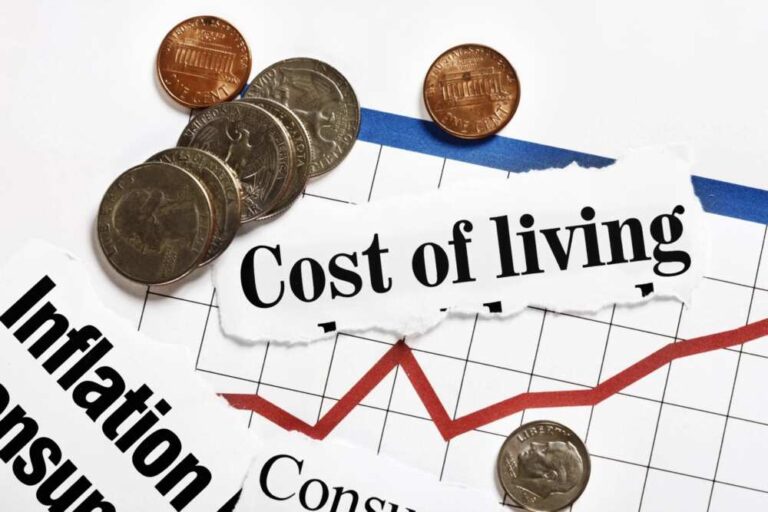
The Consumer Price Index (CPI) has shown that inflation rate for the month of August reached an unprecedented 29-month high to 13.22 per cent from the previous rate of 12.82 per cent in July 2020. The last time Nigeria’s inflation was as high as that was in March 2018 when the CPI hit 13.34 per cent. The worry is that the current inflationary headwinds may subsist till December, an upward movement that has been confirmed by the Governor of the Central Bank of Nigeria (CBN), Godwin Emefiele, and other experts on the economy.
The CBN governor predicts that headline inflation will reach 14.15 per cent by December, when the effect of agricultural produce harvest will begin to show. Data from the CPI report showed that the food category recorded 17.3 per cent to emerge as the item with the highest price increase in the year. This is not good news for consumers of foodstuff.
According to the National Bureau of Statistics (NBS), increases were recorded in all categories that yielded the headline index. The prices of imported foods rose to 16.6 per cent. Analysis of the data indicates that on a month-on-month basis, the headline index increased to 1.34 per cent in August. This represents 0.09 per cent higher than the1.25 per cent rate recorded in July. Similarly, urban inflation rate increased to 13.83 per cent (year-on-year) in August from the 13.40 per cent recorded in July, while rural inflation rose to 12.65 per cent in August from 12.28 per cent in July.
In real terms, on a month-on-month basis, the urban index rose to 1.42 per cent in August, up by 0.15 from 1.27 per cent recorded in July. The NBS report also revealed an increase in composite food index in the month under review. Besides, the NBS report showed that on year-on-year basis, inflation was highest in Bauchi (15.77 per cent), Ebonyi and Yobe (14.71 per cent), while Lagos (11.45 per cent), Kwara (11.22 per cent) and Abuja (11.17 per cent) recorded the lowest rise in headline year-on-year inflation. However, on month-on-month basis, prices of foodstuff were reported highest in Ondo (2.20 per cent), Ogun (2.07 per cent), and Abia (1.87 per cent), while Plateau (0.72 per cent), Zamfara (0.60 per cent) and Sokoto (0.54 per cent) recorded the lowest rise in headline month-on-month inflation.
It is sad that the presidency is oblivious of the rising food prices even when the Minister of Finance, Budget and National Planning, Mrs. Zainab Ahmed, admitted publicly that, indeed, food prices are on the increase. It should be noted that presidential aide, Garba Shehu, had in a recent television programme opined that prices of foodstuff were on the decline. He claimed that a report of the National Food Security Council which surveyed the markets showed that food prices were on decline. However, when the government finally admitted that food prices are on the rise, it blamed it on bulk purchases arising from the COVID-19 pandemic. The flip-flop on the issue is regrettable. It is good that the government has admitted the soaring prices of food items. But, it should go a step further to check inflation and rising food prices.
It is not difficult to see where the inflation and soaring food prices are coming from. The economy is still reeling from the negative impact of COVID-19 pandemic on the food supply chain. This is worsened by the continued border closure, increase in Value Added Tax (VAT), electricity and petrol price hikes, stamp duties and the recent upward exchange rate adjustments by the CBN to ease pressure on the market. The fiscal and monetary policy measures have had their toll on food prices. Added to this is the worsening insecurity across the country that has adversely affected farm produce. Therefore, government should do more to tackle insecurity so that farmers can return to farms. In addition, there must be a deliberate policy to promote large-scale mechanised agriculture.
Government should address the remote and immediate causes of the current increase in the prices of food items. Failure to urgently resolve the problem might lead to dire consequences. Considering the nation’s increasing population and the volatility in prices of crude oil in the international market, efforts to boost food production ought to attract more funds at low interest rates as well as the support of private investors. While we appreciate the various interventions by the CBN in agriculture, we also advise that more should be done to reduce inflation and rising prices of food items.
Curbing inflation and rising food prices
26 September 2020 2:36 am WAT
 By
Rapheal
By
Rapheal

Stay connected with The Sun Newspaper
Get breaking news, exclusive stories, and live updates delivered straight to your phone. Join thousands of readers already following us on Whatsapp Channel and Telegram.
Stay connected with The Sun Newspaper
Get breaking news, exclusive stories, and live updates delivered straight to your phone. Join thousands of readers already following us on Whatsapp Channel and Telegram.
Latest News

Nigeria, São Tomé to strengthen ties — Matawalle
4th September 2026

NSCDC rescues 15 trafficked minors, recovers service rifles
4th September 2026



Nigeria, Ethiopia use tree planting to strengthen African ties
4th September 2026