Follow Us on Google
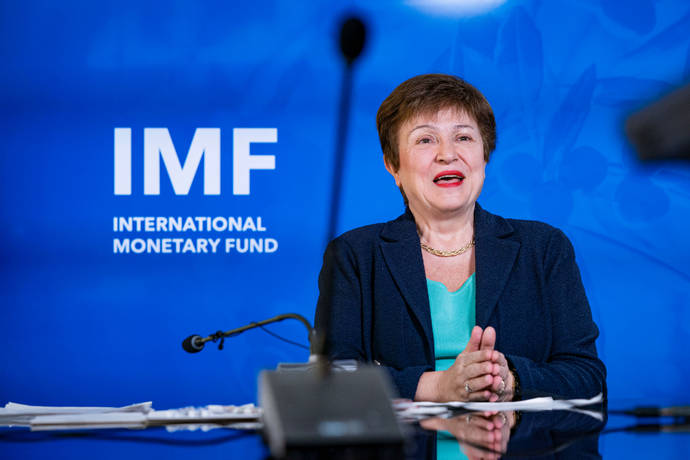
The Managing Director of the International Monetary Fund (IMF), Ms. Kristalina Georgieva, at the 2025 Annual meetings of the IMF and the World Bank in Washington DC, United States, decried illicit financial flows (IFFs) out of Nigeria. She noted that the menace is worsening Nigeria’s revenue problem and called for renewed focus on tracing such flows and plug all fiscal leakages. Though Nigeria was not the only developing economy fingered in the ‘dirty’ money outflows, the IMF boss observed that in the case of Nigeria, the problem appears to have grown bigger and, therefore, requires a blueprint that will plug the numerous fiscal leakages that undermine revenue collection, sustainable growth and financial stability of nations across the globe.
The enormity of the problem is disturbing. It also threatens the survival of the economy. We bemoan the recurring illicit financial flows in the country. Capital flight including oil theft has led to the loss of $18billion every year. This represents about 20 per cent of the estimated $50billion that Africa loses annually to illicit financial flows. Experts say that the menace is caused by corruption, tax evasion by multinational corporations and wealth extraction from developing nations.
Undoubtedly, these outflows drain the country’s public resources, foreign exchange, worsen poverty and underdevelopment and hinder economic growth. Recovering these assets and strengthening governance will rebuild the nation’s economy. We also agree with a recent finding by the World Bank that illicit financial flows now come in “multiple dimensions” that range from outright embezzlement of taxpayers’ money, to private funds channeled into illegal ventures that threaten the welfare of the citizens.
Last year, the vice president of the International Police Organisation (Interpol), Mr Garba Umar, noted that “hundreds of thousands of dollars are being laundered out of Nigeria every hour” without a trace. He made the disclosure at the inauguration of a training workshop for academy personnel of the Economic and Financial Crimes Commission (EFCC) in Abuja. He stated that based on the evidence at the disposal of Interpol, “Nigeria has become a transit country of illicit money laundering to other African countries and across the world.” He cautioned that the proceeds of the dirty funds could be used by criminals to destabilise the economy and the country.” The warning should be heeded. All relevant agencies should double their efforts to curb illicit financial flows. Unfortunately, the Nigerian banking sector accounted for an estimated $854billion of illicit cash flows in Africa between 1971 and 2009. This figure is believed to be rising steadily at an average of 12 per cent in the last ten years, and has contributed to the present slow economic growth and development of the economy.
According to a recent study by Afrinvest, Nigeria’s public debt stock may soon hit N130trillion as a result of illicit financial flows and other fiscal and monetary policy challenges. This raises some concerns about Nigeria’s debt-to-domestic product ratio. If the situation is not swiftly checked, Nigeria may be “vulnerable to more crimes, more drugs, more fraud, more corruption and more violence.” No country can make sustainable progress with illicit cash flows.
Other News
The government should use strategic plans by IMF, the World Bank, and Interpol to curtail the menace. One of these is what Interpol calls “silver note.” It is used to combat money laundering in Africa and globally. The Central Bank of Nigeria (CBN) needs to tighten all loose ends in the banking industry that enable the perpetrators of the crime to carry out their nefarious activities. Let the CBN work in concert with the EFCC and National Drug Law Enforcement Agency (NDLEA) to stem the tide. The barons of illicit financial flows must be investigated and prosecuted. The federal government must wage a relentless and coordinated war against the menace.
It has contributed to the escalation of poverty in the country. About 60 international tax havens and secret jurisdictions were recently identified across the world as conduits for illicit financial transactions. There are hundreds of others disguised as shell companies, anonymous trust accounts, fake charitable foundations, money laundering and transfer pricing mechanism. In 2015, a panel report by African Union (AU) disclosed that about $50billion illicit funds leave the African continent annually.
Of this amount, the report showed that $2.5billion was as a result of illegal commercial activities. By 2022-2023, the loss amounted to $88billion annually. This represents 3.7 per cent of the continent’s Gross Domestic Product (GDP). This has been confirmed in a report by the United Nations Conference on Trade and Development (UNCTAD). The report stated that Nigeria’s economic predicament stems largely from the fact that the federal government has not been tackling illicit financial flows as it should. Financial malfeasance in some Ministries, Departments and Agencies (MDAs) has worsened the matter.
Similarly, the Global Financial Integrity (GFI) has blamed Nigerian banks for the menace. The Nigeria Extractive Industries Transparency Initiative (NEITI) has also confirmed the illicit financial flows in our financial institutions. To curb the menace, we call for new strategies to tackle the recurring financial flows.