Follow Us on Google
• Bencosme of Dominican Republic emerges as chair of CSW71
__________
From Juliana Taiwo-Obalonye, New York
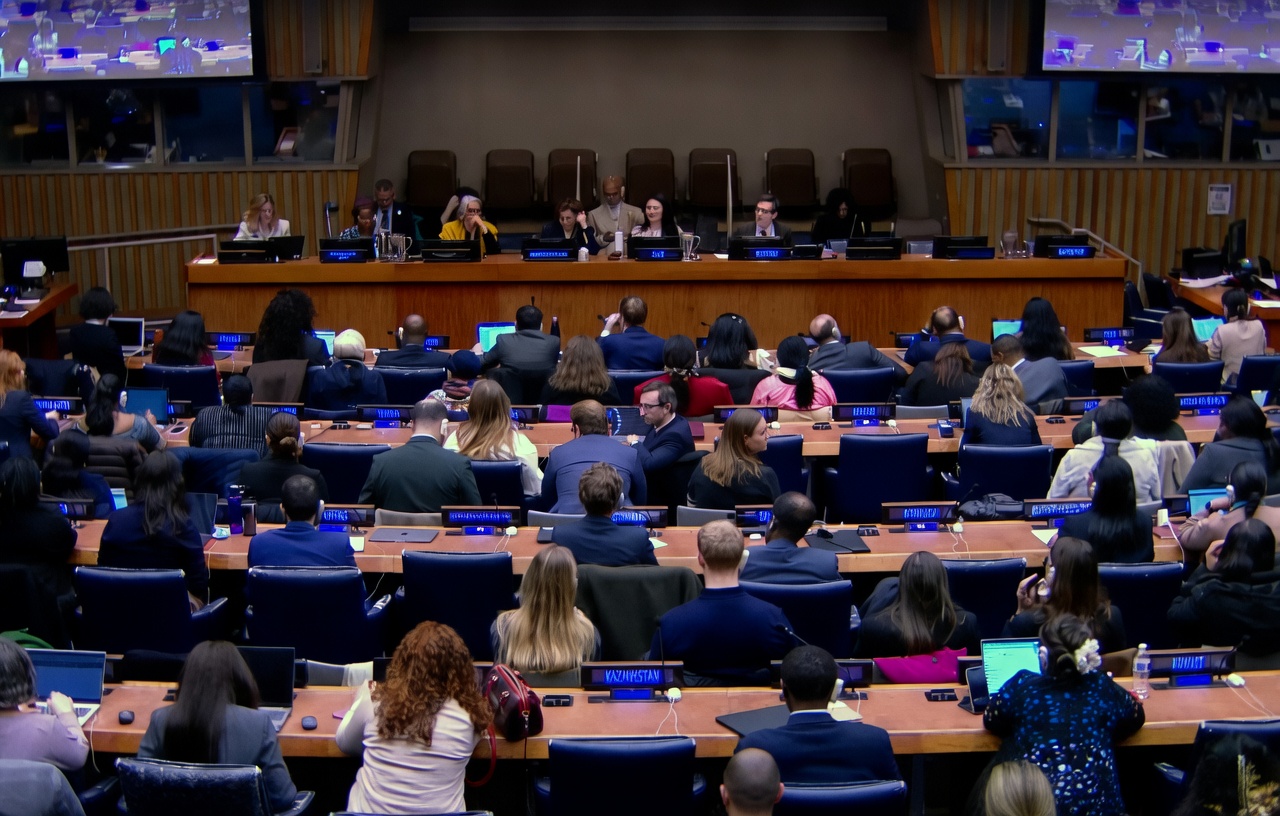
The 70th session of the United Nations Commission on the Status of Women (CSW70) closed at 12:22 p.m. on Thursday, March 19, 2026, at UN Headquarters, immediately pivoting to launch the 71st session with the acclamation of new officers—signalling fresh momentum for gender justice even as stark warnings echoed about stalled Sustainable Development Goal (SDG) progress.
Sima Bahous’ powerful CSW70 send-off
UN Under-Secretary-General and UN Women Executive Director, Sima Bahous, delivered stirring closing remarks, asserting, “The headwinds are strong, but our shared resolve to advance women’s rights is stronger.” She praised the session’s vibrant energy from delegates and civil society, stating, “As always, this Commission on the Status of Women (CSW) sent a strong message to the women and girls of the world: their right to justice matters, and discriminatory laws and practices have no place in legal systems, policies or institutions.”
Bahous lauded the CSW70 Bureau—Chair Ambassador Maritza Chan Valverde and Vice-Chairs Ms Andreea Mocanu (Romania), Ms Samah Dbouk (Lebanon), Mr Noah Oehri (Liechtenstein), and Ms Flavia Umulisa (Rwanda)—for steering “the first session of the revitalised CSW” under ECOSOC (Economic and Social Council) resolution 2026/2.
“You have done this, in the face of many challenges, because of our shared belief in one fundamental truth: gender equality and women’s rights are the foundation on which our peace, security, economic prosperity and sustainable development ambitions rely,” she highlighted.
The historic Agreed Conclusions, adopted by majority vote, centred on women’s access to justice, urging the repeal of discriminatory laws on child marriage, family, and property rights. Breakthroughs included recognition of “community justice workers and paralegals” as key actors, women in detention, and “gender-responsive transitional and international justice mechanisms.”
Bahous highlighted, “You have urged governments to review discriminatory laws… and to strengthen measures to prevent and respond to violence against women and girls, both online and offline. You emphasized the need for accountability for perpetrators and timely and trauma-informed access to justice and support services for survivors.”
Other News
CSW70 drew unprecedented participation from 190 Member States—including two Heads of State or Government, one Vice President, five Deputy Prime Ministers, and 75 ministers—alongside 4,600 NGO representatives and 255 side events.
The session rolled out fresh innovations: a multi-stakeholder hearing, a high-level meeting on violence against women and girls featuring over 80 ministers, and a dedicated roundtable on older women’s rights.
UN Women Executive Director Sima Bahous zeroed in on crisis zones, declaring, “Our collective focus must remain on the women and girls across crisis contexts. They pay the highest price, from Afghanistan to Gaza, the Democratic Republic of Congo, Haiti, Myanmar, Ukraine, South Sudan, Sudan, Somalia, and as we speak now, across the Middle East.”
In a seamless transition, the Commission opened CSW71, electing Wellington Bencosme (Dominican Republic) as Chair by acclamation. “The promotion of gender equality and the full participation of women in decision-making spaces is more than just a commitment of State. It is a question of profoundly held principles that are rooted in the lessons we have learned throughout our own history,” Bencosme declared, invoking heroine Minerva Mirabal: “She reminds us that defending the rights of women is not just a question of equality but a collective commitment we have in combating all forms of violence, including political violence in online digital spaces.”
Vice-Chairs elected were Ligia Mavale (Mozambique) and Bayarsaikhan Altankhuyag (Mongolia), joining Andreea Mocanu (Romania) and Noah Oehri (Liechtenstein). Ukraine was appointed to the Working Group on Communications, with African, Asia-Pacific, and Latin American/Caribbean slots deferred for full participation upon nomination. This diverse bureau promises robust leadership for CSW71’s priority theme: assessing gender equality and human rights across the SDGs.
Bahous issued a dire SDG alert: “With 2030 approaching, no Goal 5 indicators have been fully met.” CSW71 will “review progress on the SDGs, identify required actions and accelerators to sustain momentum and advance the Beijing Platform for Action,” focusing on women’s public participation and the elimination of violence. She rallied, “As we leave this room, let us carry forward the voices, the evidence, and the urgency that shaped this session. The world is watching. Women and girls are counting on all of us. And together, we must – and we will – deliver.”
Bahous closed optimistically, expressing hope for a female Secretary-General next year and extending Eid al-Fitr wishes: “May it bring with it peace and hope for everyone.” UN Women’s “unwavering commitment… will remain the unshakeable ground on which we stand,” she vowed.