Follow Us on Google

From Magnus Eze, who was in Calabar
Stakeholders in the media, civil society and Nigeria’s election management system are disturbed by the challenge posed by disinformation and misinformation ahead of the 2023 general election. They agreed that the electoral process may be frustrated, if the prevalence of fake news is not curbed.
There is also the challenge of the powers that be, especially the state governors and their agents, abridging the electioneering space for their political opponents. Some governors have, through proclamation of executive orders, practically barred opposition parties and politicians from campaigning by not allowing them use of public facilities for rallies.
Also, agents of government in power in some states move against political opponents and would not even allow them mount their billboards; they use their signage agencies to slam them with exorbitant charges. Such campaign materials are either destroyed or confiscated just as the opposition would not be allowed space in the state-owned media, be it newspaper, radio or television.
Communications officer of the International Press Centre (IPC), Ms. Olutoyin Ayoade, said: “If the spread of fake news in the electoral process is left unchecked, it could deny the voters the opportunity to make informed choices at the polls while it may also induce hate speech and electoral violence.
“As observed during the Nigeria 2019 elections, fake news can be potentially weaponized, if appropriate measures are not properly established to tackle it.
To this end, there has been call for the media to provide fair, accurate, ethical and inclusive coverage of the electoral process in order to expand the civic space.
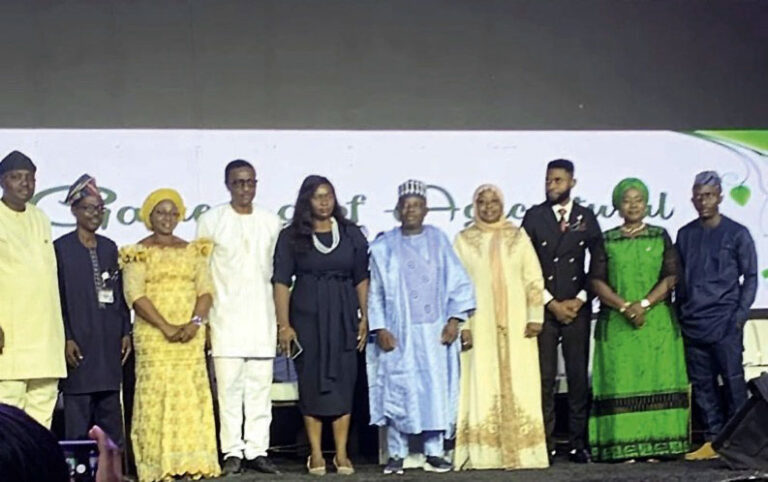
These formed the philosophical underpinning of a two-day Strengthening Civic Advocacy and Local Engagement (SCALE) multi-stakeholder dialogue on shrinking civic space and media engagement, held in Calabar, Cross River State.
Participants at the interactive session noted that misinformation and disinformation is a threat to the civic space, hence the need to curb the virus.
They were united that tackling the menace would require collaborative effort from the media, civil society and government to save the shrinking civic space.
Civil society should rave campaign and advocacy on expanding the civic space. They should also provide information to the media; in fact, they must engage the media as the voice of the people.
The dialogue brought together CSOs, relevant government agencies, media, and selected stakeholders in the south-south to expand opportunities for deepening partnerships toward diminishing barriers to civic engagement in Nigeria.
The USAID-funded SCALE project implemented by Palladium is in close partnership with indigenous partners and relevant stakeholders to strengthen the managerial, technical, and advocacy capacities of civil society organisations and business membership organisations to create a more accountable, transparent, peaceful, and democratic Nigeria with more effective and efficient public service delivery.
Majorly interactive, the event deliberated on ‘addressing barriers to civic space in the Niger Delta’ and ‘misinformation and disinformation: Media perspective to analyzing the cause, impact, and solution.’
The panellists identified misinformation to be ‘information spread unintentionally without intent, and disinformation is information spread intentionally with the intent to cause harm.’
Aware of the concomitant effects of misinformation and disinformation in the polity, the media was admonished not to be a tool of propaganda for politicians as the 2023 general election gathers momentum, adding that the electorate should be allowed to decide who represents them.
It was also stated that adequate protection for journalists by security agencies will enable them carry out their constitutional duties without hindrance. Similarly, training and retraining of journalists, periodic CSOs-media interactions, and adequate funding were also listed by the participants as factors that would mitigate the shrinking of civic space.
The lead facilitator, Dr. Harry Udoh, charged the media to be conscious of its social responsibility role. He urged the gatekeepers and media managers to always protect the underdog, hence, they should be the voice of the voiceless.
One of the discussants, and Head of South East Bureau of The Sun Newspapers, Magnus Eze, called for constant training of new media operators now that the social media has become a major purveyor of information.
Making the incisive contribution, Eze recommended the enlightenment of Nigerians on the dangers of just pressing the forwarding button of their phones without verification.
He further urged that key players in the media industry be engaged on the need to play by the rules, and adherence to media ethics in Nigeria.
“Our political space is muscled and muffled because of military hangover. So, politicians and government should appreciate that the beauty of democracy is the presence of alternative views and mass participation,” Eze stated.
Regarding the barriers to civic space in the Niger Delta, it was noted that this occurs when people in the region are not understanding, knowledgeable, and maximizing the space for their benefits.
None inclusion, poor funding, gender imbalance as well as lack of need to step down knowledge sharing to the grassroots among others were also identified as drivers of the dwindling civic space.
Participants noted that shrinking of the space in the Niger Delta region can lead to insecurity, poverty, and antagonism among other vices.
Bringing the programme to a close, chief of party of the SCALE project, Mrs. Lydia Odeh, said the event was timely, noting that civic engagement was being strangulated by the powers that be.
“We are bringing the media, civil society, and government together because we found out that these three sectors are really important if we want to solve the issue of civic space threat,” she stated.
She acknowledged the watchdog role of the media in Nigeria and the world over, despite the inherent hazards.
Odeh advised: “The media should be honest. I know they have been diplomatic in their reportage, especially in recent times and I know that there are some dangers in the media profession but at the end of the day, they are accountable to the public they represent to report the truth, be fair and none partisan.
“2023 with the election is a very critical period; it is the time the issues of misinformation and disinformation will play out because everybody is looking for how they will be able to garner votes and sometimes to gather those votes, you end up putting all kinds of news out there. So, you do have a lot of work cut out for yourselves but as long as you stay fair in your reportage; just appreciating the fact that at the end of the day, you are responsible to the citizens of the country; it is not easy but I will encourage you to just stay fair and speak the truth.”
The USAID SCALE project associate, Maxwell Ahunanyah, after submission of the action plans by two groups, extolled participants for the inputs and solutions proffered to boost civic engagement.
Earlier, policy and governance advisor of SCALE project, Badamasi Abdulsalam, who set the tempo for the programme, intimated participants of the vision and mission of the project as well as what was expected at the end.
He urged them to pour out their hearts in the course of the sessions especially as it pertained to suffocating the space.