Follow Us on Google

Joy Mackson, Abuja
When the COVID-19 pandemic forced companies to lay off workers due to the huge losses resulting from two months of lockdown, Dantata & Sawoe Construction Company Limited merely activated a crisis management plan that saved its staff from being furloughed.
The indigenous firm has been in the Nigerian construction industry for over 40 years and has constructed several hundred kilometers of highways and township roads and dozens of bridges and flyovers.
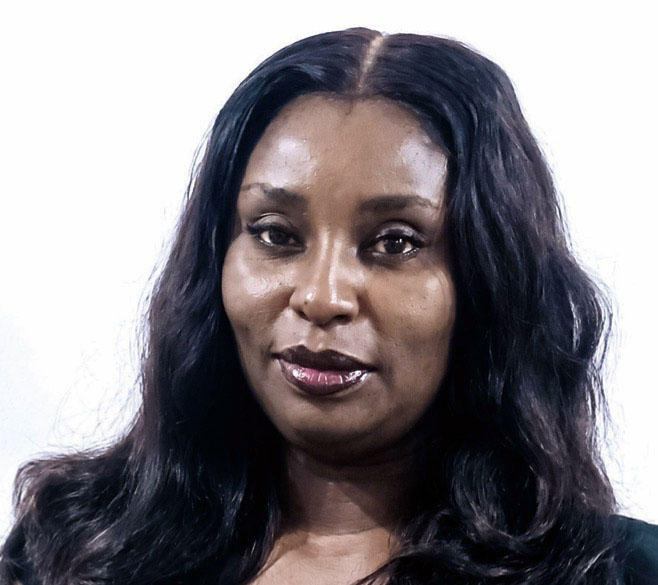
In this interview with Daily Sun, the executive director of Dantata & Sawoe Construction Company, Mr. Nasiru Dantata, speaks more about the firm.
Effects of the pandemic and lockdown on finances
We are not immune to the worldwide pandemic and its effects. Our operations were completely shut down for at least two months, while some activities in the construction industry, especially our works along the major highways were among the first to be given the approval to resume due to the intervention of the Governors’ Forum and the Minister of Works. This resumption came with a lot of restrictions regarding the number of people that can be deployed to a site at a time; number of people that can be carried in a vehicle and the provision of additional health and safety requirements such as washing of hands with soap and use of hand sanitizer.
At a time, there was a total shutdown. Then, a gradual reopening, with additional costs to operations. In many cases, these additional costs cannot be recouped from clients. So, it is exclusively on the company. We also realised that this is an unfortunate situation that affects communities and governments the most because everyone is looking up to them. The government is our major client. So, we understand the need to put all resources together. On our part, we contributed through the federal and state level, especially where we are working, for relief items.
On the side of the company, the numbers will not look as attractive as in the previous years, but we have to see how to come out of it together.
Crisis management plan
Most of the crisis management plans that we have are particular to sites. We do not have a crisis management plan for an unfortunate event such as the pandemic. No one has really seen this kind of elongated lockdown. The crisis management plan we used was shutting down sites and putting equipment in place that are safe and sound; security (from both internal and external security from security agencies) in sensitive locations, and we made sure our staff are safe. We also keyed into the government’s guidelines.
As a company, we didn’t go ahead to reduce workers immediately. What we did was we negotiated a reduced salary for them to stay at home, which is also what many construction companies do during the rainy season, when you have to shut down some activities that cannot be effectively done. We call it ‘stood-off’. So, many staff were ‘stood-off’ and gradually, we have been calling them back.
Sack rumour
The sack wasn’t because of the pandemic because, even before the pandemic, we had some sites that were slowed down due to some reasons. We did not particularly reduce staff because of the pandemic. At the moment, we are recalling those that were stood off. But you know that construction companies are not stable. There are times when we are under pressure to meet up and there are times that work is slowed down due to some reasons. It could be a design issue or an issue between the client and the company, it’s normal. We didn’t lay them off particularly because of the pandemic, but because our sites have not been operating.
In our case, we had a big job in Lagos, which was completed towards the end of last year and we finished other works between January and March. The skill set that needed for industrial concrete work is for the foundation of the factory, which we do not have another opportunity to do. Most of the jobs we are doing now are road works and some of these staff cannot be deployed to the sites. From that end, we had to reduce a lot of people.
Reinstating all staff
We have reinstated many. And many people who have worked for Dantata & Sawoe, if there’s a demand somewhere and they present a certificate that proves they have worked here, they get automatic employment because those companies are aware of the reputation of Dantata & Sawoe for good work.
We also have many loyal staff that, whenever we give them a reason to go, they’re always willing to come back when we call them. We are re-employing people that have worked with us and also employing new staff to places where we have new jobs. We are always considerate of the local community. Now, we have a new job in Ekiti State, so we source people from there. We will not only shift the people that have worked with us elsewhere. This has always been our practice.
Recovery from COVID-19
“We are recovering and it will be a long recovery. It may take a number of years. In Europe now, there is a second wave. Though the pandemic has been lenient in this part of the world, we hope that it will not get worse. But you see, Nigeria has many challenges, aside from the pandemic. Our industry relies heavily on government patronage. And the government is finding it difficult to fund many projects because of numerous demands on the government. The citizens are looking forward to better education, better security, better healthcare, better roads and public facilities. We understand the challenges and we are sure that the government will not only build roads and forget hospitals. We are hoping that the way they have started innovations, in terms of the Sukuk Fund, it has helped a lot of companies in the industry to have a steady stream of work. As we speak, many companies have resumed work and now, we have better weather to work. In the next four months, we hope that we have a steady stream of work and the government continues to fund projects. Once there is money, we are ready to work. So, everything depends on how the pandemic situation improves, we are ready to adjust. But now, operations have become costlier. We have to find a way to be more efficient and find a way to ensure that our clients also come in.
Definitely, new jobs would cost more because the adjustments would have to fit in. We are trying to be efficient so that we can cope.
Post-lockdown projects
We have resumed our Federal Ministry of Works projects. We have the Kano-Maiduguri road, the Kano Western Bypass, Lokoja-Benin, Abuja-Abaji. We are hoping to finish in the next six months. The ministry has given a deadline and we have agreed on the things that need to be done. As a matter of fact, we are on it. We have just been awarded the Ondo to Akure rehabilitation. We are mobilizing. Everything looks positive on that end. In Abuja, we are going to continue with the Guzape District infrastructure. Though our biggest challenge there is still pending, there’s a village in the middle of the layout that needs to be relocated, but we are sure that the authorities are in discussions with the residents. We have some other works to continue, thereafter, the village can move. We have a few other private jobs.
When we mobilised for Minna-Bida rehabilitation, it was when the pandemic hit us. We are persevering and already at work, but the challenge has to do with the volume of trucks going on an existing road that needs to be completely redone. So, you can imagine the challenge. The state government tried to block the road from trucks, but they threatened to stop loading anything from the southern part of Nigeria to the north because that is the main route, which necessitated the government to rethink the decision, but I believe that there are discussions going on to find them an alternative safe route that they can use while we push the job. So, that route literally started in the pandemic, but for now, we are moving forward.
We have also delivered some jobs that we have been working on for Jigawa State during the second phase of the lockdown.
New developments
Everything is delayed. We resumed work with some reduced hours, especially in the administrative section, because of the protocols. Then the rainy season came when the lockdown was eased. That automatically made many works delayed and undone, which should have been done in March or April. Many things have changed, of course, but we are trying to reassemble. The target of this year cannot be achieved in terms of physical work on sites. In some cases, we are looking at ways of accelerating the programmes, where money is available, to see how we can catch up.
COVID-19 protocols compliance
We do our best. The main challenge is the COVID-19 issue. It’s an individual responsibility, but during working hours and in our facilities, we are abiding by the national guidelines and also any guidelines issued by the Federal Capital Territory (FCT). Within our transport, we try to follow all the guidelines. We have sanitizers and soaps for hand washing available, temperature checks and so far, we have not hospitalized anyone. We hope that we will not have any reason to be penalized. The FCT team in charge of monitoring compliance came here and they were satisfied with what we have put in place and they offered some advice. We are keeping in contact with them on that.