Follow Us on Google

Agu Dawn, Abuja
COVID-19 has forced many around the world to rethink their daily lives, from work to school to entertainment.
In response to travel bans, school closures, and recommendations to not gather in large groups and keep a safe distance from fellow humans to limit the spread of the virus, many people have turned to digital tools to keep some semblance of normality.
It has become imperative to digitally transform the workplace and schools to enable smooth and effective operations. The companies that are able to use technology well to keep going and rethink their business model for the future by fast-tracking digital transformation will be the ones ahead of the competition.
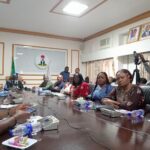
In Nigeria now, the virtual space is evident, as online meetings are being held to discuss critical national issues, especially the COVID-19 pandemic and its economic aftermath.
Analysts believe President Muhammadu Buhari’s government has woken up to the necessity for broadband growth as a major pillar for national development, as he seeks to diversify an economy heavily reliant on commodity exports.
While the number of Internet users is growing, those with access to broadband are blighted by the high cost of data and stuttering connectivity. The Speedtest Global Index ranks Nigeria 115th out of 140 countries for mobile speeds, while the country’s ranking for its fixed broadband is 149th out of 177.
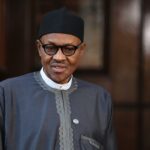
In a teleconference with the Presidential Task Force (PTF) on COVID-19, President Buhari tasked the committee to step up efforts in contact tracing of those infected with the virus in order to curb community transmission.
Buhari urged the task force to flatten the curve of the virus as quickly as possible in order to break the chain of community transmission.
Chairman of the PTF, Mr. Boss Mustapha, Secretary to Government of the Federation, said that the President also challenged the PTF to reduce the spread of the virus as soon as possible.
More recently, the President. via video-conferencing, participated in an extraordinary summit of the heads of state and government of the Economic Community of West Africa States (ECOWAS). The summit was convened by the regional leaders to deliberate on the COVID-19 pandemic, which has continued to ravage humanity worldwide.
The highlight of the videoconference was the appointment of Buhari as champion of the COVID-19 response that will lead the region’s campaign for debt forgiveness, among others.
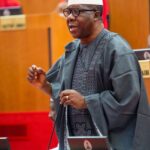
On his part, Vice President Yemi Osinbajo has been having a series of virtual engagements.
Osinbajo recently presided over the meeting of the National Economic Council’s (NEC) Special Committee on COVID-19, anchored from the Presidential Villa, Abuja, via video-conferencing.
The Vice President, at the virtual meeting, said that there was need for more public enlightenment and sensitisation on the seriousness of the COVID-19 pandemic. Osinbajo urged government at all levels to intensify efforts so that more Nigerians would become aware of the compelling and critical dimensions of the situation.
The Vice President, at the virtual meeting, said that part of the tasks given to the Economic Sustainability Committee (ESC), which he chairs, was to develop further palliatives.
In the words of the Vice President, containing the spread of pandemic and tackling its fallout was an all-Nigeria effort that required the cooperation of all.
Osinbajo responded to questions on how the Buhari administration intended to handle the consequences of the restriction of movement in parts of the country and support vulnerable Nigerians. He said that part of the work of the ESC was to look at some of the concerns that affected the poor, especially in the context of what had already been done and the data already collated.
The Vice President noted that the committee would also look at how to implement some strategies that would be able to alleviate the sufferings of the poor and the informal workforce
“So, we have data of the poorest of the poor, with the assistance of the World Bank, we have developed what is called the National Social Register, where we mapped out, in practically all local government areas in Nigeria, those who are considered the most vulnerable.
“Already, some of them got conditional cash transfers but, again, compared to the numbers, it is not large enough.’’
He harped on the importance of the assignment and the urgency required.
Also via virtual conferencing, the Federation Accounts Allocation Committee (FAAC) shared N780.926 billion as March Federation Account revenue to the federal, state, local governments and relevant agencies in the country.
The deployment of virtual tools in the midst of COVID-19 lockdown in Nigeria has gone a long way to ensure that governance is not locked down.
Many analysts have averred that the palpable advantages of virtual communication in the COVID-19 lockdown could be further harnessed appropriately in the post-pandemic era.