Follow Us on Google
From Tony John, Port Harcourt
Concerned stakeholders in the environment protection space have expressed alarm that more than fossil fuel, human-induced or anthropogenic methane emissions have emerged as the new threat to Nigerians.
The groups, which rose from a seminar in Port Harcourt, Rivers State, warned that such emissions account for 60 percent of the methane emissions in the country, adding that causes over 255,000 deaths and 775,000 asthma cases in hospitals.
The groups led by Environmental Centre for Oil Spills and Gas Flaring (ECOSGF) and the African Initiative for Transparency, Accountability, and Responsible Leadership (AfriTAL) have mapped out plans to fight back.
They also agreed to assist in fact-finding, research and development, conduct field visits, and provide capacity building as well as technology development to support the campaign.
Briefing non-state actors that worked on the plan of abatement of methane emissions, the groups said in February, 2024, TrustAfrica provided a take-off seed fund for the project.
In his opening remarks, Louis Ogbeifun, the Executive Director at AfriTAL, stated that the project would focus on decreasing methane emissions from anthropogenic sources such as human wastes, landfills, rearing of ruminant animals, rice cultivation, and other agricultural processes.
He noted that, from the information gathered thus far, there is lack of knowledge about human-influenced emission and its hazards to human health.
Ogbeifun stressed that Nigeria’s methane emissions situation was more dangerous because emissions from oil and gas activities like gas flares, pipeline vandalism, artisanal refining and others, were already high; hence, Civil Society Organisations (CSOs) must advocate for its curtailment as soon as possible.
He said the task would also include equipping CSOs and the media with knowledge and advocacy tools for “Methane Action”; and to encourage governmental entities to be more proactive in methane abatement as well as increased awareness and interest by farmers and livestock owners on the effect of improperly disposed wastes and their impacts on humans.
A reverend father, Edward Obi, of the Environmental Centre for Oil Spillage and Gas Flaring (ECOSGF), stressed that CSOs could do a lot to lessen the impact of global warming.
ECOSGF and AfriTAL said they had worked to get funding to carry out activities to reduce methane from anthropogenic sources, including research and advocacy with civil society organizations (CSOs).
According to the climate experts, “Methane (CH4) is said to be the second most significant contributor to emissions after Carbon dioxide (CO2), which has caused about a 30 percent rise in global temperatures since the Industrial Revolution.
“Methane is indicated as an odorless, colorless, flammable gas that enters the atmosphere via natural sources and human-related (anthropogenic) activities. It is formed from the decay of natural materials in landfills, marshes, septic systems, sewers, pit toilets, compressed dustbins, coal, gas, etc. It is used in manufacturing organic chemicals and as fuel for lighting and heating.”
Explaining further, the experts said methane emissions from food waste, food systems’ emissions, trash, landfills, livestock breeding and bush burning, contribute about 60 percent of global emissions.
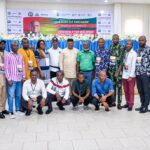
The Civil Society Organizations who overwhelmingly complemented TrustAfrica and the methane abatement partners agreed to carry out a long list of actions including to liaise with the National Council on Climate Change and other climate change actors for the necessary information to assist in birthing the project objectives.
A report at the end of the conference in Port Harcourt said in February 2024, TrustAfrica provided a take-off seed fund for the project.
The main goal of the project is to carry out advocacy on methane emission reduction and utilisation in Akwa Ibom, Cross River, Delta, and Rivers States in the Niger Delta region.
According to the organisers, it would be by raising awareness, arming non-state actors and the media to fight the wars, and to maintain the momentum of the methane abatement programme through ongoing advocacy, research, and impact evaluation.