Follow Us on Google
By Rita Okoye
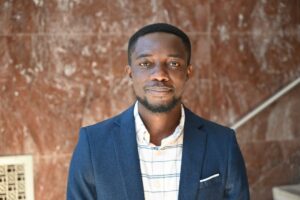
Olayemi Temitope, a Nigerian atmospheric chemist and doctoral researcher at Purdue University, has called on the Nigerian government to intensify its efforts in regulating methane emissions as part of the country’s broader climate change strategy. Speaking during a virtual seminar hosted by the Students’ Chemical Society of Nigeria, UNILAG Chapter, Temitope stressed the critical role of methane in accelerating global warming and urged policymakers to act swiftly.
“Methane is over 25 times more potent than carbon dioxide in trapping heat in the atmosphere over a 20-year period,” Temitope said. “Yet, it receives far less attention in our national climate discourse. This needs to change urgently.”
Drawing from his research at Purdue University — home to the United States’ top-ranked Analytical Chemistry program — Temitope highlighted recent findings that show how atmospheric aerosols, especially those from mineral dust and sea spray, influence the oxidative breakdown of methane. He said these insights could guide the development of region-specific emission control strategies.
Temitope’s work integrates field sampling, advanced microscopy, and isotope-resolved spectroscopy to examine how aerosol particles interact with climate-active gases. His recent contributions to research on iron-catalyzed chlorine activation point to underrecognized chemical pathways that may significantly alter the global methane budget.
“These interactions are not just academic curiosities,” he said. “They have real-world implications for countries like Nigeria, where poorly regulated flaring and agricultural waste contribute heavily to methane release.”
He called on environmental agencies to expand their monitoring infrastructure and adopt data-driven approaches to methane mitigation. “We need robust field data and a willingness to enforce regulations. Without both, we’re simply talking in circles,” he added.
Temitope also urged Nigerian universities and research institutions to invest in atmospheric chemistry programs, noting the shortage of local expertise in this field. He emphasized the value of building domestic capacity to understand and address the country’s unique environmental challenges.
In response to follow-up questions from journalists, Temitope warned that failure to address methane emissions could undermine Nigeria’s commitments under the Paris Agreement and hinder sustainable development goals. “We can’t just borrow climate solutions from the West. We need to tailor them based on our own atmospheric conditions and pollution sources,” he said.
Throughout the session, participants commended Temitope for his clarity and depth, and described his presentation as “a wake-up call for policymakers.”
Temitope’s impact extends beyond the laboratory. He has co-authored several peer-reviewed studies and collaborated with national laboratories and international teams to push the boundaries of atmospheric chemical imaging. He is also actively involved in environmental monitoring and airborne research campaigns.
With a firm grounding in both field and theoretical approaches, Temitope sees his role not just as a researcher but as a bridge between science and policy. “It’s one thing to understand the chemistry. It’s another to translate that knowledge into action that improves lives,” he said.
As global attention increasingly shifts towards methane as a key driver of climate change, experts like Temitope are helping to steer the conversation with cutting-edge science and local relevance.
He closed the seminar with a challenge to Nigerian leaders: “Methane is invisible, but its impact is not. The sooner we act, the better our future.”