Follow Us on Google
From Okwe Obi, Abuja
The Chief Justice of Nigeria, Kudirat Kekere-Ekun, has called for stronger judicial commitment to advancing the Women, Peace and Security (WPS) agenda.
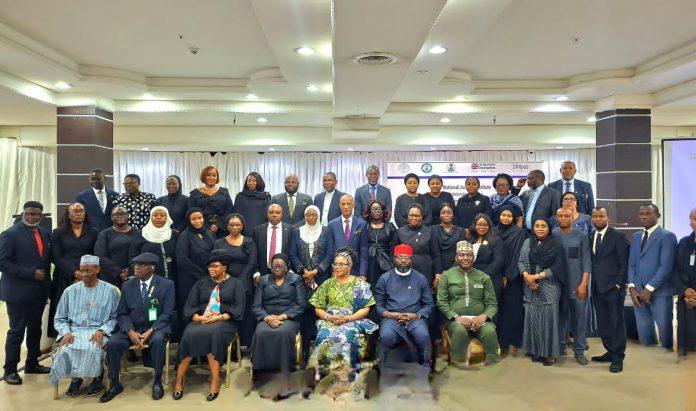
She made the call while declaring open a capacity-strengthening and dialogue workshop in Abuja organised by the National Judicial Institute, in collaboration with the Ministries of Women Affairs and Justice, with support from the UK Foreign, Commonwealth and Development Office through the SPRiNG programme.
The workshop, themed, “Operationalising the Third National Action Plan on Women, Peace and Security,” seeks to harmonise inputs for the validation of a national judicial guide on WPS.
She said where courts are “informed, responsive and properly supported, they strengthen accountability, deter wrongdoing and promote public confidence in the rule of law.” She stressed that judicial commitment to the National Action Plan must be reflected in judicial reasoning and courtroom practice.
She acknowledged that, “despite Nigeria’s strong and progressive legal framework, gaps remain between legal standards and the experiences of many court users,” noting that survivors of conflict-related sexual violence and displaced women often face procedural obstacles, evidentiary difficulties and institutional barriers that limit their access to justice.”
She added that a structured judicial guide would respond directly to justice system needs while preserving judicial independence.
The Attorney General of the Federation and Minister of Justice, Lateef Fagbemi, represented by the Head, Sexual and Gender Based violence Response Unit, Mrs Yewande Gbola-Awopetu, commended the NJI and SPRING for strengthening justice delivery through inclusive and rights-based approaches.
Fagbemi said the courts are central to translating constitutional and international obligations into lived realities for women and girls affected by conflict and structural inequality.
Other News
The NJI administrator, Justice Babatunde Adejumo, said the initiative aligns with global standards and supports implementation of UNSCR 1325.
“In performing its adjudicatory functions, the courts can elicit accountability from perpetrators of conflict-related sexual violence and gender-based violence, enforce reparations and other reliefs for victims and ensure deterrence through conviction.”
From the FCDO, Cliff Gai said the UK body “is honoured to participate in this collaborative engagement” and reaffirmed its commitment through the £38 million SPRiNG programme to build a more stable Nigeria where citizens benefit from reduced violence and improved resilience.
He emphasised that progress on the women, peace and security agenda cannot be fully realised without the active and sustained engagement of the judiciary.
Representing the SPRiNG Programme Lead, Ukiwo Ukoha and Gender Equality, Disability and Social Inclusion Lead for SPRiNG, Amina Akano-Bello, said the workshop would review and validate the WPS guide for the Nigerian judiciary as an instrument for operationalising the NAP on women, peace and security to translate commitments into judicial actions.
“The role of the judiciary, and more broadly, justice sector institutions, is critical to our shared commitments to fulfilling the transformative agenda of the UNHCR 1325 on Women, Peace and Security,” she said.
She stated that the SPRiNG initiative was dedicated to supporting efforts to foster a more stable Nigeria, where citizens experience reduced violence and strengthened resilience to climate pressures.
“Nigeria has so far implemented two national action plans, and just in December 2025, the third NAP on women, peace and security was launched, and SPRiNG is supporting NJI to strengthen the judiciary’s knowledge in advancing the NAP,” Akano-Bello added.
Also speaking, Hyginus Njoku, representing the National Human Rights Commission, said: “When women are unable to access justice, injustice and insecurity continue. He urged judicial processes that are fair, sensitive and responsive to women affected by conflict.