Follow Us on Google

By Catherine Diakpomere
The Akin Fadeyi Foundation (AFF) has stressed that meaningful behavioural change among Nigerians is key to curbing the rising rate of road accidents across the country.
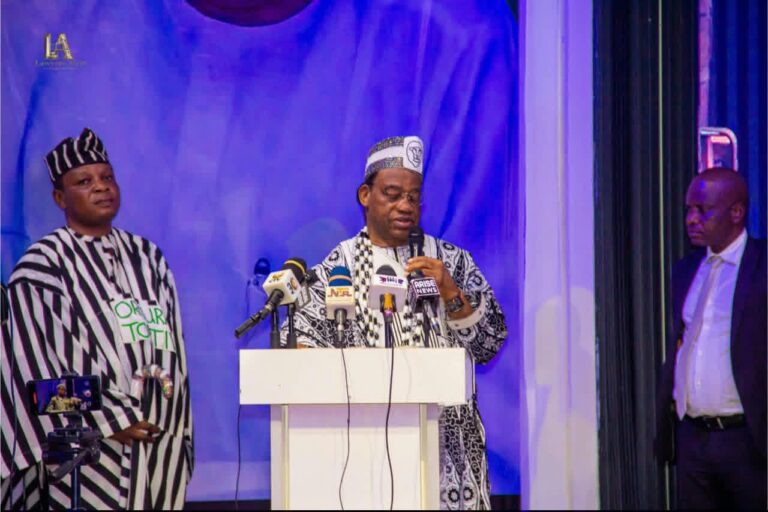
Executive Director of the foundation, Akin Fadeyi, made this known in Lagos during the unveiling of the foundation’s latest behavioural change campaign against road accidents under its “Not in My Country” project.
Speaking on the theme, “Taming Accidents on Our Roads Must Begin With Citizens’ Behavioural Change,” Fadeyi said road crashes in Nigeria reflect a troubling normalization of avoidable tragedies.
“At the core of our philosophy since 2016 is calling out corruption and collaborating with institutions to strengthen processes,” he said. “While we continue to hold the government accountable, citizens must also take responsibility for their own safety. What we see on our roads is an unfathomable debacle of recklessness.”
He emphasized that collective vigilance, shared responsibility, and national solidarity are crucial to ensuring that every Nigerian journey ends safely.
According to him, the newly unveiled one-minute advocacy drama is a civic alarm designed to disrupt dangerous habits that have become normalized.
Citing data from the Federal Road Safety Corps (FRSC), Fadeyi noted that in 2025 alone, Nigeria recorded 10,446 crashes, 38,689 casualties, and 5,289 deaths — a 9.2 percent increase. Globally, road crashes claim about 1.2 million lives annually.
“These are not mere statistics,” he said. “They represent unfinished stories and families plunged into grief due to reckless and avoidable decisions.”
He identified overspeeding, improper overtaking, driving under impairment, illegal parking, and overloading as behavioural infractions rather than accidents.
Quoting Nelson Mandela, he said, “If you want to reach the heart of the people, communicate in the language they understand,” explaining that the campaign uses relatable storytelling performed by respected Nollywood veterans.
Fadeyi maintained that Nigeria’s road safety challenge is not solely infrastructural, noting that even the best road systems cannot compensate for human indiscipline. He urged enforcement agencies to uphold standards without compromise.
The foundation acknowledged the support of the MacArthur Foundation and other global partners, including the European Union, UNDP, UNODC, and the U.S. Mission in Nigeria, for strengthening its behavioural change architecture.
He also highlighted AFF’s past initiatives, including collaboration with the Nigeria Police Force, the development of the FlagIt App to combat cyberbullying and violence, partnership with the FRSC to train over 2,200 officers, and its radio programme Make We Sama Corruption, which has aired over 200 episodes.
Fadeyi called on the Federal Ministry of Information and National Orientation to amplify the campaign across national broadcast platforms such as NTA, AIT, and Channels TV, as well as digital platforms.
He expressed optimism that Nigeria’s transformation is achievable if citizens and institutions work together.
“To the public institutions, civil society, artists, influencers, faith communities, and every Nigerian who believes in a better future, this campaign belongs to you,” he said. “Share it. Broadcast it. Let it shape conversations in our homes, schools, markets, and places of worship.”
The foundation reaffirmed its commitment to promoting behavioural reform and national orientation, urging all stakeholders to join hands in fostering a safer and more responsible society.