Follow Us on Google
By Shao Xia
Dr. Henry Kissinger once observed, “A special feature of Chinese civilization is that it seems to have no beginning. It appears in history less as a conventional nation-state than a permanent natural phenomenon.” Such continuity fosters a unique perspective – one capable of envisioning the future in centuries, while advancing through well-designed, phased strategies. Nothing embodies this outlook better than China’s five-year plans.
Forward-looking vision over short-term thinking
What makes the five-year plans so vital is China’s long-standing emphasis on medium-and long-term thinking. As British scholar Martin Jacques put it, these plans are “strategic and flexible,” suited to what he calls “the Chinese idea of thinking long-term.” This approach stands in stark contrast to short-term political cycles, allowing the country to pursue transformative goals across generations.
The First Five-Year Plan (1953-57) was launched four years after the founding of the People’s Republic of China. In the 1950s, the country had just emerged from the scourge of war with little of an industrial base. Instead of turning to quick fixes, it chose patience and long-term planning.
The Plan set clear goals for industrialization, and within five years, China advanced from producing basic consumer goods to manufacturing its first domestically built automobile and aircraft, laying the foundation of a modern industrial system.
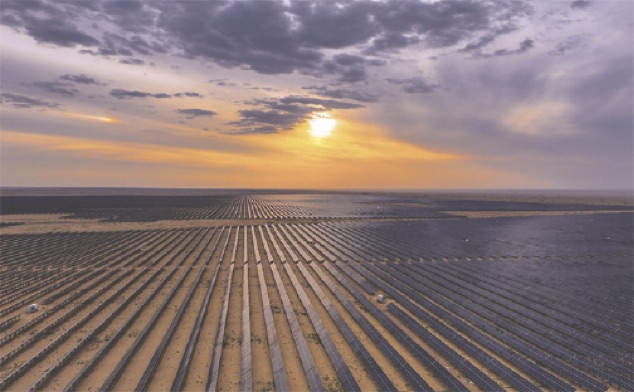
On that foundation, China has sustained this effort through fourteen consecutive five-year plans. During the process, the once impoverished agricultural nation with per capita steel output barely enough for a sickle and no manufacturing capability for cars, airplanes or tractors has grown into the world’s top manufacturer and second-largest economy.
Nobel laureate in economics Robert Engle once observed that when China is planning for the future with wonderful five-year plans, Americans are merely planning for the next election. This methodical persistence is not only a major strength but also a fundamental reason for China’s monumental achievements.
Policy continuity over flip-flopping
Other News
How has China managed to keep its long-term development plans consistently on track across decades, without veering off course? The answer lies in its institutional design, which ensures that national strategies transcend political cycles and are implemented phase by phase.

Across all the 14 five-year plans, priorities have evolved – from industrialization and reform to sustainability and innovation – but the overarching mission has remained unchanged: national development and prosperity. Take poverty alleviation for instance. First introduced in the Seventh Five-Year Plan, it became a sustained national commitment. Over four decades, China has lifted 800 million people out of poverty, accounting for over 70 percent of global poverty reduction, and has met the goals of the UN 2030 Agenda for Sustainable Development ahead of schedule.
In contrast, many western democracies are mired in short-termism. Election cycles reward point-scoring over policy-making, leading to policy reversals and paralysis. In the United States, power changes hands between the two major parties who routinely dismantle each other’s agendas. Two years are spent on undoing the past, the next two campaigning for the next mandate. It is little wonder Americans themselves ask how many times their country will quit and rejoin the Paris Agreement, or what has become of initiatives like “Build Back Better.”
A people-centered blueprint for development
Five-year plans are not political slogans or abstract economic ambitions. They are designed to deliver concrete, measurable improvements in people’s lives. At the same time, these plans remain grounded in reality, avoiding overpromising or burdening future generations.
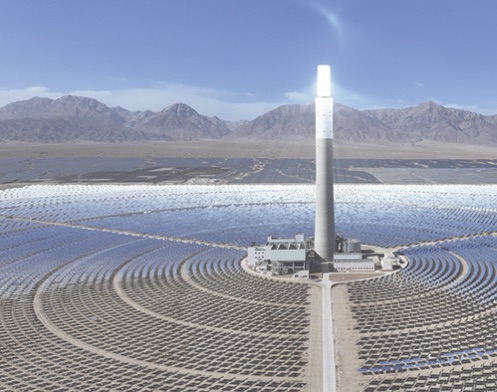
The 15th Five-Year Plan, deliberated at the Fourth Plenary Session of the 20th CPC Central Committee, exemplifies this approach. Behind every policy lie detailed implementation measures. These plans are not instruments of rigid control, but guiding frameworks that address public concerns and meet aspirations while signaling economic stability and resilience to businesses and markets.
In western electoral politics, however, policy-making is often held captive by short-term political and capital interests. To secure votes or please donors, governments may resort to fiscal stimuli that create artificial booms, often at the cost of long-term industrial health and public welfare. Legislation packaged as “pro-people” frequently ends up benefiting vested groups. A case in point is the U.S. “One Big Beautiful Bill Act.” Though touted with policies like tax cuts and strict immigration enforcement, its execution will reduce annual income by 2.9 percent for the bottom 20 percent of households, while raising income by 2.2 percent for the top 20 percent.
An even better five years ahead
In an era of global turbulence and transformation, the path toward a better world remains uncertain. Yet amid this volatility, China is steering its course with one of its most enduring tools of governance: the Five-Year Plan. More than a domestic blueprint, the 15th Five-Year Plan will serve as a source of certainty in an increasingly unpredictable world, offering not only stability at home, but opportunities abroad.
Editor’s note: Shao Xia is a special commentator on international affairs for CGTN. The article reflects the author’s opinions and not necessarily the views of CGTN.