Follow Us on Google
• Farmers, herdsmen dialogue, open up on crises
From Andrew Odanga, Kaduna
They appear small and insignificant in the matrix that leads to violent clashes in the Middle Belt. But the activities of child herders and their relationship with farming communities have proven to be critical in igniting or avoiding conflicts.
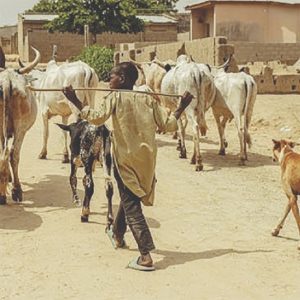
Some Herders normally put their flock in the care of very young boys who by culture are supposed to learn the trade, garner experience, bond with the flock and take over from their parents.
They are usually between the ages of seven and 14, with cases of five-year olds seen grazing; and they roam about thick forests and bushes on their own with dozens of livestock in search of pasture to graze.
Their activities have caused a disquiet in many communities which have resulted in violent clashes.
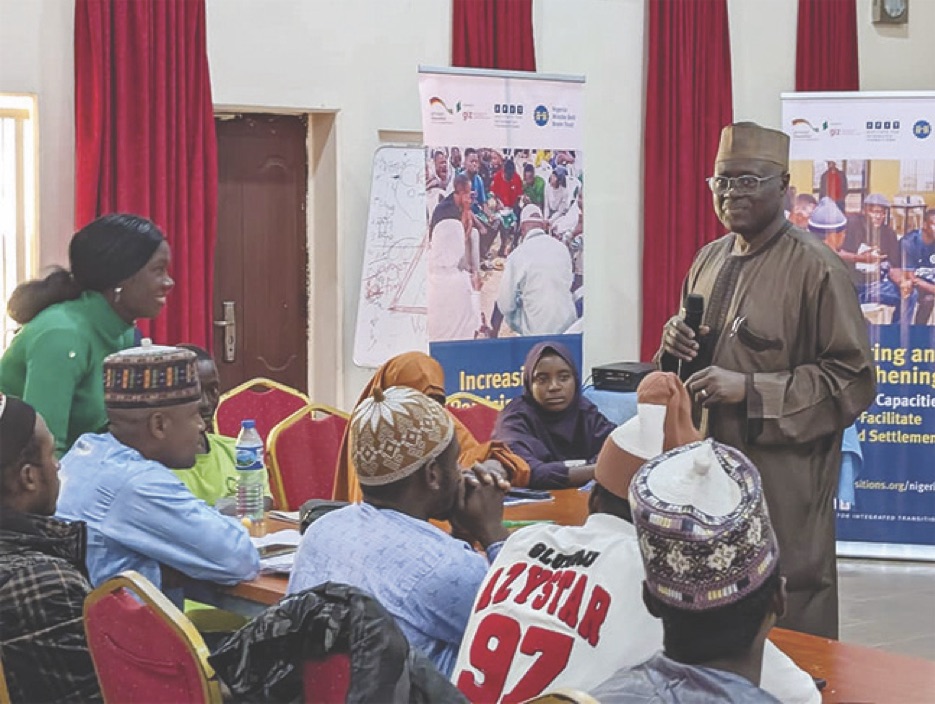
At a capacity building workshop organised by the Institute for Integrated Transitions (IFIT) and the Middle Belt Brain Trust ( MBBT) to strengthen women, youth actors and members of disadvantaged groups to co-facilitate and lead negotiations processes that lead to agreements in their communities, it was established that the orientation, and proper management and mentorship of the child herders would go a long way in preventing the clashes that occur in communities as a result of crop destruction attributed to child herders.
Both the herders and farmers who agreed to sit together at the dialogue were unanimous that one of the major problems has been the lack of communication between the herders and their communities.
The dialogue was intended to help develop trust across diverse stakeholders, broaden their participation, and increase their agency to positively impact issues that affect them.
It is also to increase the participation of women, youth actors and members of disadvantaged groups in sustainable peace building and conflict management.
With that understanding, the two sides open up on what has been troubling them and had made it difficult for them to co- exist.
The idea of leaving underaged children on their own to travel far distances to graze cattle was reviewed by both sides.
Apart from the dangers such underaged children are exposed to in terms of wild animals’ attacks, snake bites, inclement climate and unfamiliar terrain, there is also the problem of hunger as they are left on their own to fend for themselves.
Some of the rural women who encounter these children say they felt pity for them and would have preferred they either be in company of elderly ones or are spared from such rigours till they become adults.
“If you reprimand them for allowing their cattle graze in your farm, they run and report that they have been attacked,” said one of the rural women.
Hafsat Haruna, a herder’s wife said the mothers hardly imagine the danger the child herders are exposed to otherwise they would have chosen to follow them.
“We believe the children go through the normal grazing routes not knowing that some of the routes have disappeared and they have to take other routes for the herds to graze which most times leads to trouble,” she said.
She suggests that mothers should follow the children saying once they do that they would be abreast of the enormity of the danger and task required and may not accede to having their children left on their own to cater for the cattle.
Mariam Abdullah, who belongs to a herder family in Bokkos Local Government, Plateau State, agrees with her saying women are not usually involved in the decision to send the children to watch over herds of cattle.
She said from what she heard from the interactions she’s not sure people would be comfortable allowing their children to move about like that without an elderly escort.
“When they come home, they hardly tell us in detail what happened unless they’re attacked,” she stated.
Rose Yohanna, mother and wife to a farmer in the same community said crises occur when the animals stray into farmlands due to the inability of the child herders to navigate the established routes.
“Though some of the grazing routes have closed, an older person would probably have asked questions on the best way to steer the cattle but not someone who does now know better,” she stated.
Former Chief of Defence Staff (CDS), General Martin Luther Agwai, who was at the training expressed happiness that herders and farmers were able to come together to dialogue. Agwai who is the chairman of the MBBT said he was initially afraid if the two could meet calmly and discuss issues but when he asked, he was told that everything was going on fine.
He said: “That means that peaceful living is good and people can achieve it if and when they are willing.” Agwai reminded the meeting that he was in Sierra Leone where there was heavy fighting but said at the end of the day, they had to come to a round table to discuss:
“Disagreements are normal in any given society as even the tongue and teeth occasionally hurt each other. But says it does not imply that they cannot live together. If you sit and discuss and see like things are not possible will find out that it is not so.
“Instead of going back to yesterday, look for ways to move forward. The world will not wait for anyone it’s important you come together, sit down and understand yourselves.”
The participants said with the understanding they have of the situation now, when they go home, they will not fight. “I will not fight child herders as I have come to understand they have their own difficulties,” said Mary Dadon Ayuba, as participant.
One the herdsmen at the meeting said henceforth, he will be able to identify areas that cause conflicts and avoid them.