Follow Us on Google

By Uche Usim and Adanna Nnamani, (Abuja)
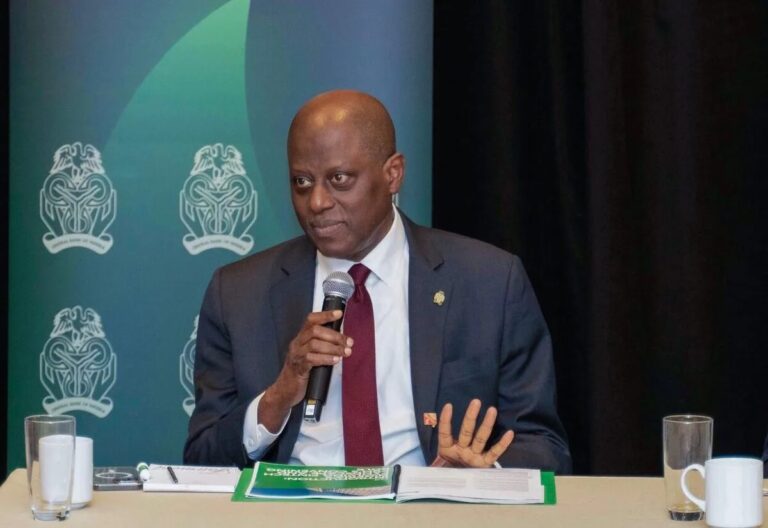
Central Bank of Nigeria (CBN) Governor, Dr Babatunde Cardoso, has said that no amount of pressure would make the regulator cower into paying foreign exchanges that have not been validly constituted.
He said a mechanism was currently in place which subjects all forex requests to forensic scrutiny.
Cardoso, in an interview monitored on Arise Tv, said there are strategic solutions being pooled to sanitize the foreign exchange market and generally plant the economic on growth path.
When and how do you plan to further stabilize the foreign exchange market. What is the key message that the CBN is trying to push out to the people, to the market, to investors and everyone else in between?
I think it is important to say that we have been in a situation in the recent past where there has been a shortage of liquidity in the foreign exchange market arising from certain distortions. And that in itself has created a situation where there has been huge volatility in the market. We have looked at this over the course of the past months and come up with certain policies which are focused on creating an environment where liquidity comes back to the market and where we can see a more vibrant market that we had before. Ultimately, I see a situation where people who require foreign exchange do not have to have anybody in the banks either the central nor the commercial banks. A system that is open and transparent, creates an environment for distortions to go away and thereby those who want to bring in foreign exchange and those who want to demand it, can do so on open bases, willing buyer, willing seller basis and therefore, the market becomes more active and price is eventually discovered at a level that makes sense.
You have the domiciliary question about what the central bank or the government was planning or not planning to do. What’s the true state of things as far as domiciliary accounts concerned in the commercial banks?
Now, from what I can see, there has been a recent publication that went on stating that the federal government had intentions of using the domniciary account balances and converting them to naira. As the governor of the central bank, I can tell you that nothing could be farther from the truth, and let me just illustrate this, by saying the reforms that you have seen in the past months, which have obviously culminated in the naira exchange becoming a little bit, a little less volatile, and ultimately will be stable, has had to embrace market reforms. We have spoken about earlier on a situation where there’s free entry and free exit. Attacking domiciliary accounts goes against the grain of that philosophy, okay. We’re talking of liberalizing the markets. And encouraging foreign portfolio investors, foreign direct investors to come in and invest. Doing something like attacking the domiciliary account balances goes against the grain of that philosophy, and we certainly wouldn’t do anything like that. So, I want to assure you that there is absolutely no truth in it as at no point in time has that ever come up for discussion because we’re very clear that that does not fall into the overall strategy and focus that we have as a central bank.
Now that you spoke about the strategy, and I want you to walk me through a bit of your short, medium to long term strategies, in terms of the focus on how to improve FX inflows and stabilize the value of the local currency itself.
Ultimately, a number of things are very important and I think our focus has been to start looking very aggressively at the supply side of the chain. Some of the things we have done, for example, we have looked at the issue of the net open position of banks, and are of the view that a good number of the banks have no business holding the foreign exchange that they have held. They have absolutely no business doing that and for the quantum and the period they have held it for and that that certainly does not encourage a vibrant market. And for that reason, we have asked them to sell their positions to customers with hope that that will begin to rekindle supply into the market and be able to satisfy the demand of many businesses in the economy rather than holding on to it. Easily, trading can take place in such a situation in and out rather than holding on to it and of course, making gains, you know, an astronomical amount as and when the foreign exchange rate goes in an upward direction. The other thing that we have also done is the international money transfer operators (IMTOs). Up to this point in time, we know that a lot of activity has been undertaken by IMTOs. We know that everybody knows this. And sadly, we find a situation where very little of that has come through the official channels, very little of it. It has all been done in various forms that you know, do not advance the cause of an open market. And so for that reason, in conversation with them, we came up with certain rules and regulations, which we believe would be positive in the direction of encouraging them to now come into the formal market to undertake the activities rather than doing it outside of the official forms, and to be to be fair, I think that the players in that sector understand that. And I am very positive that with the new framework that we have, we are going to see a very major mind shift in that and don’t forget that at this point in time, the difference between the official markets and the BDCs is relatively minimal. So, there is really not much incentive for anybody to want to go through the official channels and of course, not having to take any unnecessary risks in going through channels that may be less accountable for them. So, we brought out new regulations for the IMTOs that we believe very strongly, will help to increase supply and of course with that will come the reduction in volatility. It is also important to say that, in all this, we believe that the markets must be very transparent. The rates must be out there, everybody should know the rules of the game. That way, people do not get caught unawares. I think that is another very critical message that we are sending out to the market and we on our own, as as regulators, we are significantly improving and taking up surveillance activities to ensure that the markets work the way they are meant to come to work, and that all the players play by the rules and that there is hardly any room for any infractions, and that it is compliance all the way. I think those may seem basic, but there are fundamental in our view, to the proper functioning of any long term foreign exchange.
When it comes to the backlog of FX to clear, whether it is with the airlines or any other, what are your views? How are you working to ensure that there is a measure of confidence in the market as far as the legacy issues are concerned?
When we came in to the leadership of the Central Bank a few months ago, the issue of foreign exchange backlogs was something that we met. Obviously, it was something that had accumulated over a period of time and we met that when we came in, and of course, it is very important as a sovereign nation, to be able to keep your integrity intact, and as a bank, to be able to show that we consider applications as obligations that must be met.
Now, approximately $7 billion US dollars was what we were told that the obligations were and we looked at these and commenced the process of starting to pay meager resources as we had them towards settling some which we believed were valid and due for payment, and obviously this is not something we could just do in one shot. It had to take a bit of time.
Now, as we went along, we now had reason to believe that we needed to take a harder look at these obligations.
And so, we contracted Deloitte management consultants to do a forensic analysis of all these obligations and to actually tell us what was valid and what was not. And of course, we were committed to ensuring that we would pay all valid transactions.And the results that came out of this was quite startling.
We discovered that of the $7 billion, about $2.4 billion had issues we believed had no business being there and there were infractions that ranged from so many things. For example, not having valid import documents. And in some cases, even entities that did not exist, and in some cases, beneficiaries, account parties who had asked for foreign exchange and got more than they asked for and some who did not even ask for any and got. So, there were a whole load of infractions there. Which as I said, amounted to about $2.4 billion.
So how are you dealing with with with that?
Well, we are not paying. If you you do not qualify, they are not validly the constituted request.
And of the validly constituted ones, we have settled about $2.3 billion and that applies to the airlines and a whole load of different entities spread throughout our economy.
And then now what remains is about $2.2 billion. That’s about what remains now to be settled. And I’m confident that we will shortly be addressing those and be able to move on and make progress.
Dealing with the FX issues in terms of supply and this is speaking to how you begin to clear up the about $2.2 billion remaining. What would the calendar look like down the line? Is there an idea of what to expect?
Yes. As I said, I think that will be something that we will be done very shortly. Now, you can imagine that having $2.2 billion outstanding and $7 billion outstanding are not the same thing. They are not the same figure. So, I think we are at the end of this, to be honest, to put it to you that way. We will clear all that very shortly and we will move on to the next line of action. So, I am not concerned that backlog will continue to be an overhang. I think we’ve come to the end of that road.
So, you are dealing with the IMTOs, you are dealing with the airlines and a few others, how do all of these come together in terms of what you were doing at the Central Bank, as part of the overall objective of moving the economy forward, stabilizing the economy as it were, considering legacy issues and what we are dealing with at the moment. How does that fit together into what you expect to see from the fiscal authorities?
You know, I have absolutely no doubt in my mind that the monetary side cannot do it on its own. Both the monetary and the fiscal side must collaborate. I have absolutely no doubt about that. And both must understand what each other is doing and how they interrelate. And quite frankly, from the financial economic standpoint, the different stakeholders within government understand collaboration is key. And we have regular meetings, we exchange views and ideas and ensure that we are all heading in the right direction. And I think that you should expect to see that we are walking the talk.
You think domestic productivity will help the central bank position, but
ultimately it comes back to us.
This is a problem I sometimes have when many blame the central bank for the foreign exchange situation. It is really a problem I have because we rely on what comes in. We do not produce foreign exchange. So, we rely on what comes in. All we can try and do is use that to leverage for more to start coming in. And that also includes foreign direct investment, foreign portfolio investors, which sometimes sometimes some people look at FPI’s and say, Oh, it’s hot money and all that. I do not believe that is the case. I take it that in any portfolio that you have, or foreign exchange, either it be a sovereign or even a corporate, you will have a diversified mix of portfolio investors diversified. Today, I will say that we have a situation where a lot of foreign portfolio investors are very interested in coming back to the Nigerian markets. It’s incredible. And if there’s any group that is very methodically interested in understanding the reforms that have taken place, in understanding it and seeing how it is taking the country to a direction they believe is the right one, it is the foreign portfolio investors. They come, you think they may not come back, they come back a second time, they come back a third time. Then they see some of the rating agencies coming out with their own conclusions of how they see the economy of the country progressing. It validates what they are thinking. We do additional reforms, it continues to encourage them. That is how I see investors playing today. Gone are the days where you can shut yourself out and say no, we don’t want this. The issue is to have it as part of the mix of different inflows and speaking about that, I think the recent move to have NNPC and some of the other MDAs move their funding straight to the Central Bank also strengthens the confidence.
Finally, Nigeria is going in a direction that many investors would want to see it go. So these are all very positive reform Ms that we may see as very little, but for those outside, they see it as giant steps forward. May not be in the end game yet, but definitely in the right direction that will take us there. And that in itself as you know, as the confidence comes back because, like you have rightly said, it has been a confidence booster, as the confidence comes back and their money starts coming in, which I see happening, volatility begins to reduce the wide swings you have be seeing in the foreign exchange market begin to reduce which is really what we want. And I believe very strongly as that volatility reduces and the foreign exchange market stabilizes which it will, and I have said before, and I will say it again, that the Naira is undervalued. I do believe it. And it is undervalued for a number of reasons, not least of which is the distortionary Impact of panic on the part of some people not really understanding what going on and how things get determined and also as a result of irrational decisions are taken. My view honestly is that the time for panic and for cynicism is not now. That time has passed. We are on the road now where the right policy decisions are being taken. Is that what I’m saying has been validated by the international community, people who have seen it in other places, the rating agencies. Our ratings have strengthened it is not just because they have nothing else to do, but because they look at what is going on, they analyze it, they see how other countries go and have gone and they draw their conclusions on that. And they are not sentimental about these things.
So, people who follow that thinking will definitely see that Nigeria is on the mend.
One critical point that you have talked about since you resumed office was about the the various interventions that the central bank has been into for the past couple of years, whether it is on agriculture, energy or whatever sectors. Are you abandoning those interventions? Or is there a new playbook that you have for strategic interventions in Nigeria’s key economies that businesses, investors, small and medium enterprises, ordinary Nigerians, farmers, really wants to benefit from? What is the new playbook from the Cardoso’s regime?
I have absolutely no illusions about the fact that interventions are necessary for our economy, especially in a time of crisis and to be honest, even in the normal times, because things may not be working in the way you want them to and interventions, help to channel resources accordingly, and to come in and, bring certain sectors of the economy when they are down, up to what you expect them to be. So, I think that one is very clear on that and one is very clear on the knowledge that a big country like Nigeria, and a huge population like Nigeria, we must reach out and ensure that everybody gets touched in one way or the other, very important. But I do believe that it is important that the framework is there that once you do it, it reached the people that it is meant to reach. There is no point in voting such a huge amount to an intervention when the people that it is meant for are not able to access it or they access it in such are way that it is not sufficient or does not help them to achieve their objectives.
So those are things thy we want to be able to sit down on as a central bank and use our convening power to bring people round the table and agree on a way forward. Because the problem is that if you, as a central bank, are trying to do the thinking, and at the same time, you’re also trying to implement, there’s not enough time in the day to be honest and it is really not your core strength. So, we will be working closely with those whose core strength it is okay to encourage them and as I said, bring others to the table. They do not all have to be local, internationally as well, who have had experiences elsewhere and it has worked, copy what they have done, that has been able to transform their economies on intervention space, and bring them to sit to the table to share experiences, such that those who are now going to do the implementation will understand that these are the things that are required to make it successful.
We do not have the luxury of failed interventions any longer. because we all see what inflation is. There are the concerns around exchange rate. We cannot have a round of these interventions that do not have the impact they are meant to have. And the people who are further down the pyramid, do not get the relief that we genuinely want them to get.
How are you preparing for the the February 26, February 27, monetary policy meeting, your first monetary meeting. What should the market and everyone expect?
firstly, I was a bit concerned when I became governor of the central bank, and engaging, with various stakeholders, both internally and externally, that a lot of work seems to have been done around MPC, a lot of work, a lot of discussions have been held around it. But, I was concerned that transmission was questionable. I was concerned about that. And I did not want his situation where we started back on that same trajectory. And it is for that reason that we took our time to ensure that as much as possible, we can put ourselves in a position where the MPC will be impactful and where it will complement the activities of the fiscal side and ensure that we are moving the economy in the right direction, that we are signaling the economy in the right direction. Yes, you’re right. I will not be the only one in the room. And very shortly, before that time, you will know the new MPC members who in my view are all independent minded people, which is very important for us, and people who take will decisions in the best interest of the country and again, will not be emotional about the way those decisions are being taken.
So I am hopeful that with the renewed focus of the central bank, as a central bank that is fully focused on stabilizing prices, controlling inflation, we have a great responsibility to ensure that the right decisions are made that will lower inflation and its impact. Having said that, I think you can draw your conclusions from what I’m going to say here. And that is that if you look at the latest IMF forecasts, it is significant decreasing in inflation for Nigeria, between now and the end of the year. That is all as a result of the tightening that we are doing this as a result of that. And I, all I will say is that one is extremely sensitive to the fact that this is an issue that we as a country need to get hold of, and ensure that prices do come down and they become stable such that living wage is living wage.
Transparency is very paramount in reforms and I think this is what you bring him in to the FX market and to the entire spectrum of including the banking sector reform, which is part of your five year agenda for 2024-2028. So how do you communicate these various waveforms through monetary policy actions and communications that are very clear, and simple and straightforward to everyone in the room, down to the man on the streets as to where the central bank is going? And what the end game really is?
Communication, we know is key with respect to monetary policy. And we obviously understand that the decisions that come from monetary policy can be a little bit complicated at times. But the idea is to ensure that moving forward, our communication strategy is able to give the right messages depending on the different segments that we are trying to address. So, we are revamping the whole communication strategy for the central bank. And I am hoping that as we move forward, particularly as the Monetary Policy Committee engagements take place, you will begin to see the way and manner in which we try and get out the message. We are also obviously engaged in various financial and economic actors, to ensure that they understand the mode of travel. We are constantly going to be going out and we already do it in many respects, but we are going to strengthen the process of getting out and receiving feedback, because the first thing you want to do is to make communication a one way traffic. We are going to be going out there to get feedback on the various efforts that we are implementing and to be frank nowadays with social media and the way communication is taking place is a lot easier to to do that.
In addition to that, I must tell you that we are building capacity in that area. In fact, when I came into the central bank, I recognize that that was the one of the major things we wanted to fall. In fact, if I mentioned two or three things, it was one of them to ensure that the strategy is one that is effective.
Let me ask you about these news around the plan to move some staff of central bank from the headquarters here to Lagos or some other parts of the country. What was the rationale behind this? And what is the endgame?
I think there has been an attempt to sensationalize what is a normal process for any vibrant entity like a central bank. Bear in mind that as a national institution, the central bank has presence in every single state of the Federation. And a situation where in large amount of the technical skills are in one particular location to the detriment of others does not go well. So this has really been an attempt to realign that and to ensure that skills are moved from where there is over abundance, to where there is a great shortage of skills. So, that is basically what that is about. And with respect to Lagos, which you mentioned, from our perspective, it makes a lot of sense that the entities which we are attempting to regulate and need to be on top of, that are based in Lagos, should have the right skills from the central bank right next to them so they can adequately and effectively do their jobs.
Is the headquarters of the central bank overpopulated
It is. It is overpopulated, and with what we are doing right now, we are hoping that that will also help in easing the issue of overpopulation, which it clearly is and quite frankly, anybody that comes to the bank and interacts on that level will see that it is it is overpopulated and we have to ensure that we are able to manage potential issues that could fall out from an overpopulated environment.