Follow Us on Google
By Gabriel Dike
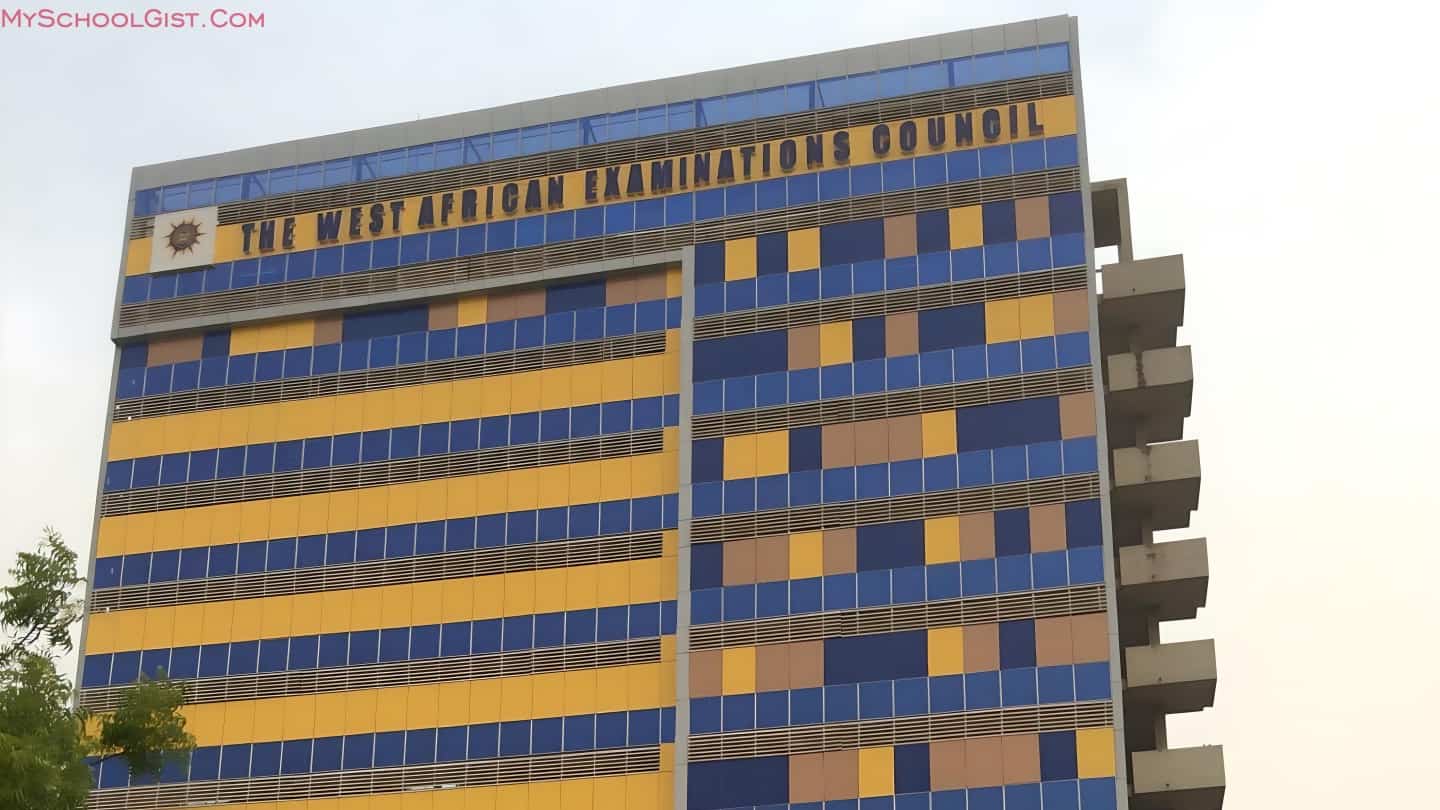
The West African Examinations Council (WAEC) has complied with the directive of the House of Representatives to shift the conduct of Computer Based-WASSCE, which was to commence in 2026.
The council, yesterday, said rather than conduct full CB-WASSCE in 2026, it would use next year to conduct the pilot test of the computer-based school exam in 2026.
At the NNC meeting, WAEC rewarded some students in the May/June 2024 WASSCE for their outstanding performance.
The overall best in WASSCE went to 18 year-old Ajisafe Olamilekan of Eemaan Foundation College, Osogbo, Osun State, with eight A1.
The second position went to 18 year-old Onovo Joan of Louisville Girls High School, Ijebu-Itele, Ogun State, with eight A1.
Another 18 year-old Mbah Mac-Donald of Grundtvig International Secondary School, Oba, Anambra State, with eight A1 clinched the third position.
The three students and others were presented with certificates, plaques and cash award
The Chairman, WAEC Nigeria National Committee (NNC), Hajiya Binta Abdulkadir, announced that the council would begin the conduct of CB-WASSCE from 2027.
The House of Representatives, had last week, directed WAEC to halt the conduct of CB-WASSCE and start the computer exam in 2030.
Other News
Abdulkadir said this year marks a significant milestone in the council’s commitment to modernising assessment to serve the Nigerian child.
She said: “This technological evolution builds upon the success of the CB-WASSCE introduced last year, starting with the private candidates’ examination (first series, 2024). This initial rollout utilised a hybrid mode: candidates tackled the multiple choice questions directly on the computer screen.
The NNC chairman said the council was aware that the directives from the Federal Ministry of Education regarding the full migration to CB-WASSCE for the 2026 examination had raised concerns among stakeholders.
“I want to seize this opportunity to assure you that no candidate sitting this examination will be disenfranchised. To ensure a smooth transition to the CB-WASSCE, the council is collaborating with the Federal Ministry of Education to explore options that will ensure the smooth transition. “Recently, we trained students in senior secondary school on the pilot test of the use of tablet and digital style in responding to essay questions. This is to ensure that they are fully prepared for the migration to the full-blown CB-WASSCE, in line with the directive of the Federal Government,” she noted.
Abia State Governor, Dr. Alex Otti, said the state had made remarkable progress in improving school infrastructure, strengthening teacher capacity, safeguarding the learning environment and implementing forward-looking policies that place the learner at the centre of educational development.
The governor, who was represented by the Commissioner for Basic and Secondary Education, Elder Goodluck Ubochi, acknowledged the proactive steps WAEC had taken to strengthen the credibility of examinations, particularly the recent policies introduced to curb malpractices and protect the integrity of assessment processes.
Otti assured the council that the state would fully align with the vision and continue to support every initiative aimed at promoting honesty, discipline and fairness in Abia schools.
His words: “WAEC continues to occupy a pivotal place in the educational landscape of West Africa. Your work shapes the standards that mould millions of young people across the region.”
In his address, WAEC Head of National Office (HNO), Dr. Amos Dangut said the NNC was the highest policy-making organ of WAEC in Nigeria and the membership of the committee is made up of experienced and distinguished Nigerians. Dangut disclosed that the committee ensures that the policies of the council in Nigeria were formulated and executed in the best public interest, and to guarantee the smooth conduct of WAEC’s operations in every part of the country.
He reassured that WAEC, which has grown in leaps and bounds in the 73 years, would continue to deliver its mandate of being Africa’s foremost examining body, adding value to the educational goals of its stakeholders.