Follow Us on Google
From Fred Ezeh, Abuja
The Catholic bishops, under the umbrella of the Catholic Bishops’ Conference of Nigeria (CBCN), have faulted the ability of the 2026 Electoral Law to produce elections in 2027 that would be free, fair and acceptable to the majority of Nigerians.
The Catholic bishops noted that the recently passed and signed Electoral Law does not represent the wishes and will of the people as presented during the preparation process, and therefore suggested a review of the process to accommodate the key wishes of the people.
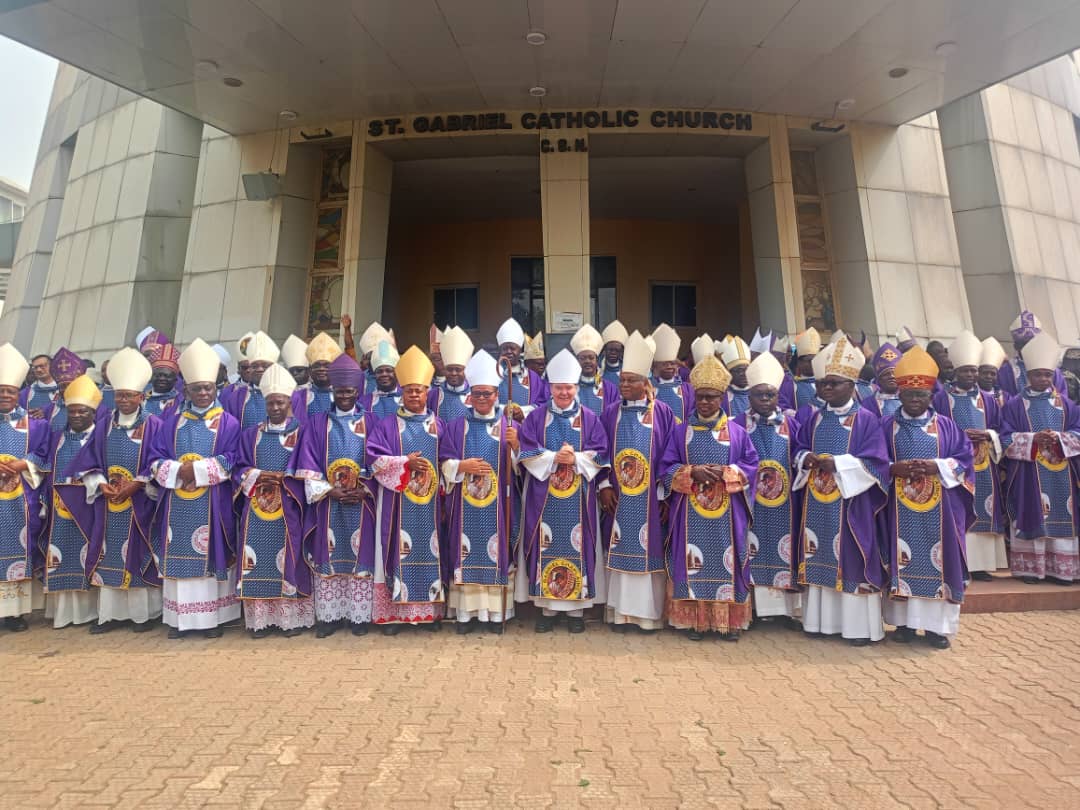
CBCN President, Archbishop Lucius Iwejuru Ugorji, raised the concerns at the opening session of the 2026 first plenary meeting of CBCN at the Catholic Secretariat of Nigeria (CSN) in Abuja on Sunday.
He said, “Unfortunately, the process of electing political leaders in Nigeria has been, for years, undermined by gross irregularities. These irregularities strongly affect the confidence of Nigerians in the electoral process and have led to the steady decline of voter turnout during general elections.
“In 2003, the turnout was 69 per cent of registered voters. In 2007, it was 57 per cent, in 201,1 54 per cent, in 201,5 43.65 per cent; in 2019, 35.66 per cent; and in 2023, it dropped further to 23 per cent. This decline says a lot about citizens’ trust in the electoral process and calls into question the legitimacy of elected officials in a democratic dispensation with the mandate of an ever-decreasing minority of citizens of voting age. If this downward trend in voter turnout during general elections continues, it will inflict a disastrous blow to democracy in Nigeria.
“To save democracy in the country, the National Assembly (NASS) should review its recent stand on the electoral reform and try to revive the confidence of Nigerians by ensuring that the Electoral Act provides for the mandatory transmission of the election results in real-time from the Bimodal Voter Accreditation System (BVAS) at the polling unit to the INEC Result Viewing (IReV) portal at the INEC headquarters to prevent any human tampering with the expressed will of the electorate henceforth.
Other News
“This is the will of the people and has to be respected. This will promote free, fair and credible general elections in our nation. In passing a Bill that is a ‘watered-down’ version of the people’s will and which creates room for the manipulation of electoral results, the NASS should recall that it had earlier passed the 2025 Tax Bill that demands digital filing, record-keeping and payments across the country.
“Members of the National Assembly should not allow themselves to be perceived as talking out of both sides of the mouth, expressing inconsistent and contradictory positions in the process of passing bills. The world is watching.”
The CBCN President, however, lamented the continued rise in security challenges. “We continue to hear sad tales of senseless massacres, mass burials, endless tears and grief. Tensions have heightened in the country due to the new wave of mass kidnapping incidents by gunmen in Kwara, Kebbi, Niger, Kaduna, and Kogi States, involving many students, pupils and worshippers.”
He also noted that criminal groups use proceeds from the sale of minerals, such as gold and lithium, to buy weapons and fund terrorist activities across the country, accusing foreign nationals, especially the Chinese, of collaborating with criminal networks to exploit weak regulations and enforcement to participate in illegal mining and cart away the nation’s wealth, while citizens watch with seeming helplessness.
“Hazardous chemicals such as mercury and lead used by these unlicensed miners result in severe environmental degradation, soil and water contamination, loss of biodiversity, and a public health crises,” he noted.
He charged the political leadership in Nigeria to work for the common good. “This is its full justification and purpose. The common good presupposes respect for the dignity and rights of each individual. It involves the social welfare and development of one and all in the society.
“To achieve the common good, it is the responsibility of the public authority to ensure that the citizenry has access to what is needed to lead a truly human life, notably, food, clothing, health, work, education, culture, suitable information, the establishment of a family, etc. The common good also requires peace, stability and security of a just order,” he noted.