Follow Us on Google
By Uche Usim
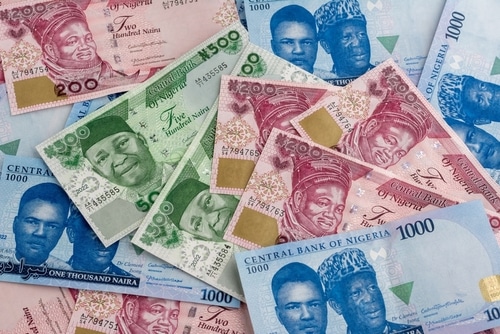
Despite years of investment in digital payments, mobile banking and financial inclusion initiatives, Nigerians continue to rely heavily on cash transactions, with currency held outside the banking system rising to N5.19 trillion in May 2026.
Latest Money and Credit Statistics released by the Central Bank of Nigeria (CBN) showed that cash outside banks increased from N5.08 trillion in April to N5.19 trillion in May, representing a month-on-month rise of N109.34 billion or 2.15 per cent.
The figure was also N559.16 billion higher than the N4.63 trillion recorded in May 2025, translating to a year-on-year increase of 12.07 per cent.
The development highlights the challenge facing regulators and financial institutions seeking to deepen electronic payment adoption and reduce dependence on physical cash across Africa’s largest economy.
The data showed that total currency in circulation rose to N5.69 trillion in May from N5.65 trillion in April, an increase of N43.59 billion or 0.77 per cent. Compared with May 2025, currency in circulation expanded by N675.19 billion, representing annual growth of 13.46 per cent.
Analysis of the figures indicates that a substantial portion of cash released into the economy remains outside the formal banking system.
Currency outside banks accounted for 91.27 per cent of total currency in circulation in May 2026, up from 90.03 per cent in April. This implies that more than nine out of every 10 naira in circulation were held by households, traders, businesses and participants in the informal economy rather than deposited with financial institutions.
Although the ratio was slightly below the 92.40 per cent recorded in May 2025, it highlights the continued dominance of cash transactions across large sections of the economy despite the rapid expansion of digital payment channels.
Industry analysts say the figures reflect the enduring influence of Nigeria’s informal sector, where cash remains the preferred means of exchange due to convenience, limited banking penetration in some communities, network challenges and concerns over transaction costs.
The trend also suggests that while digital payment adoption has grown significantly in urban centres, many rural and semi-urban areas continue to rely on cash for daily commercial activities.
The latest statistics come amid sustained efforts by the CBN, banks, fintech firms and payment service providers to encourage electronic transactions through bank transfers, mobile money, agent banking networks, QR-code payments and other digital channels.
Other News
However, the rise in cash held outside banks coincided with a decline in reserves maintained by deposit money banks with the apex bank.
According to the CBN data, bank reserves fell from N34.603 trillion in April to N33.763 trillion in May, representing a decrease of N840.77 billion or 2.43 per cent.
The decline points to reduced liquidity buffers within the banking system during the month even as more physical cash circulated outside formal financial channels.
Nevertheless, bank reserves remained significantly higher than levels recorded a year earlier. Reserve balances rose by N2.90 trillion from N30.865 trillion in May 2025, representing annual growth of 9.39 per cent.
The contrasting movement between rising cash outside banks and declining reserves highlights the complex nature of Nigeria’s financial landscape, where digital payment growth has not yet translated into a significant reduction in cash usage.
Financial experts note that cash remains deeply entrenched in sectors such as transportation, open markets, agriculture, small-scale retail trade and other informal economic activities that account for a large share of employment and commercial transactions nationwide.
The persistence of cash usage comes even as Nigeria records some of the highest volumes of instant electronic payments in Africa, driven by increasing smartphone penetration, fintech innovation and expanding digital banking services.
Speaking recently at the launch of the Nigeria Payment System Vision (PSV) 2028 in Abuja, CBN Governor, Olayemi Cardoso, said the initiative is designed to build on the country’s achievements in digital payments and accelerate the transition to a more inclusive, efficient and technology-driven financial ecosystem.
Under the roadmap, the apex bank aims to reduce currency circulating outside the banking system to below 40 per cent of total currency in circulation over the coming years.
As part of the strategy, more than 10 million QR-code and tap-to-pay acceptance points are expected to be deployed across markets, transport hubs, rural communities and commercial centres nationwide.
The CBN believes that wider acceptance of digital payments, combined with stronger financial inclusion efforts and improved payment infrastructure, will help reduce dependence on cash and strengthen transparency within the economy.
For now, however, the latest data show that physical cash remains king for millions of Nigerians, underscoring the scale of the challenge facing policymakers as they push for a less-cash economy.