Follow Us on Google
From Uche Usim, Bangkok, Thailand
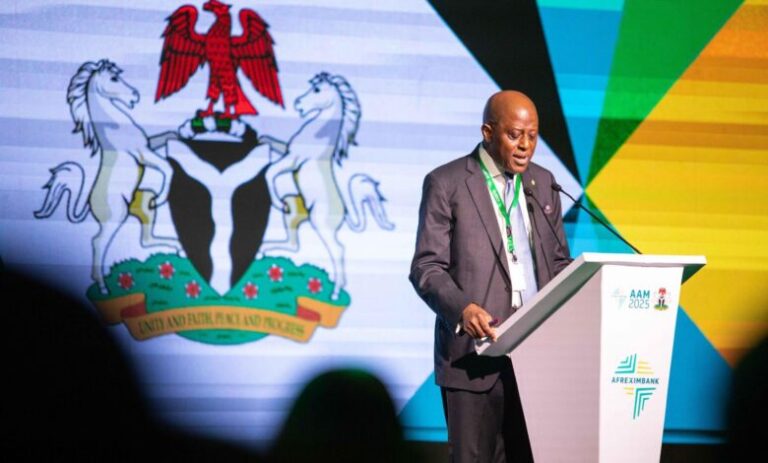
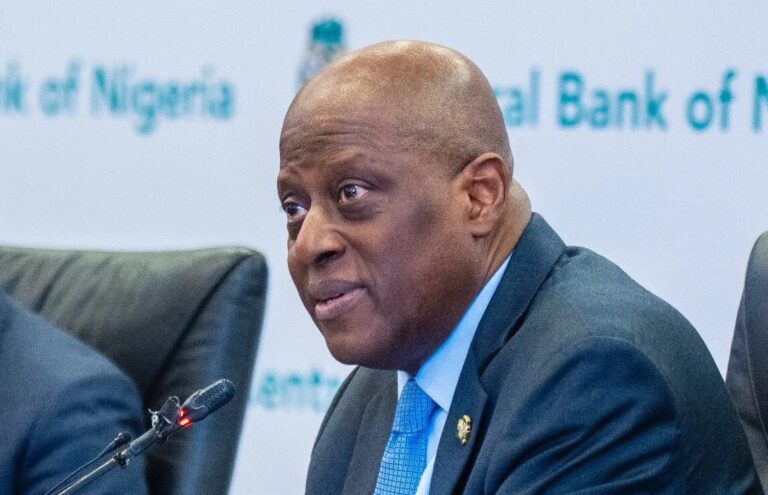
The Governor of the Central Bank of Nigeria (CBN), Olayemi Cardoso, has said that the apex bank’s credibility and clear communication helped it manage a monetary policy decision that surprised the market without causing significant disruption.
Cardoso said the decision was supported by improving economic conditions, stronger external reserves, falling inflation and efforts to correct weaknesses in the way monetary policy affects the wider economy.
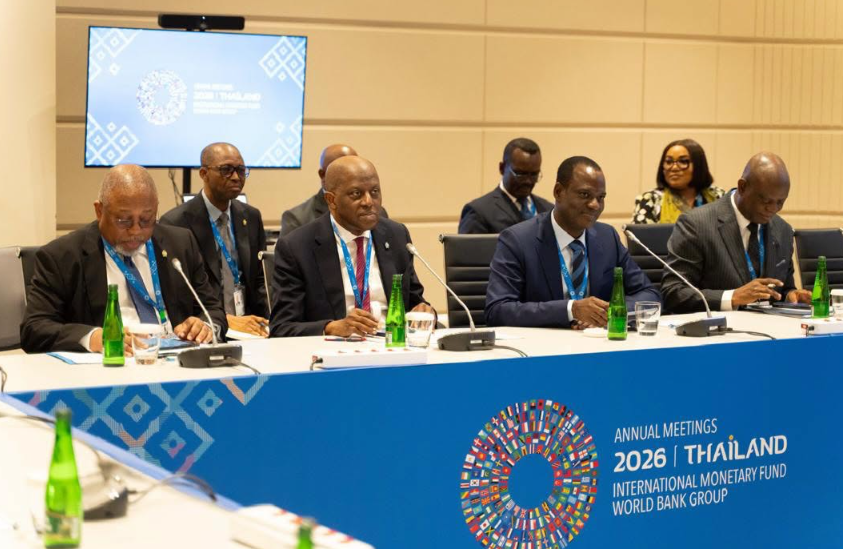
Speaking on Thursday at a session titled ‘How Central Banks Decide’, moderated by Dan Katz, First Deputy Managing Director of the International Monetary Fund (IMF), Cardoso explained how the CBN reached policy decisions, managed disagreements among Monetary Policy Committee (MPC) members and communicated its decisions to the public.
He stressed that the ability of a central bank to take difficult decisions depends not only on economic data but also on the independence of its decision-making process and the confidence it has built with market participants.
“The market must have seen the central bank consistently doing the right things over time and developed confidence that it can trust the institution,” he said.
According to Cardoso, that trust becomes particularly important when a policy decision comes as a surprise to investors and other market participants.
He explained that the CBN had taken steps to improve coordination between fiscal and monetary authorities, introduce greater clarity into interest rate conditions and strengthen the economy’s ability to withstand policy changes.
The CBN governor said the fiscal and monetary authorities signed a memorandum of understanding to ensure that both sides worked towards common economic objectives.
He added that the introduction of the overnight financing rate had provided greater clarity about actual interest rate conditions than the previous arrangement.
Cardoso stated that these developments, alongside improving economic indicators, created room for the bank to take a decision that might have been possible earlier.
“From a macroeconomic perspective, Nigeria was in a relatively strong position,” he said, adding that external reserves had reached their highest level in 18 years, inflation was declining and the economy was continuing to grow at a reasonable pace.
He noted that the CBN devoted more time than usual to explaining the reasons behind the decision after the MPC meeting.
Rather than simply announcing the outcome and leaving the market to interpret it, Cardoso said he explained the economic conditions that led to the decision, the challenges the country had faced and the progress made in addressing them.
“You can announce a decision first and leave people wondering how it relates to other developments. Alternatively, you can explain the context,” he said.
According to him, the approach helped market participants understand the thinking behind the decision and why the bank considered it necessary.
Cardoso said the CBN also had sufficient economic buffers to manage the decision, reducing the risk of an adverse reaction.
He identified a weakness in the monetary policy transmission mechanism as one of the major issues the MPC needed to address.
The transmission mechanism describes how changes in the CBN’s policy rate affect interest rates charged by banks, lending to businesses and households, spending, investment and, ultimately, inflation.
Cardoso said market participants were already aware that the mechanism was not working properly because they could observe its effects in their daily operations.
As a result, they were able to understand the rationale for the CBN’s action once the bank explained its position.
Other News
Beyond communicating policy decisions, the governor said the quality of monetary policy deliberations depended heavily on the composition of the MPC and the willingness of members to express independent views.
He explained that the committee has 12 members, comprising seven internal members and five external members, whose different experiences help improve the quality of discussions.
According to him, external members bring perspectives that may differ from those of officials who work within the CBN and deal with the same data and procedures every day.
“A critical part of that process was ensuring that the external members of the Monetary Policy Committee were strong, well-recognised and independent-minded individuals. This significantly reduced the risk of groupthink,” he said.
Groupthink occurs when members of a group avoid challenging one another’s views and instead follow a common position, even when alternative opinions could improve the outcome.
Cardoso said external members helped make discussions more rigorous by questioning established practices and introducing ideas from outside the institution.
He also said he avoided holding preliminary meetings with internal MPC members to agree on decisions before formal committee sessions.
“I do not hold meetings with internal members to reach conclusions on MPC decisions before the committee meets. I do not do that.
“Instead, members receive relevant data in advance and have access to the CBN’s secretariat to ask questions, examine possible outcomes and conduct scenario analysis before forming their positions,” he said.
Cardoso said the governor’s role as chairman was to guide discussions towards productive conclusions without imposing decisions on members.
He explained that he reads the individual statements published by MPC members to understand the reasoning behind their positions, including those who disagree with the final decision.
The CBN introduced the publication of individual statements as part of its commitment to transparency, allowing the public to gain a better understanding of the different views within the committee.
Cardoso said one effective way to manage lengthy deliberations was to establish areas of agreement before discussing points of disagreement.
“If you begin with the areas of disagreement, you may spend too much time debating relatively minor issues. But if you first establish common ground, you can identify the next steps more easily,” he added.
He also cautioned against copying the policies of other central banks without considering Nigeria’s peculiar economic conditions.
According to him, Nigeria’s inflation experience differed from that of several other countries because foreign exchange harmonisation and the removal of fuel subsidy occurred at a different stage of the global inflation cycle.
Consequently, inflationary pressures were emerging in Nigeria at a time when inflation was easing in many other economies.
Cardoso said monetary policy decisions must therefore reflect domestic realities, even when members examine the actions of institutions such as the United States Federal Reserve.
He maintained that sound decision-making, independent debate, transparency and effective communication remained essential to maintaining confidence in the CBN and ensuring that its policies achieved their intended results.
Other members of the panel are: Chairman of the Governing Board of the Swiss National Bank, Martin Schlegel, and Emmanuel Moulin, Governor of the Banque de France.