Follow Us on Google
Grey-list exit frees up $30bn in lost investment
______________________
By Uche Usim
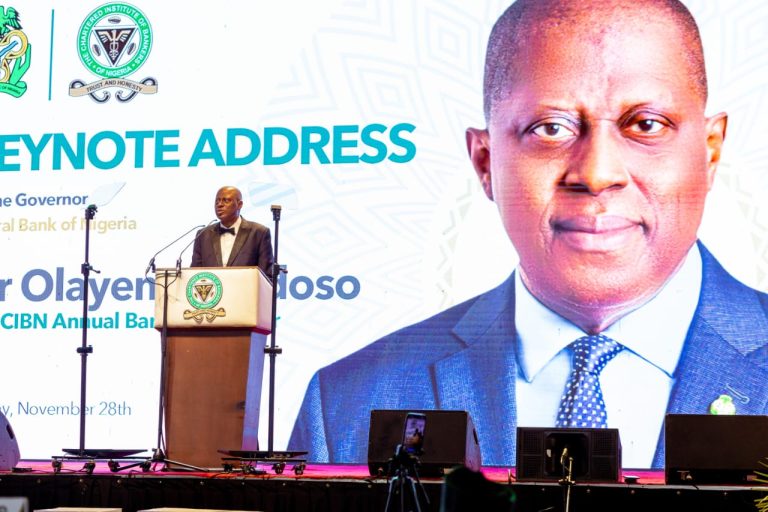
Central Bank of Nigeria Governor Yemi Cardoso has announced a marked rebound in Nigeria’s economic confidence, citing robust financial indicators and positive trends.
Speaking at the Chartered Institute of Bankers of Nigeria’s 60th Annual Dinner in Lagos, Cardoso reported that foreign capital inflows had reached $20.98 billion between January and October 2025. This figure represents a 70 per cent increase from last year and is more than four times the inflows recorded in 2023. He attributed this return of investor confidence to restored order in Nigeria’s foreign-exchange system and improved market transparency.
Cardoso highlighted Nigeria’s removal from the FATF grey list as a decisive achievement for the year. He explained that countries on the list typically see a drop in capital inflows worth 7.6 per cent of GDP, equating to over $30 billion in missed investment for Nigeria. According to Cardoso, exiting the list has “restored credibility, eased cross-border payments, and reopened doors to global finance.”
He forecast a gradual and sustained decline in inflation for 2026, stating that ongoing reforms have already begun to stabilise prices, strengthen the naira, and rebuild trust in Nigeria’s monetary system. The CBN is now steadily moving toward a full inflation-targeting regime to align fiscal and monetary policies more closely.
Cardoso noted that Nigeria is becoming less vulnerable to oil price shocks. Oil revenue now accounts for just 33 per cent of government earnings and 51 per cent of exports, indicating deeper economic diversification.
Other News
He stressed that swelling foreign-exchange reserves are supported by stronger non-oil exports, improved market activity, and renewed foreign investments, rather than borrowing.
On the banking sector, Cardoso explained that the CBN is tightening its credit-risk framework as the recapitalisation exercise enters its final stage. Twenty-seven banks have raised fresh capital, with 16 already surpassing new thresholds, keeping the sector on track to meet the 31 March 2026 deadline. He said this approach aims to avoid the boom-and-bust cycles of previous recapitalisation drives.
The CBN’s support for small businesses continues to grow, with microfinance lending up by 14 per cent this year and more than 1.2 million MSMEs accessing new digital-credit products.
Cardoso reaffirmed the Bank’s commitment to a flexible exchange-rate system, with a revised FX Manual set to tighten documentation, expand market participation, and ensure consistent implementation. He also credited reforms such as EFEMS deployment, unified exchange-rate operations, and risk-based supervision for making Nigeria more resilient.
“With discipline and focus, Nigeria’s economy will stay stable, inclusive, and ready for long-term growth,” he assured.