Follow Us on Google

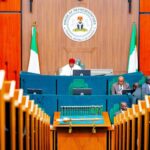
The Christian Association of Nigeria (CAN) and former presidential candidate, Mr. Gbenga Olawepo-Hashim, have lauded the Senate for reversing its earlier position not to allow the use of electronic voting and transmission of result in the coming elections.
CAN’s General Secretary, Joseph Daramola, in a statement,yesterday, recalled the uproar and controversy the July decision generated and commended the leadership of the Senate for being sensitive to the yearnings and aspirations of the people.
“That is the beauty of democracy. The more the government does this, the better for our nation.’’
CAN called on the House of Representatives to follow this path of honour by rescinding its own decision too and President Muhammadu Buhari to do the needful by signing the amendment bill into law as soon as he received it.
The association, however, called on the two chambers to let political parties decide how their candidates would emerge instead of imposing Direct Primaries on them.
“We appeal to INEC, the Federal Government, the security agencies, political parties and the Non-Governmental Organisations to work together to ensure credible, free and fair polls in the country.
“The situation where courts decide those occupying our political offices is totally unacceptable, reprehensible and disheartening.
“If by now our democracy is still a baby, Nigeria will not be regarded as a serious country in the comity of nations,” the association said.
Similarly, Olawepo-Hashim, hailed electronic transmission of votes and direct primaries as a big vote for democratic consolidation in Nigeria.
Other News
In a statement in Abuja, yesterday, he said: “The controversy over electronic transmission of results was laid to rest when the Senate voted in its support on Tuesday. Senate actually did what Nigerians wanted; and that is what parliaments are meant to do.”
Olawepo-Hashim, who is now a chieftain of the All Progressives Congress (APC), commended the ruling party and added that that was what the Peoples Democratic Party (PDP) was unable to do in its 16 years in power.
“With this, the APC did what the opposition PDP refused to do in 16 years of its control of power in Nigeria. The APC-controlled National Assembly did more as it legislated direct primaries and transferred power to the people. Surprisingly, it is the opposition PDP that is crying. What a “democratic party” that is afraid of the people.”
He commended the new political process which he said has now handed over power directly to the people.
“The journey started in July when the Speaker of the House, Femi Gbajabiamila moved the amendment to allow direct primaries, which was adopted by the House during the clause by clause consideration. On Tuesday, October 12, 2021, Senate reviewed its earlier decision on the controversial section 52 (3), and also adopted the position of the House on Section 87 on mandatory direct primaries for all parties. 87(1) of the bill now reads, “A political party seeking to nominate candidates for elections under this Bill shall hold direct primaries for aspirants to all elective positions, which shall be monitored by the Commission.
“While direct primaries involves the participation of all party members in the selection of party candidates, the indirect primaries involves the use of delegates who are usually leaders and members of the executives at the ward, local government and state levels, to elect the party’s candidates at a congress or convention.
“The case for direct primary is that it is generally less prone to manipulation by godfathers, moneybags and sitting governors.. Some have seen this direct primary as a direct revolt against the governors who they claimed have transformed themselves into emperors in their states.
“For instance, in 2014, if majority of party leaders across the country had not decided on President Muhammadu Buhari as APC candidate, the man who bears dollars would have crashed his victory. Not a few also believe that with direct primary, no politician will stay far away from his or her constituency again. That is for local elections.
“For presidential primary, there are concerns that this may in fact double campaign expenses. The presidential primary may become a general election before the general election, that only the “king of boys” can afford. The ‘people’ may just be spectators in the process, giving the prevailing culture of vote buying,” he said.