Follow Us on Google
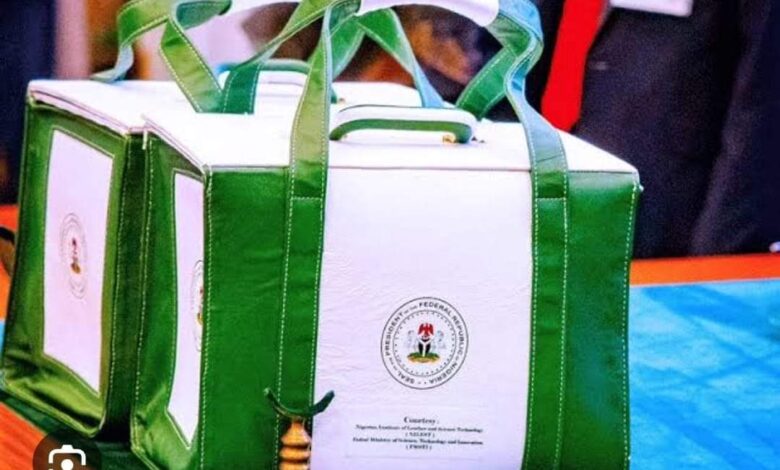
The Organised Private Sector and experts have commended the projections and estimates canvassed in the 2024 budget of renewed hope presented by the president and are seeking improved capital expenditure, diversification and implementation to save the economy.
In the proposed N27.5 trillion Federal Government’s 2024 budget, presented to the national assembly by president Bola Tinubu, the strategic objective of the expenditure policy is expected to tackle macro-economic stability, investment environment optimization, human capital development, poverty reduction and social security.
In its analysis, the Lagos Chamber of Commerce and Industry (LCCI), noted that relative to Nigeria’s GDP size, the proposed budget is 12.2%, which is very low compared to its African peers, adding that this is a serious issue that needs to be addressed by the government, in the light of its renewed hope agenda.
Dr Chinyere Almona opined that government must improve its budget performance in terms of capital expenditure in 2024.
She said over the years, the performance of the capital expenditure has been very low relative to the recurrent expenditure, with implications for the country’s infrastructure sector. “The situation is worrisome and calls for urgent solutions.”
The LCCI boss further recommended that particular attention must be paid to investing more in transport infrastructure to mitigate the high cost of fuel and resolve the many logistical challenges that have impacted the movement of goods across the nation.
“Looking beyond oil revenues, government must build investors’ confidence and enhance our forex earnings through non-oil exports. We need to invest more in export infrastructure through automation and implementation of critical port reforms to reduce the bottlenecks in our export logistics and processes.”
For Frank Onyebu, immediate past chairman, Manufacturers Association of Nigeria(MAN), Apapa branch, the emphasis on a stable macro-economic, business friendly environment with due regard to private investment is commendable.
He however noted that on the expenditure, the non-debt recurrent expenditure of N9.92 trillion is very high. “If you add this figure to the projected debt service of N8.25 trillion you have a total of N18.17 trillion out of a total budget of N27.5 trillion.
“This constitutes more than 66% of the budget, which leaves only N8.7 trillion for capital expenditure. These will be part-funded by a deficit of N7.83 trillion.”
He emphasised on the need to cut back on the cost of governance “but this government doesn’t appear to be impressed with this call. It is important that we all understand the gravity of the situation we face at this point in time and take necessary measures. It is imperative that the government leads by example.”
He said on the revenue side, government needs to expand its tax net by bringing in more people into the tax bracket instead of over taxing.
“It’s unfortunate that a lot of very rich people in this country pay little or no taxes. They people evade tax while the visible ones, especially manufacturers, are overtaxed.”
The manufacturer supported the idea of private sector involvement in development, which he said will boost the economy.
Development Expert, Dr. Nathan Owhor noted that there are clear indications in the budget presentation to create jobs, reduce poverty, ensure security, enhance human capital development, contain rising domestic prices, lower cost of doing business, ensure value for money, greater transparency and accountability as well as macro-economic stability.
He however pointed out that the major challenge in the past has been the disconnect between policy and implementation.
But he is hopeful that this is a new administration with a renewed hope agenda in eight thematic areas of the economy.
” It is generally believed that the government will deliver on its agenda to raise and sustain the hope of Nigerians.
“In any domestic economy, private sector investment will always accelerate socio-economic development. This is given especially when the investment is in some critical sectors of the economy like energy, communication and transport infrastructure amongst others. “These sectors have the capacity to enhance manufacturing, trade and businesses with its attendant positive impact on the well-being of citizens.”
For an SMEs expert, public affairs analyst and a member of the LCCI, Daniel Dickson-Okezie, a situation where we are spending about 45 percent of our expected revenue on debt servicing speaks volumes.
“I have some issues with the expected revenue of about N18.32trillion. The question is where is the revenue coming from, we have never gone up to N10 trillion expected revenue in our previous budgets and over optimistic revenue projection will lead to further borrowing, which may be in the usual way of taking foreign loans or ways and means from the central bank.”
The expected revenue of N18.32 trillion in my view is on the high side.”
Decrying the present situation where companies are over taxed which has led to many closing shop and relocating he said : From the high estimated revenue which is about 18.32 trillion , we hope government is not just relying on heavy taxation as it is obvious the government is banking so much on increasing taxes. If you tax businesses beyond what they can give, obviously they will leave. Now the cost of living is beyond what everyone can handle. Purchasing power has been eroded. The people that will buy what those businesses will produce don’t have the capacity to buy. That is the effect of excessive taxation.”
Dickson-Okezie viewed that for this budget to work first, the country has to diversify the economy.
“Some may say well we have diversified the economy but we have not developed other areas of diversification neither have we developed the oil sector.”
On the area of agriculture, he commended the projections and estimate but noted that if the political will is not there to implement the budget on defense, there won’t be security for farmers to go back to farms and for people to leave IDP camps and go out to do business ” this is fundamental.
This will also affect getting raw materials input for manufacturers and other businesses.”
On the area of job creation, he lamented that the government was not implementing the buy made in Nigeria order which could create more jobs if executed.
“How can the government create jobs when it must have bought about 10,000 SUVs all imported. They do not want to patronize made in Nigeria goods how can they encourage local industries and create employment.”
He viewed that more than budget estimates, the government really needs to have the political will to follow up and implement the budget.
“We have seen nice budgets in the past. The point remains the will power to follow up on it.
“You want to create jobs, no improvement in power supply, you are not patronizing made in Nigeria goods , you import everything and then you want to create jobs, it’s not feasible.
The manufacturing companies and SMEs are closing shop due to unfriendly environment of doing business.
There is always absence of verifiable action plans to revive the manufacturing sector, agriculture,energy , health, education sectors. We hope the government will walk the talk and do things that will not inhibit what they tend to achieve.”