Follow Us on Google
From Jude Chinedu, Enugu
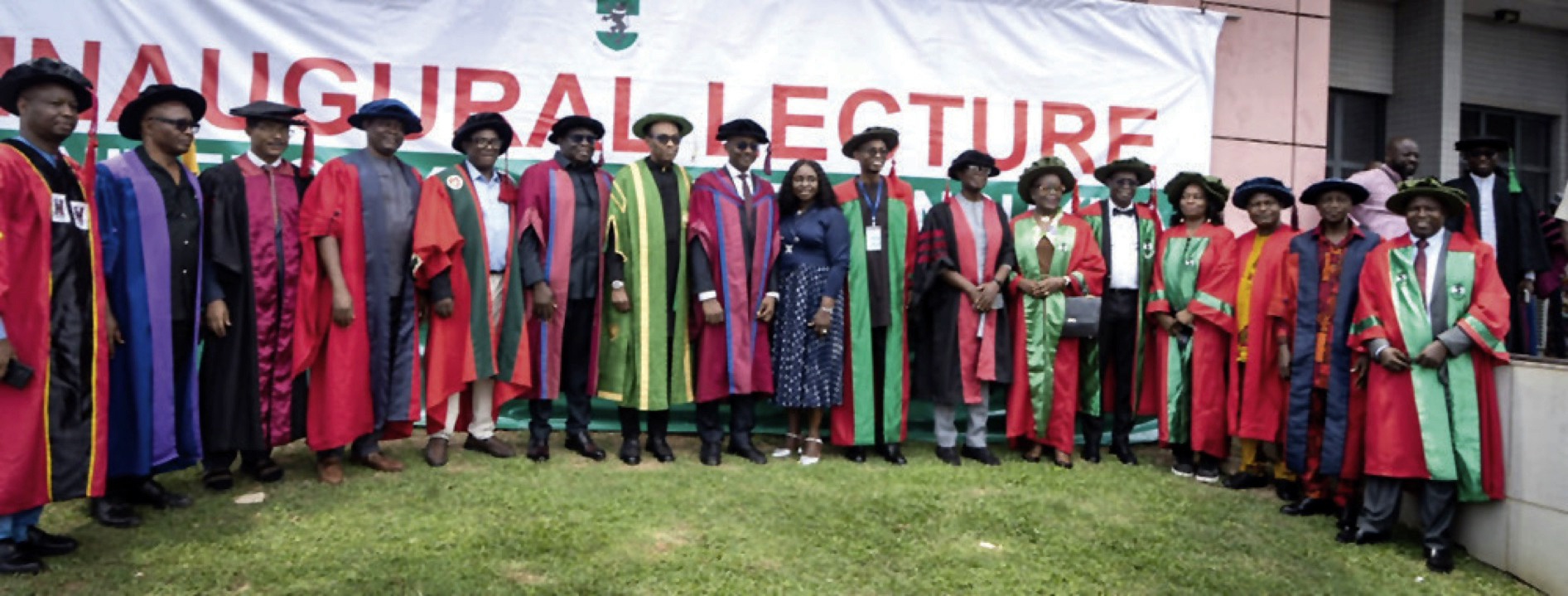
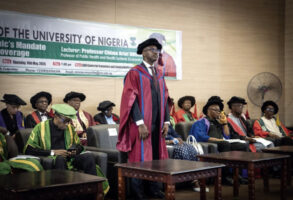
The hall inside the CBN Building at the University of Nigeria, Enugu Campus (UNEC), fell into reflective silence on May 14, 2026, as Chima Ariel Onoka, Professor of Public Health and Health Systems Economics at the University of Nigeria, delivered the institution’s 241st inaugural lecture before an audience of academics, medical practitioners, policymakers, students and public officials.
It was more than an inaugural lecture. It was a searching reflection on a healthcare system that often leaves the poor vulnerable to illness, debt and avoidable deaths.
Titled, “Bridging the divide: the pracademic’s mandate in the quest for universal health coverage,” the lecture traversed decades of research, painful encounters in Nigeria’s hospitals and villages, and hard lessons from health financing reforms that have repeatedly failed the country’s most vulnerable citizens.

For nearly two hours, Onoka spoke not only as a researcher, but also as someone shaped by years of frontline medical experience.
He spoke of mothers who died because healthcare arrived too late; of children lost to preventable illnesses; of families driven into poverty because hospitals demanded payment before treatment; of rural communities where distance, weak governance and empty drug shelves continue to determine who lives and who dies.
And, perhaps, most painfully, he spoke of the moment his faith in the Nigerian healthcare system collapsed.
“The shift from being a clinician to a passion for systemic reform arrived at 10pm in a General Hospital,” he recalled.
“As the only doctor and medical director, just one year after NYSC, I found myself manually removing a retained placenta from a woman who never presented for antenatal care and arrived in labour. I intervened under the flickering light of a kerosene lantern.
“To ensure her survival, I did not rely on a nonexistent referral system; I drove the hospital ambulance I had renovated to a private clinic where the ‘embarrassment of mortality’ would force a high-ranking public official to intervene.
“While that mother survived, my belief in the status quo died. The realisation of a broken system eclipsed the joy of a life saved. The clinical ‘gold standard’ presented in my textbooks was a mirage; the reality was a fragmented system where Universal Health Coverage was a distant dream and ‘out-of-pocket’ meant ‘out of luck.’”
Other News
It was the story of a young doctor confronting a painful reality familiar to many Nigerian health workers: that skill and commitment alone cannot compensate for systemic failure.
That encounter, he explained, changed the direction of his life and pushed him away from purely clinical practice into public health systems, health economics and healthcare financing reform.
“I have practiced medicine in prisons, government houses, NYSC camps, urban and rural hospitals, a government house clinic, homes, classrooms, village squares, streets, by phone, and in over one hundred medical mission outreaches, IDP camps, and orphanages.
“Everywhere, the diagnosis was the same: most patients were not just ill — they were poor, unprotected, and forgotten. They were victims of structural abandonment — the systematic exclusion of the vulnerable from the protective reach of the state,” he said.
Throughout the lecture, Onoka repeatedly returned to one central argument: that healthcare in Nigeria is not failing because the country lacks medical knowledge, but because the system itself remains structurally unequal.
“In the Nigerian context, UHC is not a medical problem. It is not even a math problem. It is a power problem.”
The phrase lingered in the hall like a challenge directed at government officials, policymakers and institutions responsible for healthcare governance.
Universal Health Coverage (UHC), which lay at the centre of the lecture, refers to a healthcare system where every citizen can access quality health services without suffering financial hardship. But according to Professor Onoka, Nigeria remains far from that goal.
“Universal Health Coverage (UHC) is the global health goal centred on the principle that everyone, everywhere, should have access to the full range of preventive, curative, and rehabilitative health services they need, whenever they need them, without facing financial hardship.
“UHC is beyond health insurance. Fundamentally, it represents a shift in how a society values the life of every citizen, from the President’s child in Aso Villa to the sachet water seller on the street,” he explained.
Citing data from the lecture document, he revealed that out-of-pocket healthcare spending in Nigeria remains between 70 and 75 per cent — among the highest globally. Meanwhile, despite increases in public expenditure, the 2026 health budget of about N2.48 trillion still represented only between 4.2 and 5.2 per cent of the national budget, far below international recommendations.
“Across the settings we studied, out-of-pocket payments remain the primary source of private health financing.
“OOPs take many forms: formal user fees at public facilities, informal payments to providers, direct purchases from patent medicine vendors, payments for out-of-stock drugs, transport and diagnostic costs that accompany care seeking, and informal under-the-table payments to facilitate access.
“Two features are striking. First, OOPs are highly regressive: poorer households spend a larger share of their income on health than wealthier households. Second, OOPs are volatile and unpredictable, making them a poor mechanism for managing risk.
“For many families, a single acute episode such as an emergency delivery, a severe malaria case, or a surgical complication can trigger a cascade of financial distress.”
“Health financing that guarantees financial risk protection for the poor is a macroeconomic issue and not just a medical one.
“Without financial risk protection, the health system becomes a ‘poverty-generating machine’ rather than a pillar of economic development. The architecture of health financing, including the ways we raise, pool, and spend money, determines who gets care, what care costs, and whether households are protected from financial ruin.”