Follow Us on Google
Nigeria’s Bonga Southwest/Aparo deepwater project is emerging as a major test of the country’s renewed push to attract large-scale investment into its oil and gas sector, with the development expected to attract between $15 billion and $21 billion over its life.
The project, located in the deep offshore waters of the South-Western Niger Delta, is expected to achieve peak production of about 175,000 barrels of crude oil per day and 140 million standard cubic feet of gas per day.
Beyond its projected oil and gas output, the Bonga Southwest/Aparo project, also known as BSWAp, is expected to create opportunities for Nigerian businesses, boost local content, generate employment and strengthen the country’s position as a hub for deep offshore project execution in Africa.
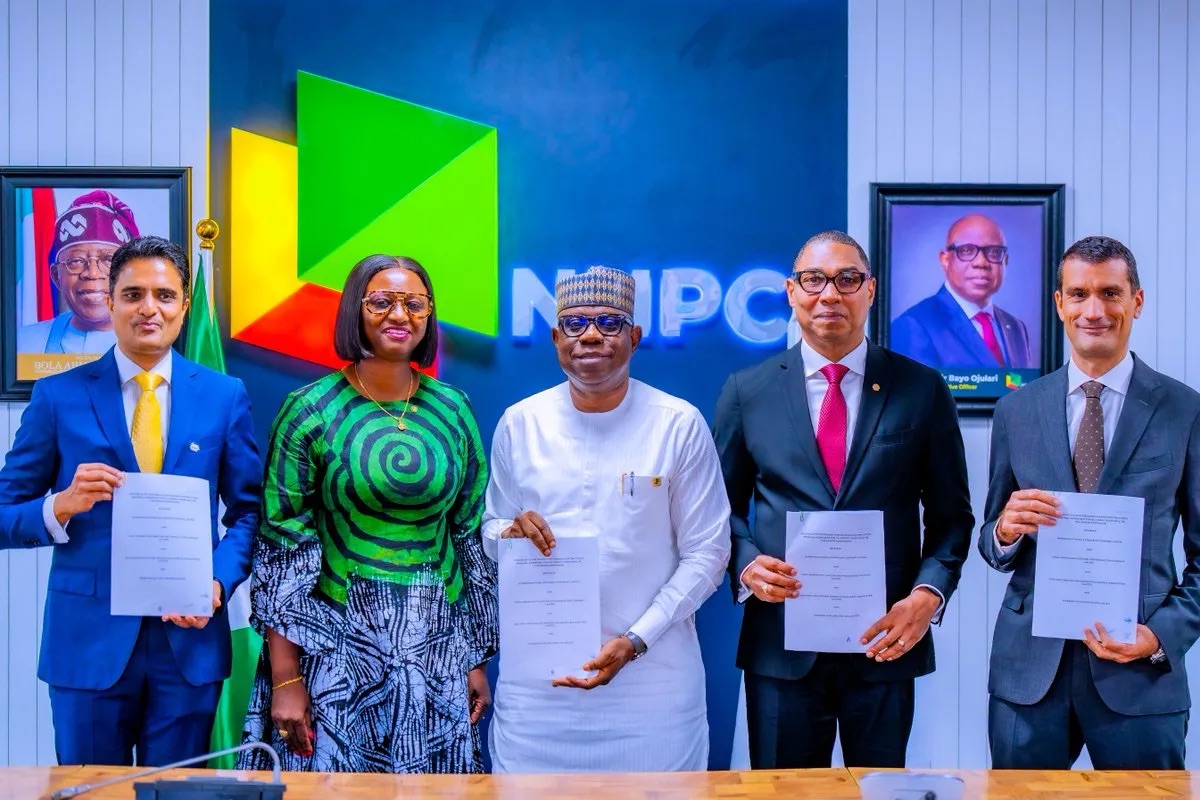
The development has assumed greater significance following the recent execution of an Addendum to the OML 118 Production Sharing Contract (PSC) and an Addendum to the Dispute Settlement Agreement (DSA) by NNPC Ltd and its partners.
The agreements were signed by NNPC Ltd, Shell Nigeria Exploration and Production Company Limited (SNEPCo), Esso Exploration and Production Nigeria (Deepwater) Limited, and Nigerian Agip Exploration Limited (NAE), giving effect to fiscal and commercial terms approved by the Federal Government.
The agreements are expected to provide greater certainty around the project and reinforce Nigeria’s effort to create a competitive and stable environment for major deepwater investments.
The development comes against the backdrop of the Federal Government’s Deep Offshore Oil and Gas Projects Incentives (Tax Remission) Order, 2026, which replaces project-by-project negotiations with a more transparent, rules-based investment framework.
The new framework is designed to unlock up to $50 billion in deep offshore investment by providing clear eligibility requirements and greater certainty for investors while protecting Nigeria’s long-term economic interests.
President Bola Ahmed Tinubu has described investment certainty as a critical factor in attracting long-term capital, noting that countries that attract investment are not necessarily those with the largest natural resources, but those that provide the greatest certainty.
The BSWAp project has already made technical progress, with the contractor parties completing the Pre-Front End Engineering Design (Pre-FEED) phase. The project is expected to proceed to the Front-End Engineering Design (FEED) phase, subject to partner, assurance and governance requirements.
For Nigeria, the development could represent a major boost to crude oil production at a time when the government is seeking to increase output and strengthen foreign exchange earnings.
A rising rig count in the country is also pointing to increased upstream activity. Active rigs reportedly rose by more than 40 per cent month-on-month between February and March, with the country’s rig fleet reaching about 73.
The increase suggests that operators are committing fresh capital to exploration, drilling and production rather than merely maintaining existing operations.
The renewed activity has implications beyond crude production, as every additional rig generates demand for drilling contractors, completion crews, engineering firms, logistics companies and other oilfield service providers.
For Nigerian-owned businesses, the BSWAp could therefore become an important source of opportunities across engineering, fabrication, marine services, offshore construction, logistics and operations.
The project is expected to increase the participation of Nigerian contractors and suppliers while creating direct and indirect employment.
The Nigerian Content Development and Monitoring Board (NCDMB) has also been pushing to increase local participation in the sector, with Nigeria’s local content level now put at 61 per cent and a target of 70 per cent by 2027.
The board has reported the creation of more than 50,000 jobs, while its Executive Secretary, Felix Ogbe, has said Nigeria is moving beyond being regarded simply as a high-potential market to becoming a destination capable of delivering measurable returns to investors.
Under the new upstream regime, Nigerian content plan approvals are expected to be processed within 10 days, with automatic consent where regulators fail to respond within the stipulated period.
Contracting cycles that previously lasted as long as 18 months have also been reduced to between four and six months, while targeted tax incentives are being used to encourage deepwater and gas investments.
The NCDMB has also moved against the use of intermediaries and shell entities that had been blamed for inflating costs and slowing project execution, with certification guidelines now requiring physical verification of assets.
NNPC Ltd is expected to play a central role in the development of the project and in coordinating the interests of the government and international oil companies.
Group Chief Executive Officer of NNPC Ltd, Engr. Bashir Bayo Ojulari, described the BSWAp agreements as a major step towards unlocking a significant deepwater project and demonstrating the competitiveness of Nigeria’s fiscal framework.
The project also carries an important gas component, with the expected 140 million standard cubic feet per day potentially contributing to domestic gas supply and supporting the power and industrial sectors.
Analysts believe the combination of fiscal reforms, improved regulatory coordination and increased upstream activity could strengthen the outlook for Nigeria’s oil and gas industry after years of subdued investment.
The Bonga Southwest/Aparo development is therefore being positioned not simply as another offshore oil project, but as part of a broader attempt to restore investor confidence, raise production, increase government revenues and expand economic opportunities around the petroleum industry.
Its projected investment of up to $21 billion makes it one of the largest deepwater developments currently in Nigeria’s pipeline and a potentially significant contributor to oil production, foreign exchange earnings, government revenue, local content and employment.
With the project’s technical work advancing and the fiscal framework becoming clearer, the BSWAp could become a defining symbol of Nigeria’s renewed ambition to reclaim its position as a major energy investment destination.
Adeyemi Samuels, an energy investment analyst, wrote in from Port Harcourt.