Follow Us on Google
By Simeon Mpamugoh
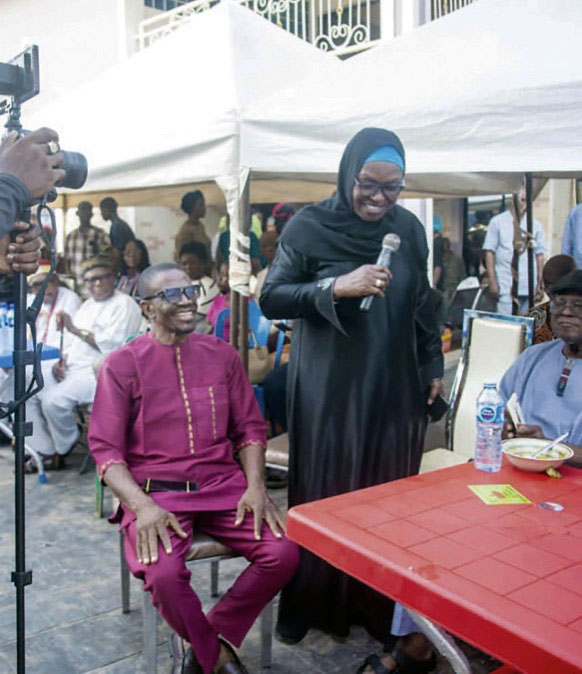
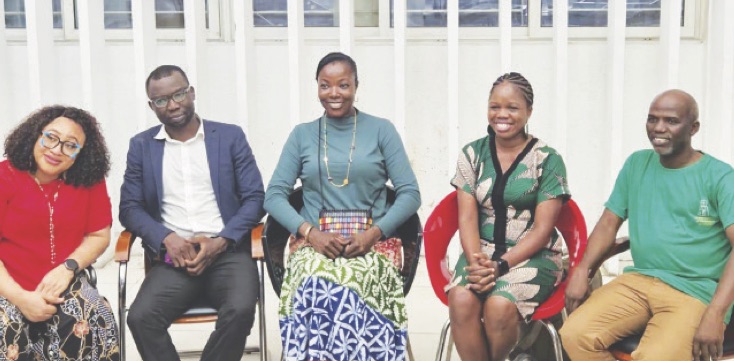
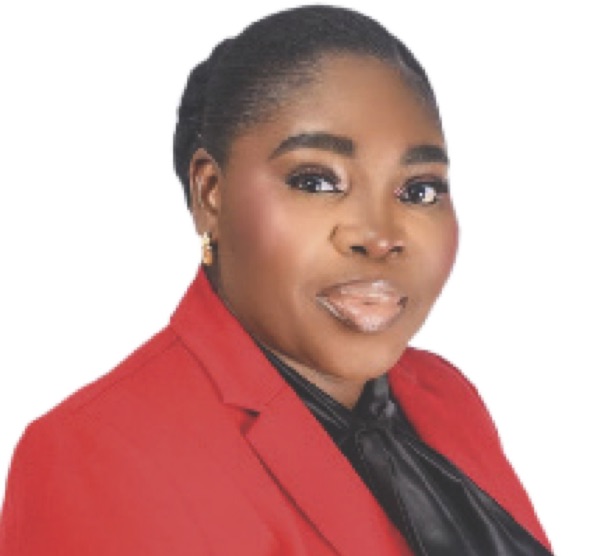
Dr. Omotola Bamigbaiye is the author of Imperfectly Awesome: Embracing and Becoming a Wholesome You. The book reminiscences about her early life and mirrors a monument to resilience and capacity for self discovery, moulded by the vibrant energy of the busy streets of Lagos, to the halls of corporate power, and her parent’s unyielding resolve. She is a marketing professional with a PhD in international business management with focus on consumer behavior, and the convener: Imperfectly Awesome Conversation (IAC), which was recently held In Lagos. An adjunct lecturer at the University of Lagos Business School, Lagos Business School, Rome Business School and Orange Academy, Maryland, Lagos, Bamigbaiye, in this interview with Simeon Mpamugoh, shares her stories of becoming to help the reader reinvent and bloom. She also speaks on imbibing the culture of reading among students from primary to secondary schools.
I must say that Imperfectly Awesome … enjoyed brilliant media reviews. How has the book performed?
I would say that the book is doing very well because if you look at the number of copies printed, we have sold over 85 percent of copies. We printed more than 1000 copies and we’ve sold 85 percent. A lot of people bought it as gifts to inspire and motivate other people. Sometimes it’s usually better to learn from other people’s stories. Even when one thinks he/she has been done In here or there, one realizes that there is still something more to grapple with, but with courage, tenacity and resilience, one would be able to overcome.
There is a saying that, if you don’t fall for anything, you can fall for everything. What drives your passion for writing?
What drove my passion for writing is the fact that I realized that, firstly, other people can learn from my stories, because it is better when we learn from other people’s stories. I have been encouraged and supported by other people who have shared their resilience stories with me and how they have overcome. And when you have mentors and sponsors, they also tell you: “I didn’t get here overnight.” So, if you are facing challenges, it is also what I faced and this is how I have been able to go through it.” So, I have been supported by such stories and I also thought it was really a good thing to share mine. Everyone has a story but not everyone can write it. So I thought it better to put it together in a book and share the story of becoming with everyone else.
Beside Imperfectly Awesome, what other titles do you have; their themes and thrust?
I have written several articles for international magazines, and blog posts that are currently trending on my website but Imperfect Awesome… is my first titled formal book, printed and launched into the book market.
I happen to be one of the participants during your book reading at Roving Height bookshop Lekki, Lagos, and I gathered from the session that the book is replete with themes of resilience, human connection and pursuit of self. Why did you choose an industrialist to write the foreword?
I not only chose an industrialist but also someone who has also gone through some challenges. As an industrialist, he not only manages his organization or manufacturing setup but also a setup that requires him to be on his feet and manage a broad section of people with different issues and challenges daily. That in itself takes resilience and tenacity to lead a business in today’s world. So as an industrialist, you need the skills and ability because you are managing not only people but also their emotions, equipment, and the production processes. For a business to survive in Nigeria’s economy today requires a lot of resilience. Besides that, you must be tenacious. And this kind of person who sits atop the leadership space of an organization can tell stories of different issues and challenges and can also relate with the theme and thrust of the story.
What are some of the strong characters an average female author needs to wade through the challenging modern world of publishing?
I would say that there’s no gender to writing and publishing. Whether you are male or female, there is no gender to it. It is about skill sets, and the art of storytelling itself is something that needs to be studied. Recall what I said earlier, that everyone has a story but not everyone can write the story; hence it is about crafting or orchestrating; and composing your story in such a way that your readers are intrigued and inspired to turn to the next page.
I’m sure you read other works of Nigerian writers, both male and female. What is your assessment of Nigeria’s literature and writing quality?
I would say that Nigerian authors are doing very well, because, if you look at a couple of literature prizes, awards and programmes and works submitted all over the world, Nigerian authors are winning many of them. And one Nigerian author I particularly like to read is Chimamanda Adichie. I read a couple of her books, and her style of writing also inspires me: the crafting of the story; the back, forth, middle, and you go forward, go to the back and you come back to the middle, and she takes you years ahead; I think that in itself is the orchestration that I like about her book.
The Nigerian Prize for Literature, sponsored by the Nigeria Liquefied Natural Gas (NLNG), has been around since 2004 with 20 awards contested out of which there were no winners of three editions: 2004, 2009 and 2015 respectively. But of the 19 winners so far, there were only about 4 female authors who won in children literature and prose genres. What do you think of the minimal number of female authors that have won the prize?
I’m not in a position to speak about that because the opportunity was open and made available for everybody. It’s a function of one submitting his or her entry. So, this has nothing to do with the organization nor has it anything to do with the entries.The jurists can only judge what had been submitted. Nothing more and nothing less. Again, writing has no gender. If you want to write, go ahead and write. It shouldn’t be a gender issue, we have to be conscious about it.
How about your intervention in the ongoing debate on the 100,000 USD prize money, which pundits say should not be awarded to a single winner but to multiple winners so that efforts of more writers could be encouraged?
I have nothing to say about it. I don’t want to be part of the debate. I don’t work with NLNG. Secondly, one must realize that it’s the choice of the organization. As an organization they must have thought deeply through it and got insights guiding decisions that they make, which I don’t know anything about and therefore not in a position to give an objective response to the issue.
Reading has a lot to do with the economic state and standard of living of the people. How do you rate today’s reading culture?
Firstly, the leadership of the country has nothing to do with the reading. It’s something that is imbibed from the home and school and then the individuals building their own interests in reading. Now, has technology helped? Yes. Because now, one doesn’t need to pick up a physical book to read. You can read online, download e-copy, e-copies of different genres are now available online. So there are more opportunities to read. Two decades ago everybody had physical books but in the world of today, there are more access and opportunities to enable everybody to read.
So I would say that there’s a bit of improvement. Again, this has nothing to do with the leadership but more with the level of exposure and interest that people have generated. Are we looking for more hardcopy books? Every opportunity, whether you want hardcopy or soft copy, is available now. I will sum up by saying that a lot more people are reading, maybe not the hard copies, maybe we are now reading the soft copies. Because we consume knowledge on the go right now; in fact there is knowledge on the go. So whether you are reading the physical book or books on e-format, pieces of the book have been read somewhat.
With the picture you have painted of the e-book over the physical book, does it mean that the physical book is facing a danger of extinction?
I would l say that the e-book has opened up more opportunities, and increased accessibility to books. I wouldn’t say it is taking over physical book. My perception of the issue is that it is increasing accessibility to the reading culture. And because we are also on the go, books are now broken down into chapters, you can take your time to read. Our phones are always in our hands, you can read summaries, unlike before when you have to read the whole book, today there are some apps that summarise books such that within an hour you can actually read a book. I think the e-book is an enabler rather than a challenge to the reading culture.
What are the affirmative actions necessary to drag more people into the net for the improvement of the reading culture instead of just reading to pass exams?
I would like to take it back to the schools by suggesting that in every school, a time to go to the library should be inserted in the timetable. Just like we have every subject in the timetable, a library time should be inserted in the timetable so that students can imbibe the culture from youth. As they know the period for Mathematics, Chemistry, they should also be made to know the period for the library. At that point in time, they will go to the library like a subject, sit down, pick up a book and read. Overtime, six years of primary school going to secondary, the interest in reading is already generated from that point onward. Can institutions help? That might be one of the things to do: imbibe the culture from young so that you then realize that there is a time to read and overtime, the interest will be built. Because habits are built through repetitive behaviour
After the launch of Imperfectly Awesome, what else are we expecting from you?
After launching Imperfectly Awesome…, the challenge is not always whether there will be more issues or not, or how to react to them, it is just about the fact that everyday, building our ladder one rung at a time with laughter, tears, may be some lipstick made on the way, the unexpected will happen but we just keep going. Maybe I’m going to learn how to dance, or pick up new habits but definitely this is just the beginning because my storyline is one that shares experiences.