Follow Us on Google

“The best way to overcome joblessness is to create a social contract between the public and private sectors to provide decent jobs for the unemployed. The decaying infrastructure of our cities is in urgent need of repair and restoration.” —Martin Luther King III
By Omoniyi Salaudeen
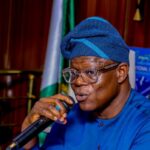
Governor Biodun Abayomi Oyebanji’s historic triumph in the recent off-cycle election continues to dominate political discourse in Ekiti State and beyond. His victory does more than just solidify the APC’s dominance, the overwhelming margin of his re-election firmly validates the social contract between his administration and the electorate.
In a state famous for its politically savvy voters, consecutive transitions for a ruling party were once deemed nearly impossible. By securing this historic return to power, Oyebanji has broken the jinx and achieved a feat unmatched by his predecessors under the current democratic dispensation.
Since the dawn of the Fourth Republic in 1999, Ekiti has earned a reputation for possessing one of the most fiercely independent, unpredictable, and politically sophisticated electorates in Nigeria. Historically, the state’s voters have been notoriously unforgiving of perceived underperformance, routinely rejecting incumbent administrations or ruling parties seeking succession.
For decades, the political pendulum swung aggressively between major rival parties, establishing an unwritten rule that no single political order could comfortably entrench itself. Yet, Governor Oyebanji went into this highly anticipated off-cycle election and did what was once deemed nearly impossible: he broke the jinx. By securing a resounding and sweeping victory across the state’s local government areas, Oyebanji did not just survive an election; he rewrote the rulebook of Ekiti politics, becoming the first individual in the state’s history to successfully win back-to-back mandates under a continuous ruling-party banner.
Other News
Beyond the partisan victory for the APC, the sheer volume of votes that returned him to power serves as a profound validation of the social contract that exists between his administration and the people. In political philosophy, the social contract presupposes that the legitimacy of a government rests entirely on its capacity to protect the interests, welfare, and future of the citizenry. For the past three years, the Oyebanji administration has approached governance not as an exercise in political patronage, but as a sacred trust, leaning heavily into a legacy of massive infrastructural transformation. Chief among these visible footprints is the completion and commercial operationalisation of the Ekiti Agro-Allied International Cargo Airport.
While the ambitious project was conceived by the government of Mr Segun Oni in 2008, with major work commencing under his predecessor, Dr Kayode Fayemi, it was Governor Oyebanji’s relentless execution, budgetary prioritisation, and adherence to rigorous civil aviation standards that pushed it over the finish line, securing official regulatory approval for scheduled commercial flight operations. Today, the operational airport stands as an economic gateway, revolutionising regional connectivity, trade, and agribusiness by linking local farmers directly to broader commercial networks.Similarly, the administration has fundamentally transformed the urban landscape of the state capital. The completion of the iconic 1.2-kilometre Asiwaju Bola Ahmed Tinubu Flyover—stretching from Ajilosun to Okeyinmi in Ado-Ekiti—stands as a masterful engineering feat that has permanently alleviated inner-city traffic gridlocks and modernised the capital’s metropolitan aesthetic. This flagship project is flanked by a vast network of urban and rural road rehabilitation efforts, including the Omisanjana-Ajebandele, Ikere-Ise-Emure, and Igede-Ilawe corridors, which have effectively opened up rural agrarian hubs to wider markets. By blending this aggressive infrastructure drive with consistent human capital investment—such as prioritising the regular payment of civil servant salaries and long-overdue pension benefits—Oyebanji effectively demystified the office of the governor.
However, a comprehensive analysis of the Oyebanji phenomenon cannot exist in a vacuum of praise. Despite the celebratory atmosphere within the ruling party, the administration’s journey has been heavily shadowed by vocal critics, opposition stalwarts, and internal party dissidents who present a starkly different narrative. To these opposition groups, the narrative of “superlative performance” is nothing more than an elaborate public relations smoke-and-mirror show, masking deep-seated systemic failures. Critics from the opposition camps have repeatedly accused the administration of non-performance, arguing that the headline-grabbing infrastructure projects do not reflect the true socioeconomic realities of the average Ekiti citizen.
Opponents contend that the multi-billion naira overhead bridges and airport projects are cosmetic elitist monuments that have failed to alleviate the biting poverty, high youth unemployment, and inflationary pressures choking the local economy. The critique rests on the argument that while concrete is being poured on capital city highways, the rural economies remain severely underfunded, and the state’s internally generated revenue (IGR) remains perilously low, leaving Ekiti overly dependent on federal allocations.Furthermore, the administration has faced harsh criticism over security lapses. Despite the government’s reassurances, opposition figures have capitalised on intermittent reports of rural insecurity, banditry, and agrarian clashes to argue that the administration has failed in its primary constitutional duty: the protection of lives and property. Critics allege that the government’s approach to security has been reactionary rather than proactive, leaving border communities vulnerable.
Even within his own party, the path was not entirely smooth. Internal rivals accused the governor of transforming the state party structure into a private estate and using state machinery to marginalise dissenting voices ahead of the electoral cycle. The opposition has consistently maintained that the overwhelming numbers at the polls were not a genuine reflection of performance, but rather the result of a heavily fractured opposition that failed to present a united front, combined with the strategic deployment of incumbency factors.
The administration, however, has fiercely pushed back against these allegations, labelling them as the standard rhetoric of a displaced opposition seeking political relevance through misinformation. Supporters point out that governance is a continuum, and addressing decades of sub-national economic challenges cannot happen overnight. They argue that the very infrastructure being criticised as cosmetic—such as the cargo airport and rehabilitated agricultural roads—is the foundational bedrock required to attract private investments that will ultimately solve the state’s unemployment crisis.The electoral outcome suggests that, for the majority of the sophisticated Ekiti electorate, the arguments of the administration carried more weight than the allegations of its critics.
Ultimately, Governor Biodun Oyebanji’s victory is a masterclass in sub-national political engineering. It proves that the surest way to build a lasting political legacy is by genuinely investing in the tangible welfare of the ordinary citizen while navigating the crosscurrents of political dissent. Now that the ultimate political jinx has been broken and the social contract renewed, the burden of proof shifts heavily back to the governor. With the distractions of the election settled, the administration must now move from consolidation to deeper economic transformation, proving to both its passionate supporters and its fiercest critics that this historic mandate was indeed merited.
Moving forward, the immediate agenda for the Oyebanji administration must transcend brick-and-mortar triumphs and focus squarely on institutional sustainability and aggressive revenue generation. To effectively silence critics and cement this historic legacy, the government must deliberately pivot toward transforming its newly built infrastructure into active wealth-creating engines. This requires a transition from public funding to private-sector-led industrialisation—positioning the cargo airport as a bustling agro-export hub, aggressively tackling rural insecurity to protect the agrarian economy, and widening the state’s internally generated revenue (IGR) base without overburdening the vulnerable populace.
By shifting the governance paradigm from physical expansion to sustainable economic development, the gentleman popularly known as BAO can ensure that this hard-won continuity translates into true, lasting prosperity for every citizen of Ekiti State.