Follow Us on Google

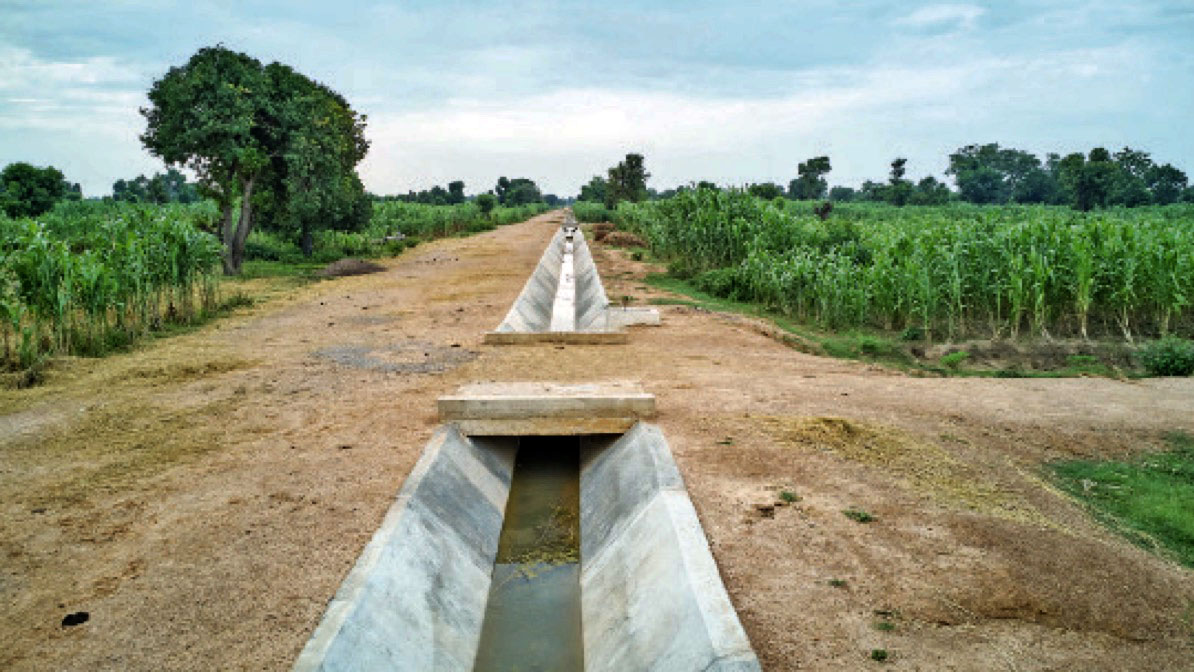
• Better access to irrigation and roads is opening possibilities for farming communities in Kano. Turning those opportunities into dependable livelihoods will require sustained training, effective maintenance and fair access to water.
Faruku Musa Haruna and other farmers in Kumfada used to pool their money to buy plastic sheets, trapping enough water to irrigate small patches of land. They wanted to keep farming after the rains, but their ambitions depended on how much water they could save.
“We always had the desire to farm, but we lacked the means,” Haruna said.

When the rainy season was poor, dry-season cultivation could become impossible. The consequences extended beyond an unplanted field: fewer opportunities to work, fewer crops to sell, and another period of uncertainty before the next rains.

Now, Haruna describes a different experience. Water reaches the farms without the need to run a generator.
“You just turn the valve, and water flows right into your field.”
He grows carrots, followed by onions, tomatoes, and peppers on the same land. With a more reliable supply, he hopes to add rice and wheat—crops he previously considered beyond reach because of water shortages.
For Haruna, irrigation offers greater freedom to decide what to plant and when. For the communities around Tiga, Challawa Gorge, and the Kafin Chiri dams, the larger question is whether that freedom can become a dependable livelihood.
More than water
The federal intervention around the three dams combines irrigation rehabilitation and expansion with erosion control, road improvements, and agricultural support. The Ecological Project Office, under the Office of the Secretary to the Government of the Federation, under the President Bola Ahmed Tinubu’s Renewed Hope Agenda, oversees the intervention, while contractors undertake civil works, and the International Institute of Tropical Agriculture provides agricultural technical support.
Its importance reaches beyond Kano. Producing beyond the rainy season could help farmers supply markets more consistently and extend rural employment. But additional harvests must cover their costs before they can improve household finances.
Haruna says the improved water supply has reduced the need to leave his community in search of work. His experience illustrates what irrigation could mean for seasonal employment, although it does not establish a wider decline in migration.
Access to water may also change production expenses. Haruna no longer needs a generator to deliver irrigation water to his field. Yet seed, fertiliser, labour and transport remain part of the calculation, as does the price a buyer eventually offers.
The distinction is essential: growing more food and earning more money are connected, but one does not automatically guarantee the other.
Professor Lucky Osabuohien Omoigui, a plant breeding and genetics specialist at IITA’s Kano station, argues that farmers need support to make productive use of the infrastructure.
“But you need to train them on how to use the water effectively, productively,” he said.
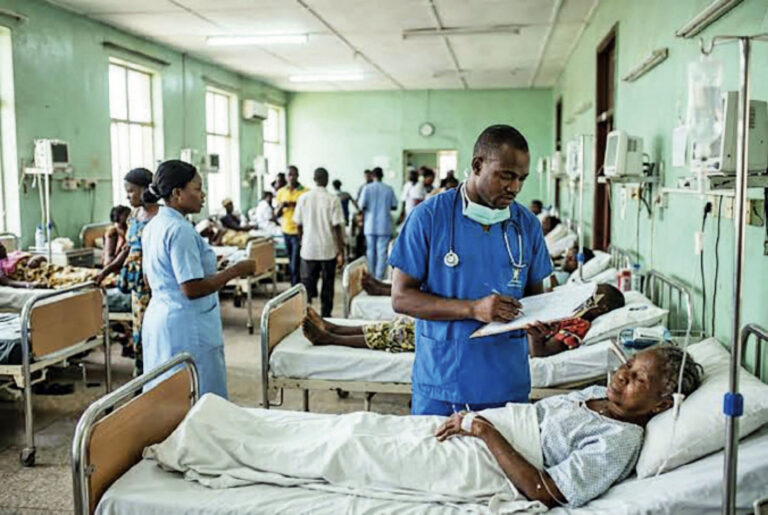
IITA’s intervention covers water management, crop management, soil fertility and improved farming practices across 16 local government areas. The institute reports 1,890 beneficiaries overall, including 501 smallholder farmers who received training. Eight farmer field schools and 86 demonstration plots provide opportunities for practical learning.
These activities establish that agricultural support is taking place. Whether the lessons are adopted widely—and remain useful after the initial intervention—will determine their lasting value.
Making another season count
Omoigui describes initial reluctance among some farmers to make land available for demonstrations. That hesitation is understandable: a household relying on its harvest must weigh the risks of committing land and labour to an unfamiliar practice.
Demonstration plots can help farmers assess those risks. They allow techniques and varieties to be tested under local conditions, giving participants something more concrete than a promise of higher yields.
Omoigui also stresses the importance of farmers’ preferences. Improved varieties must suit the environment and the people expected to grow them. Technical performance alone cannot settle whether a farmer will adopt a new crop or change an established practice.
Even then, the assessment takes time.
“So, you will see the effect maybe in two or three years,” he said.
His caution puts the early enthusiasm in perspective. Some participants report benefits already, but dependable conclusions about adoption, productivity, and income require evidence across successive seasons.
That includes understanding what happens to the soil when cultivation becomes more frequent.
Omoigui warns that repeatedly growing cereals on the same field can deplete soil fertility. He advocates cereal-legume rotations and appropriate fertiliser management to help sustain production.
For farmers, this is a practical concern. The opportunity to plant again after harvesting has limited value if declining soil fertility makes each subsequent crop pricier or less productive.
Training therefore needs to extend beyond the arrival of water. Farmers require advice on planting decisions, suitable varieties, fertiliser use, and land management over time. They also need access to the inputs required to apply that advice.
The measure of success will be what farmers can continue doing when organised demonstrations and initial support have ended.
A harvest still needs a road
Water is only one part of the journey from planting to payment.
Abdullahi Hamza, a farmer in Gana, recalls how poor road conditions complicated trips to Bakin-Fa, particularly during rain. Onions could fall, become damaged, or spoil on the way to market.
“By the time we reached the market, they would be crushed and spoiled,” he said.
He revealed that repairs have made it easier to transport produce by motorcycle or car. His account shows how transport difficulties can undermine a successful harvest before a farmer reaches a buyer.
For rural businesses, access works can matter just as much.
Hafsat Yakubu, a businesswoman in Kwanar-Dangora, says flooding previously prevented customers from reaching her street. Drainage improvements, she states, have made access easier and helped her business.
Neither account provides a measured change in sales or losses. Both, however, identify a clear connection between infrastructure and everyday commerce: farmers need to move produce, and businesses need customers to reach them.
At Darki, Adamu Salisu of Firm and Resolute Engineering describes a 1.5-kilometre market bypass intended to ease Thursday congestion. Road markings remained outstanding when he spoke.
The bypass illustrates why transport belongs in the irrigation discussion. More production creates additional demand for movement, storage, and buyers. A canal can help grow a crop; it cannot ensure that the crop arrives at market in excellent condition or commands a worthwhile price.
Roads and drainage also affect journeys beyond trading. Their condition shapes how easily residents can reach farms, services, and neighbouring communities. Those benefits deserve attention alongside construction milestones.
In Sumaila town, residents describe how gully erosion threatened homes while inaccessible roads forced car owners to park outside their neighborhood. Ado Ibrahim, a resident, remembers carrying household goods by hand because vehicles could not enter.
However, through President Bola Ahmed Tinubu’s Renewed Hope Agenda, implemented by the Ecological Project Office under the leadership of Permanent Secretary Dr. Aishetu Gogo Ndayako, the construction of roads and erosion-control infrastructure has improved accessibility, allowing residents to move more freely.
Who keeps the water flowing?
At Kafin Chiri, Jibril Muhammad Ibrahim, lead site engineer for ECL Construction Limited, describes a completed main canal alongside continuing work on distribution and field channels.
His assessment that rehabilitation was 80 per cent complete applied to the embankment section. This figure does not represent the total completion status for the entire intervention.
For farmers, the difference matters. A completed main canal does not establish that every intended plot receives enough water when it is needed. The smaller channels carrying water onward and the arrangements governing its distribution are equally important.
Maintenance will become a recurring obligation. Channels need clearing, damaged structures need repair, and faults need a timely response. Responsibility for that work—and how it will be financed—must be understood before deterioration interrupts supply.
The Hadejia Jama’are River Basin Development Authority has supported engagement with water user associations and dam managers on operations and maintenance. The practical test will be whether these arrangements continue to function over successive seasons.
Fair access is another condition for lasting gains. Farmers need workable rules for sharing water and resolving disputes, including arrangements that protect those cultivating plots farther along a canal.
Women’s participation also warrants closer attention. IITA reports that women comprise 20 per cent of its overall beneficiaries and 97 of the 501 trained farmers. Those numbers show participation but do not explain who controls irrigated land, receives reliable water, and makes decisions about crop income.
A durable intervention must be judged by those experiences as well as its physical reach.
Back in Kumfada, Haruna’s immediate concern is simpler: the water that once constrained his farming is now more accessible. He can consider another crop and envision more work within his community.
What remains uncertain is how consistently that opportunity will pay. Success will depend on reliable supply, healthy soil, useful advice, maintained infrastructure, and a market return that justifies the effort.
Haruna has described what it means to turn a valve and see water enter his field. The more demanding test will come after repeated harvests, when farming families can judge whether another planting season has brought dependable earnings.