Follow Us on Google
By Chinenye Anuforo
For millions of Nigerian girls, the journey to education begins long before the first school bell rings. It begins at home, where expectations are often unevenly shared. It continues in communities where poverty, insecurity and culture still shape who goes to school and who stays behind. And increasingly, it unfolds in media spaces where public narratives quietly influence how society imagines girls, values their ambitions and responds to their struggles.
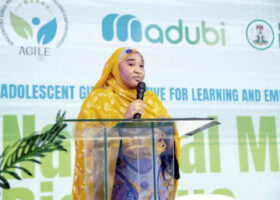
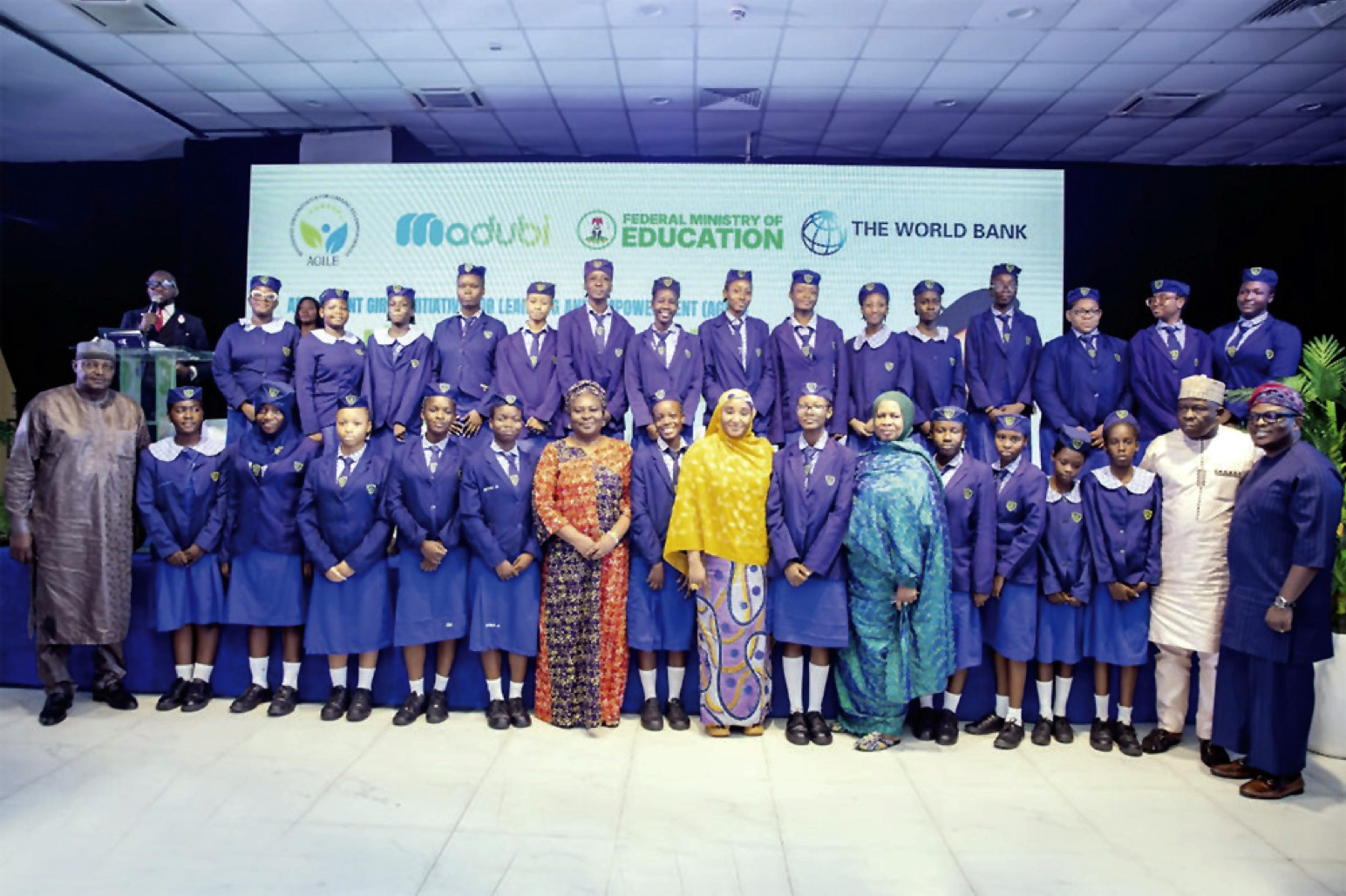
This reality framed discussions at the Madubi Phase III National Media Dialogue in Lagos, where education stakeholders, government officials and media professionals confronted an uncomfortable question: Has Nigeria become too accustomed to seeing girls mainly through the lens of vulnerability?

The conversation, themed “The Girl in the Mirror: Media as Catalysts for Change in Girls’ Education,” was organised by RED Media in collaboration with the Federal Ministry of Education and the World Bank-supported Adolescent Girls Initiative for Learning and Empowerment (AGILE).
Yet beneath the event itself lies a much deeper national story. Nigeria is home to one of the largest out-of-school populations in the world. UNICEF estimated that more than 10 million children are currently outside formal education, with girls carrying a disproportionate share of the burden. The figures become even more troubling when narrowed by gender.
According to UNICEF, approximately 7.6 million Nigerian girls are out of school. About 3.9 million at primary level and another 3.7 million at junior secondary level. In northern Nigeria, the challenge is particularly severe. Female primary school attendance in parts of the North-East and North-West remains below 50 per cent, leaving millions of girls excluded from opportunities many of their peers elsewhere take for granted.
The reasons are layered and deeply interconnected. Poverty remains one of the strongest drivers. For many low-income families, school expenses compete with daily survival. Where difficult choices must be made, girls often lose first.
Cultural expectations and early marriage further complicate the landscape. UNICEF estimated that four in every 10 Nigerian girls are married before the age of 18, a reality that frequently interrupts education and limits future opportunities.
The consequences stretch far beyond the classroom. Studies consistently showed that education alters life trajectories. Girls with no formal education marry significantly earlier than those who complete secondary school. UNICEF data suggests girls without schooling marry at a median age of about 16.6 years, while those completing secondary education marry closer to 21.7 years.
Education, therefore, is not merely about literacy. It is about health, economic participation, delayed marriage, reduced vulnerability and the ability to make informed life choices.
And yet, despite these realities, speakers at the Lagos dialogue argued that the national conversation around girls too often stops at hardship. Minister of State for Education, Professor Suwaiba Sa’id Ahmad, challenged the media to rethink this framing.
For her, persistent portrayals of girls primarily as victims risk creating a narrow and incomplete public image. “Girls are not weak,” she declared. “They are strong. Report them from the perspective of their strength and not merely their struggles.”
Her comments drew from both policy concerns and lived experience. According to the minister, girls frequently shoulder enormous responsibilities from an early age balancing domestic expectations with academic pursuits and navigating social pressures that boys may not encounter in equal measure.
Yet these realities, she argued, are seldom reflected in the language and assumptions shaping public discourse.
“When we speak about strength, we are not necessarily referring to physical strength,” she said.
“But in terms of resilience, endurance and responsibility, girls demonstrate extraordinary strength.”
Ahmad warned that narratives centred solely on tragedy and vulnerability may unintentionally reinforce stereotypes and lower expectations.
“Too often, girls become visible only when something goes wrong. We must also tell stories of achievement, resilience and excellence”, she said.
Her concern reflected a broader debate increasingly taking place within global education and gender advocacy circles. Who gets represented as capable? Whose stories become symbols of possibility? And what happens when entire groups are repeatedly associated with crisis?
Research increasingly showed that media narratives shape more than public sympathy. They influence policy conversations, social investment and collective priorities. This connection between storytelling and social outcomes formed the core of the Madubi campaign.
Other News
Madubi meaning “mirror” in Hausa, invites society to examine not only the barriers facing girls but also the assumptions shaping those barriers.
For Director and National Project Coordinator of AGILE, Mrs. Amina Abubakar Haruna, that reflection is long overdue.
Haruna described AGILE as one of Nigeria’s most ambitious interventions targeting girls’ education.
Supported by the World Bank, the initiative operates across participating states and has reached millions of girls through infrastructure improvement, digital literacy, financial support and safe learning initiatives.
According to programme data, AGILE has expanded educational support across 18 states and impacted more than four million girls.
The intervention includes school renovation, hostel upgrades, classroom construction, sanitation facilities, solar-powered boreholes and digital learning support aimed at improving both access and retention.
But Haruna insisted that infrastructure alone cannot solve the problem.
“The media is not merely a channel for disseminating information,” she said.
“It is a catalyst for change. It shapes opinion, challenges norms and amplifies voices that are too often unheard.” Her appeal reflected an understanding that policy and public perception must work together.
Even the best-funded interventions can struggle where communities remain unconvinced of girls’ educational value.
This tension surfaced repeatedly during panel discussions at the dialogue. Moderator Kelly Carey, Chairperson of the European Union Youth Sounding Board in Nigeria, argued that public investment in girls begins first with imagination.
“Before government invests in a girl, society must first imagine her,” Carey said. “And much of that imagination comes from the media.”
Her observation cut to the heart of the debate. Media narratives do not merely document society; they participate in constructing it. When stories consistently present girls as helpless, dependent or permanently vulnerable, public imagination may unconsciously narrow around those identities. Yet, speakers insisted this does not mean difficult stories should disappear.
Head of Presentation at Channels Television, Ms. Adejoke Rogers, acknowledged that newsroom culture naturally gravitates toward dramatic and crisis-driven stories. But she questioned whether this tendency sometimes overshadows stories of agency and perseverance.
Rogers said: “Girls do not want to be seen merely as vulnerable. They want to be recognised for their strength and resilience.”
She pointed to issues such as menstrual hygiene and adolescent health as examples of how reporting can either reinforce stigma or affirm dignity and wellbeing. The challenge, she suggested, is not whether such stories deserve attention but whether journalists frame them with empathy and balance.
Beyond the media, however, stakeholders acknowledged that changing narratives requires deeper cultural shifts. Head of Programmes at Nigeria Info, Mr. Sherif Quadri, argued that many limiting ideas about girls begin inside homes. “If parents do not tell their daughters, ‘You can do anything a boy can do,’ progress will remain difficult,” he said.
His comment reflected a difficult truth. Media influence matters, but media also mirrors society. Where communities continue to prioritise boys’ education or view girls primarily through domestic roles, those assumptions often filter into public storytelling.
Yet advocates maintained that the case for girls’ education extends beyond fairness alone. Global research consistently links girls’ education to stronger economies, lower maternal and child mortality, improved family wellbeing and increased national productivity.
Educated girls are more likely to become economically active women, raise healthier families and contribute meaningfully to social development. The economic argument is therefore as compelling as the moral one.
Nigeria’s future workforce, innovation capacity and social stability are deeply connected to how effectively it educates girls today. Perhaps that is why the symbolism of Madubi resonates so strongly. A mirror reflects what exists. But it also reveals what society chooses to see.
And for many participants at the Lagos dialogue, that may be the real challenge before Nigeria. Not merely building more classrooms or designing new interventions. Important as those remain but confronting the deeper narratives that define whose dreams matter and whose futures receive investment.
The struggles facing Nigerian girls remain real and cannot be romanticised or ignored. But alongside stories of hardship must also stand stories of brilliance, leadership, endurance and possibility.
Because when girls look into the mirror, what they see may ultimately shape who they believe they can become.