Follow Us on Google
By Henry Akubuiro
In the bustling markets of Ebute Metta, Lagos, a centuries-old medical practice unfolds in plain sight, yet remains largely invisible to the outside world. Beneath makeshift stalls, Hausa traditional practitioners remove uvulas and tonsils with simple instruments; no anaesthesia and no formal medical certification. For many patients, however, these market stalls are not symbols of ignorance but of survival. When hospitals are overcrowded, appointments are weeks away and pain cannot wait, these practitioners become the closest and often the only option.
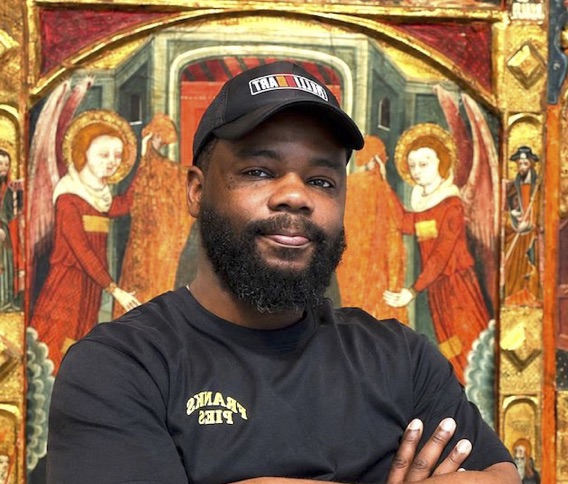
It is this complex intersection of tradition, healthcare and survival that captured the imagination of filmmaker and sociologist Mohammed Adedayo, whose debut documentary, Belu Belu, is attracting attention for illuminating an African reality rarely explored on screen.
Rather than treating the practice as an oddity, Adedayo asks a deeper question: Why do such traditions continue to thrive in the age of modern medicine? His answer is neither simplistic nor judgmental. Instead, the documentary patiently reveals that traditions often survive not because people reject modernity, but because modern institutions frequently fail to reach those who need them most.
For Adedayo, the story is also deeply personal. Growing up in Ebute Metta, he often heard the cries of patients undergoing these procedures without understanding what was happening. Years later, after studying sociology, criminology, film production and screenwriting, he returned to those same streets—not merely to observe them, but to understand them.
“My background in sociology means I never just observe—I interrogate,” he says. “Every story I tell is rooted in a question about why people do what they do and what systems shape those choices.”
That philosophy forms the backbone of Belu Belu.
Shot with a compact production team, the documentary features cinematography by Muiz Kolade, co-direction by Sanni Lukman and multilingual interpretation by Issa Musa, allowing conversations to flow naturally across English, Hausa and Yoruba.
The film introduces audiences to three practitioners—Yahu, Yakub and Mustapha—whose personalities differ as much as their methods. Yahu built his practice independently from a young age. Yakub proudly attributes his knowledge to generations of family tradition. Mustapha insists on giving every patient warm water after each procedure at no extra cost because, to him, compassion is inseparable from his work.
Their stories are balanced by those of former patients who explain that they turned to the market practitioners only after hospitals either dismissed them or offered appointments too distant to relieve immediate suffering.
What begins as a local story soon expands into a continental conversation.
Adedayo’s research reveals that similar practices exist across Africa under different names. In Rwanda, it is known as ikirimi. In Swahili-speaking communities, it is called kimeo. Though undocumented in medical textbooks and largely absent from formal institutions, the practice has endured for generations because the social conditions that created it continue to exist.
Without relying on heavy-handed narration, Belu Belu quietly argues that the persistence of traditional medicine is often a reflection of the limitations of public healthcare rather than resistance to modern medicine itself.
The documentary reflects a career built on asking difficult questions.
Other News
Long before stepping behind the camera, Adedayo was examining the structures surrounding Nigeria’s creative industry. His undergraduate dissertation at the University of Ibadan focused on the piracy networks operating through Alaba Market—an ecosystem that profoundly shaped the fortunes of Nollywood. His master’s research in criminology explored the relationship between violent media and violent behaviour, research that continues to influence the crime thrillers and socially conscious screenplays he writes today.
For Adedayo, academic research has never been separate from storytelling. “Storytelling for me is an extension of social research,” he explains. “I am not just making films. I am documenting the things that policy ignores and academia never reaches.”
That mindset has guided every stage of his professional journey.
Before entering film, he worked as Production Manager at TheatreHubAfrica, where he developed the collaborative discipline that would later define his filmmaking. He subsequently built a reputation within Nollywood as a script consultant and researcher, contributing field investigations, cultural research and story development to productions that earned recognition at the Africa Magic Viewers’ Choice Awards.
His interests have since expanded beyond filmmaking.
Adedayo is co-founder of Monkey Business Entertainment, an independent production company, and founder of News. Actually, an African news and geopolitics platform that reaches more than one million daily views across its digital platforms. Through its weekly commentary series, The Elephant in the Room, he continues to explore African affairs with the same analytical curiosity that characterises his documentaries.
His creative portfolio also includes completed screenplays ranging from a supernatural feature inspired by Yoruba mythology to a Lagos crime thriller and a television pilot examining organised criminal networks. Across genres, one thread remains constant: characters shaped by the social systems around them.
Even after relocating to Cambridge, his storytelling remains firmly rooted in African realities.
His second documentary, The Root Doctors, exploring the herbal medicine traders of Oyingbo Market in Ebute Metta, has already been completed and is awaiting release.
Meanwhile, Belu Belu is available on YouTube and Vimeo with a viewer discretion advisory because of its surgical content, while the film is being submitted to independent cinema and community screenings in Nigeria and the United Kingdom.
For Adedayo, however, the growing recognition is secondary.
His real ambition is to preserve stories that might otherwise disappear—stories overlooked by policymakers, absent from academic journals and ignored by mainstream cinema.
In an era when Africa is too often represented through familiar stereotypes, Mohammed Adedayo is quietly building a different archive: one where ordinary communities, invisible traditions and overlooked lives become worthy of careful attention. If Belu Belu is any indication, he is only just beginning