Follow Us on Google
By Chinenye Anuforo
Long before she became a teacher shaping young minds, Rose Adudu was a young girl with a quiet but powerful resolve. Growing up in a community where schools mirrored the biases of wider society, Rose experienced relentless bullying not just from peers but, painfully, from some teachers who failed to see beyond her albinism.
Her pale skin and light hair drew stares and whispered judgments. But her father, though uneducated, taught her something many adults never learn and that is, self-worth is the bedrock of life.
“I made up my mind early to always do well academically,” Rose recalled, describing how she meticulously kept her notes up to date, corrected errors in her textbooks, and stayed relentlessly focused in class even when teachers dismissed her.
That discipline became her passport out of humiliation and into a life of purpose. Today, as a teacher, she confronts stigma daily not only in society, but in classrooms where parents sometimes withdraw children with albinism, believing they cannot thrive academically.
Yet Rose persists, advocating not just for educational inclusion, but for human dignity. She once persuaded a school principal to admit an albino child, a victory that led to increased support staffing, proving that change is possible when barriers are confronted intentionally.
Rose’s story is not exceptional in its adversity, it is emblematic of the struggle and resilience of many Nigerians living with albinism. Her voice is part of a larger narrative that both challenges and inspires.
Albinism is a genetic condition marked by a significant lack or absence of melanin, the pigment that gives color to the skin, hair and eyes. This absence isn’t merely cosmetic, melanin also protects the body from ultraviolet (UV) radiation. Without it, people living with albinism (PWAs) face serious health risks and visual impairments, including photophobia, nystagmus and amblyopia.
Global estimates suggest albinism affects about one in every 20,000 people, but prevalence in Africa, including Nigeria appears to be significantly higher. Historical regional studies estimated the prevalence in parts of Nigeria at around one in 15,000, though precise national figures remain unavailable. Additional unofficial estimates suggest Nigeria could be home to up to two million people living with albinism, though data is sparse and often anecdotal.
In a country with intense tropical sunlight, the health consequences of limited melanin are severe. People with albinism have a dramatically higher risk of skin cancer, a reality borne out in Nigerian clinical studies which show that albinos account for a disproportionate share of skin cancer cases.
Recent health reporting painted a grim national picture, three to five Nigerians with albinism die of skin cancer every six months, and only about 2% survive past age 40.
These statistics highlighted a stark truth while albinism itself is not fatal, the lack of preventative care, protective resources and early treatment turns a manageable condition into a life-threatening one.
Because melanin protects against UV radiation, PWAs are highly vulnerable to sunburn and skin cancer at much younger ages than the general population. In skin lesions studied among Nigerian PWAs, cancers like squamous cell carcinoma were common, further highlighting the danger posed by prolonged sun exposure without adequate protection.
Yet access to dermatological care is limited. Nigeria has fewer than 125 dermatologists for its entire population, disproportionately concentrated in big cities, leaving rural residents with almost no access to specialist care.
Visual challenges linked to albinism such as light sensitivity and reduced visual acuity can make traditional classroom environments extremely difficult. Without accommodations like extended exam time, access to enlarged text, or supportive learning technologies, many children with albinism struggle academically and are withdrawn from school prematurely a violation of their fundamental right to education.
Misunderstanding about albinism remains deeply rooted. Across many communities, harmful myths persist ranging from beliefs that albinism is contagious to superstitions that misattribute mystical properties to individuals with albinism. Globally and in Africa particularly, such misconceptions have led to social exclusion, ridicule and discrimination, sometimes forcing individuals to avoid public life or hide their identities.
While extreme crimes like those reported in parts of East and Southern Africa are less common in Nigeria, the social stigma and cultural myths that fuel such actions and the discrimination that isolates PWAs in school, work and marriage are ever present.
Human rights bodies across Africa have highlighted the need to protect the rights of people with albinism including their rights to education, health, equality before the law, and freedom from discrimination. International frameworks, such as provisions under the African Charter on the Rights and Welfare of the Child, call for inclusive protection mechanisms for children with albinism specifically.
Yet at the ground level, enforcement often lags behind policy commitments.
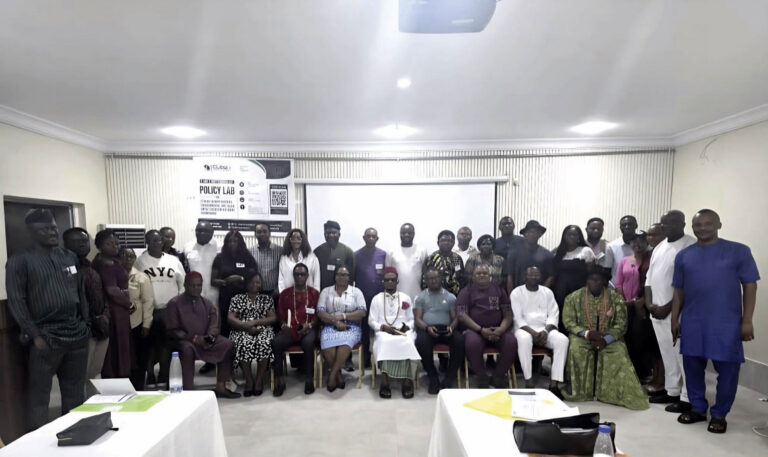
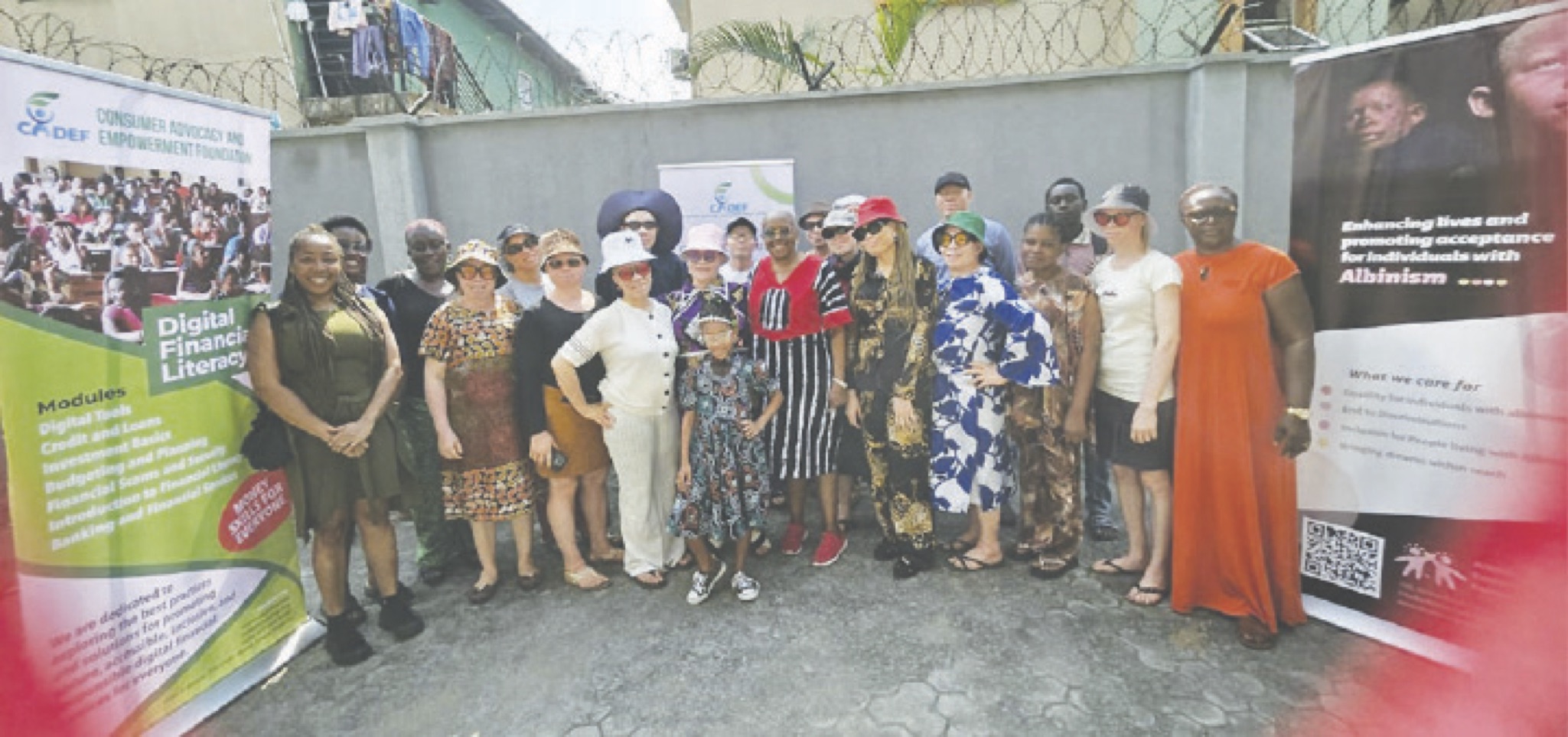
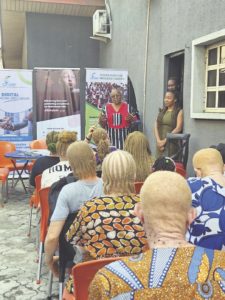
At a recent gathering co-organized by the Consumer Advocacy and Empowerment Foundation (CADEF) and the Albino Empowerment Foundation, to host an empowerment and listening session for Persons Living With Albinism (PLWA). advocates from within the albino community articulated what many feel: they don’t want pity, they want empowerment.
Speaking at the event, CADEF’s Executive Director, Professor Chiso Ndukwe-Okafor, set the tone. She stressed that real progress only becomes possible when people are respected and included, not pitied. While relief items such as food, protective clothing and materials to address skin and eye care were shared, she noted that the most powerful moments came when participants spoke for themselves.
“They reminded us that dignity begins when people are seen fully and treated equally,” she said, adding that self-awareness and knowledge of fundamental human rights are essential tools for self-advocacy.
According to her, understanding one’s rights equips people to demand fairness, inclusion and accountability, a principle CADEF holds firmly in its belief that an informed consumer is an empowered one.
The voices from the room made that point unmistakably clear.
Ms. Kobi Ikpo, an advisory board member of CADEF, challenged participants to take ownership of how society relates with them.
“If you do not tell people how to treat you, they will not know how to address you,” she said.
In her view, the time for endless complaints has passed; what is needed now is experience-sharing, education and confident self-presentation. “Once you accept yourself as a complete human being deserving of respect, it reflects in how you carry yourself band that confidence commands respect.”
For Afolake Odudinu, the conversation turned to the harsh realities many families still face. She highlighted how lack of parental enlightenment continues to shape the future of children with albinism. Some struggle in school not because they lack intelligence, but because poor eyesight is misunderstood as dullness. Too often, such children are withdrawn from school and pushed into lifelong disadvantage.
She recalled a painful encounter with an albino woman selling bottle water under the scorching sun, her skin badly damaged.
“Sometimes all you can do is pray,” she said, noting that skin cancer treatment in Nigeria remains out of reach for many.
Beyond education and health, Odudinu also spoke about social and marital challenges, where stigma still shadows many albinos seeking companionship and family life.
Another strong intervention came from Efosa Peter, who warned that empowerment without sincerity is dangerous. He shared how he once joined an organisation claiming to empower albinos, only to discover it had become political, with resources never reaching those who needed them most.
“I hate pity. I don’t want to be pitied. I want empowerment,” he said firmly. Peter described persons with albinism as uniquely gifted with creativity and deep thinking, urging leaders to ensure empowerment initiatives are driven by genuine motives. As a father of three and an associate pastor, he recounted moments of raw ignorance, including people insisting on checking his newborn child for albinism and stressed that confidence built through self-development is key to overcoming such encounters.
“Empowerment must include self-esteem and self-motivation,” he said. “Many people withdraw because of past experiences. When you see yourself as whole, others will follow.”
Rose’s journey from a bullied child to an educator and advocate mirrors the larger story of Nigerians living with albinism, struggle tempered by courage, discrimination countered with dignity, and challenges met with resilience.
Their fight is not for sympathy, it is for respect, inclusion, opportunity and equality.
The closing message to participants was both spiritual and practical. Discrimination, they were reminded, exists everywhere, even beyond Nigeria’s borders. Yet every individual has a purpose and a mark to leave on the world. Content creators were encouraged to use their platforms to educate while entertaining, leveraging digital tools to challenge myths and shift perceptions.
For CADEF and the Albino Empowerment Foundation, the event is not a one-off gesture. Plans are already underway to make it an annual programme held at the start of each year.
Beyond that, CADEF says it is advancing work on Digital Financial Inclusion Rights for Persons With Disabilities, reinforcing its commitment to inclusion that is intentional, not optional.
What stood out most from the gathering was a simple but powerful message: people living with albinism do not want sympathy they want opportunity, understanding and respect. And when society listens, not with pity but with purpose, real inclusion becomes possible.