Follow Us on Google
•Experts chart new frontiers against malaria
From Fred Ezeh, Abuja
For decades, the fight against malaria in Nigeria has revolved around a familiar strategy, notably, distribute insecticide-treated nets, provide effective medicines, protect pregnant women and save children under five who, evidently, bear the greatest burden of the disease.
The approach might have produced some measurable results. Millions of children have been protected through Seasonal Malaria Chemoprevention (SMC), while the recent introduction of malaria vaccines is expanding, resulting in significant drop in the mortality rates.
But the despite the gains, experts are warning that meeting the global target of defeating malaria will definitely require looking beyond today’s successes and preparing for tomorrow’s challenges.
The experts further noted that at the centre of those concerns is a threat that has haunted malaria control efforts for decades which is drug resistance.
The concerns featured prominently during the recent Leadership Development Course for stakeholders involved in malaria management across the globe titled “Science of Defeating Malaria” held in Abuja.
One of the speakers, Dr. Timothy Wells, Chief Scientific Officer of Medicines for Malaria Venture (MMV), Geneva, Switzerland, said history has shown that malaria can quickly regain lost ground when medicines stop working: “With malaria, you always have this problem of resistance. Hence, we need to have the next generation of drugs ready just in case. While the current treatments remain effective, no anti-malaria medicine lasts forever, hence the need to deploy what we have at the moment, but they will eventually fail and we need the next ones ready.”
Lessons of chloroquine
For older generations of Nigerians, chloroquine was once synonymous with malaria treatment.
But the emergence of resistance eventually rendered the drug ineffective, significantly contributing to a major setback in global malaria elimination efforts during the 1960s.
According to Wells, the lesson remains relevant today: “Chloroquine resistance contributed significantly to the collapse of global malaria eradication efforts during the 1960s. While scientists are confident that alternative medicines can still be developed, the danger lies in waiting until resistance becomes widespread before acting. But what we don’t want is a situation where all the drugs have failed and we have nothing to go forward with.”
Wells said the warning comes at a time when global health agencies are intensifying surveillance of malaria parasites and investing heavily in research for new treatments.
Why malaria still kill children
Despite improvements in prevention and treatment, severe malaria continues to claim the lives of Nigerian children every year. For Prof. Mokuolu Olugbenga, one of Nigeria’s leading malaria experts, the reason is simple: malaria remains widespread and delays in treatment can be deadly.
“When somebody crosses to the level of severe malaria, there is about a five per cent chance of dying. Severe malaria occurs when the infection progresses to a life-threatening stage affecting vital organs and body systems,” he explained.
According to him, many of the deaths can be prevented through early recognition of symptoms, prompt diagnosis and immediate treatment. “The goal of everything we are doing is to prevent deaths. That is why we educate people for early detection and prompt treatment before malaria becomes severe.”
He noted that many people still attribute fever to stress, excessive exposure to sunlight or even spiritual causes, thereby delaying proper medical attention. “We want people to understand that fever could be malaria and it could also be other serious infections.”
Not every fever is malaria
Olugbenga said that one of the biggest misconceptions hampering malaria control efforts in Nigeria is the widespread belief that every fever is malaria. However, health experts say the assumption often leads to self-medication and inappropriate use of anti-malaria drugs.
He stressed that many Nigerians wrongly conclude that malaria medicines have failed whenever symptoms, particularly fever, persist after treatment.
He noted that while partial artemisinin resistance has been reported in some African countries, Nigerian surveillance has not confirmed widespread resistance to ACTs. “We test annually under research conditions and I can say categorically that we do not have resistance to ACTs in Nigeria,” he said.
Sadly, many people confuse treatment failure with drug resistance. He explained that treatment failure can occur for several reasons, including wrong diagnosis, incorrect dosage, poor adherence to treatment or treating an illness that is not malaria. “The distinction is important because fever itself has numerous causes.”
Using Lagos State as an example, Olugbenga revealed that recent surveillance data collected over an eight-month period showed that only about five per cent of reported fever cases tested positive for malaria.
“That means the overwhelming majority of fever cases were caused by something else other than malaria. So It is important to emphasize that not all fevers are malaria, and you cannot be sure you are treating malaria based on symptoms alone,” he said.
Expanding protection beyond children
Traditionally, malaria interventions have focused heavily on children under five because they account for most malaria-related deaths.
However, experts believe the next phase of malaria control must extend protection to older children, adolescents and adults.
According to Wells, this shift will become increasingly important if countries hope to eliminate malaria entirely. “We have focused so much over the last 20 years on children under five because that’s where most mortality occurs.
“But you still need to protect children aged five to fifteen. Then the deeper question becomes, if you want to eradicate malaria, maybe you also have to protect adult populations and pregnant women,” he said.
Other News
He disclosed that researchers are exploring medicines and prevention tools that can safely protect broader population groups. “However, the challenge is developing interventions that are safe for everyone, including women who may become pregnant,” he noted.
The long-acting injections
Among the innovations generating excitement in malaria research is the long-acting injectable medicines capable of providing protection for several months from a single dose.
The concept mirrors similar long-acting injectable approaches already exist in HIV prevention, and researchers hope to replicate that success in malaria. “That’s what our goal is in malaria.
“If successful, such medicines could transform malaria prevention by extending protection beyond young children to adolescents and adults,” he said.
He further confirmed that researchers are also investigating entirely new drug targets through collaborations involving African scientists and research institutions.
Wells said another promising frontier involves combining medicines with mosquito control. “Scientists are exploring drugs that could prevent mosquitoes from successfully feeding on humans or transmitting malaria parasites after biting an infected person. We know it’s possible,” Wells said.
He noted that similar approaches are already used successfully in veterinary medicine to control parasites in animals. Although still in the research stage, the strategy could complement traditional vector control measures such as insecticide-treated nets and indoor spraying.
Strengthening community response
While scientists search for future solutions, health authorities are working to improve malaria management at the grassroots level.
Olugbenga highlighted the growing role of community pharmacies, patent medicine vendors and community health workers in early detection and treatment. Through community case management programmes, trained volunteers are helping identify suspected malaria cases and refer severe cases for advanced care.
He said some are also equipped to administer pre-referral treatment using rectal artesunate for children showing signs of severe malaria.
“We have recognised the pivotal role of everybody that stands in the management chain of malaria,” he said.
The strategy aims to bring diagnosis and treatment closer to communities where access to health facilities may be limited.
Vaccines and prevention strategies
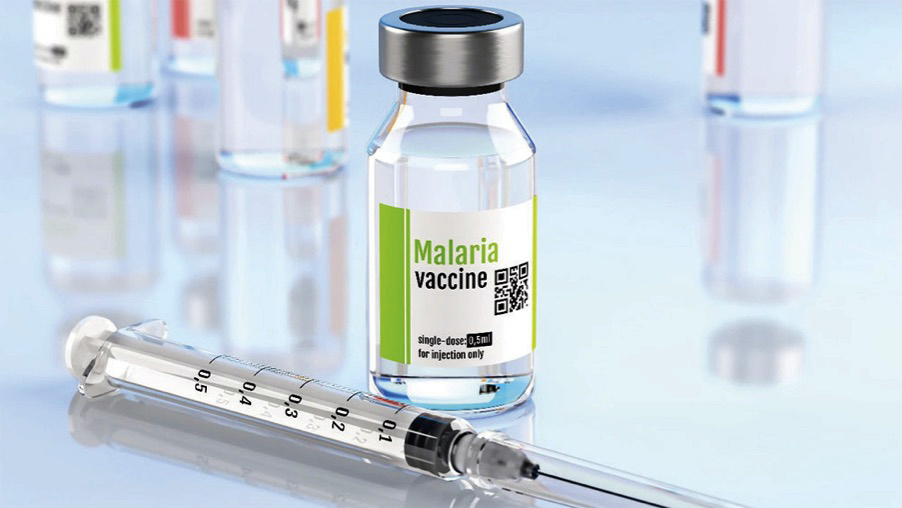
The experts said the recent introduction of malaria vaccines has added a powerful tool to Nigeria’s prevention arsenal. But beyond vaccination, authorities are deploying more advanced insecticide-treated nets designed to overcome insecticide resistance among mosquitoes.
Other interventions include Seasonal Malaria Chemoprevention (SMC) in northern Nigeria, emerging perennial chemoprevention programmes in southern states, larval source management and environmental sanitation initiatives.
According to data presented by Olugbenga from state malaria surveillance records, Kebbi State showed a remarkable reduction in malaria prevalence between 2021 and 2025, a period that coincided with the introduction of multiple interventions, including vaccination.
Although experts caution against attributing the decline to a single intervention, the results have strengthened confidence in integrated malaria control strategies.
Africa takes charge
Perhaps one of the most significant developments for the future of malaria control is the strengthening of Africa’s regulatory systems.
According to Wells, the emergence of the African Medicines Agency and improvements in national regulatory authorities could dramatically speed up access to new medicines.
He noted that countries such as Nigeria, Ghana and Rwanda are steadily building stronger drug approval systems capable of making independent scientific decisions.
He also believed that in the coming years, the institutions would enable African countries to evaluate, approve and deploy innovative medicines more rapidly than ever before.
“It sounds like government bureaucracy, but it is actually a major step forward because Africa starts to be in control of which drugs it approves and which drugs it uses.”
Looking ahead
The experts noted that the fight against malaria is no longer just about distributing bed nets or treating infected patients, but increasingly about anticipating future threats before they emerge.
They insisted that victory over malaria will not come from a single breakthrough but from staying one step ahead of a disease that has repeatedly shown its ability to adapt, and in that race, preparation may prove just as important as treatment.
The challenge is particularly urgent for Nigeria, which continues to account for one of the highest malaria burdens in the world. Experts also warned against complacency, attention shifts to drug resistance, adult protection and early diagnosis.