Follow Us on Google
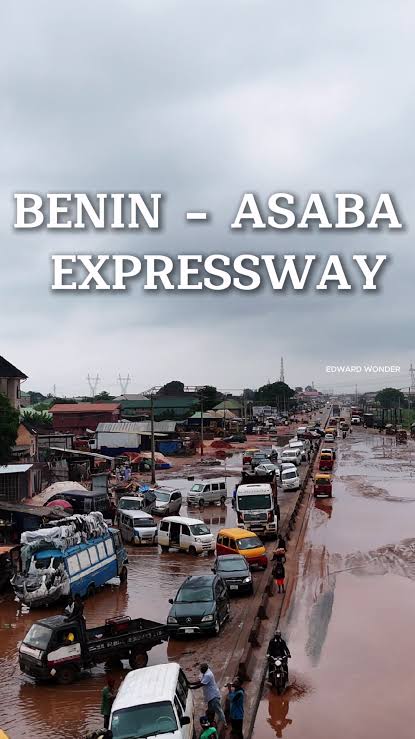
The ongoing reconstruction of the Benin-Asaba Expressway has come under growing public scrutiny as motorists contend with bad sections, traffic delays and the difficulties associated with travelling through an active construction corridor.
The concerns are understandable. For motorists using the approximately 125-kilometre road, the quality of the journey is measured by what they encounter each day — not by the equipment at construction sites or the engineering plans for the future.
But the current condition of the highway may not, on its own, tell the full story of the reconstruction project.
The Benin-Asaba Expressway is not simply a road rehabilitation exercise involving the filling of potholes and laying fresh asphalt. The project involves extensive reconstruction and expansion work, including earthworks, drainage, culverts, pavement construction, traffic management, production facilities and the deployment of heavy equipment.
Parts of the urban corridor are also planned for expansion into a 10-lane carriageway, underscoring the scale of the project.
For a road of this size, much of the work required to produce a durable highway takes place beneath or away from the surface motorists eventually see.
Before the final asphalt is laid, engineers must undertake earthworks, prepare the subgrade, construct drainage systems and culverts, lay pavement layers and, where necessary, relocate utilities.
Construction plants and specialised equipment must also be mobilised to sustain the work.
The Benin-Asaba Expressway concessionaire, BAECC, says these activities are ongoing across sections of the corridor.
Project updates indicate that earthworks and subgrade preparation, drainage and culvert construction, asphaltic concrete and binder-course development, as well as carriageway expansion, have been undertaken.
Work has also been reported from Chainage 9+500 to Chainage 30 in Benin and towards the Delta State axis.
BAECC has said billions of naira in private-sector resources have already been committed to construction equipment, materials, facilities and logistics.
That investment, however, does not mean motorists should simply accept difficult travelling conditions while waiting for the permanent road to emerge.
A concessionaire reconstructing a highway that remains open to traffic faces a difficult dual responsibility: it must build the road of the future while keeping the existing road reasonably passable for today’s users.
This is where palliative work becomes important.
BAECC says it has undertaken and continues to undertake palliative and rehabilitation works across the corridor to reduce the hardship faced by motorists while permanent reconstruction continues.
Such interventions are not substitutes for the main reconstruction. They are temporary measures intended to keep traffic moving and reduce the risks created by deteriorated sections.
The challenge has been compounded by the rainy season.
Persistent rainfall can disrupt earthworks, drainage operations, pavement stabilisation and asphalt laying. Saturated ground conditions can force contractors to slow down or rearrange certain activities, while asphalt and other pavement works require suitable conditions to achieve the desired durability.
Another difficulty is the need to keep traffic moving through sections under construction.
BAECC has explained that some reconstructed sections have had to be reopened to traffic earlier than engineers would ordinarily prefer in order to ease congestion.
This creates a difficult balance.
Other News
Keeping a section closed for longer may provide better conditions for construction but could worsen traffic congestion. Reopening it may provide immediate relief to motorists but expose the newly constructed section to traffic before the pavement has achieved the ideal construction and curing conditions.
For motorists, however, these technical considerations offer little comfort when they are stuck in traffic or forced to navigate damaged portions of the road.
Their demand is straightforward: safer roads, shorter travel times and reliable access between Benin and Asaba.
That demand should be taken seriously.
The fact that the project is still under construction cannot become an excuse for inadequate traffic management, poor communication or insufficient palliative measures.
BAECC must therefore continue to strengthen temporary repairs, improve traffic management and provide motorists with clearer information on construction activities and diversions along the corridor.
At the same time, government must maintain pressure on the concessionaire to meet its obligations and deliver the project to the required standard.
Accountability and patience are not mutually exclusive.
Government has a responsibility to demand performance. Motorists have every right to demand relief from avoidable hardship. But the concessionaire must also be given the opportunity to complete a complex engineering project that has already required substantial mobilisation.
The real measure of the project should ultimately be whether the resources deployed, engineering work undertaken and construction programme produce a safe, durable and modern highway.
The coming months will therefore be important.
As weather conditions improve, construction activities that have been constrained by rainfall should be able to gain momentum. The expectation should be that the plants, equipment, earthworks, drainage systems and other preparatory work already undertaken translate into sustained permanent pavement construction.
Nigeria has experienced too many infrastructure projects that have struggled because of delays, changing plans and competing pressures.
The Benin-Asaba Expressway should not suffer the same fate.
The immediate priority should be to make the most difficult sections safer and more passable through aggressive palliative work and effective traffic management.
The medium-term priority should be accelerated permanent construction, while the ultimate objective must remain completion of the entire corridor to the agreed standard.
Motorists will continue to judge the highway by what they experience today. That is understandable.
But infrastructure planning must also look beyond the immediate inconvenience to the road being built for tomorrow.
The Benin-Asaba Expressway should therefore be judged not only by its most difficult construction season, but by whether BAECC ultimately converts the investment, equipment and engineering work already mobilised into the safe, durable and modern highway promised to Nigerians.
That requires accountability from the concessionaire, oversight from government and, where justified, patience from road users.
The current hardship should not be ignored. But neither should the long-term objective of delivering a better highway be lost in the frustrations of the construction phase.