Follow Us on Google

The half-year report of the economy clearly shows that in spite of recent tough economic decisions taken by President Bola Tinubu in the areas of fiscal and monetary policies, such as fuel subsidy removal and the unification of the foreign exchange rates, the economy is in need of urgent comprehensive reforms. These reforms must include easing inflationary pressures, reducing cost of living and reduction in the cost of governance, rising poverty and unemployment. All of these, if properly implemented, will ensure economic growth in the second half of the year.
Reviving the economy that is currently in negative territory needs appropriate fiscal and monetary policy measures. There is need to appoint competent financial and economic managers to ensure economic recovery and growth. Many multinational companies have exited the country in recent years as a result of harsh economic policies. Even many local industries have shut down operations because of high cost of raw materials and power supply challenges that have affected profit margins.
Therefore, government should put urgent measures in place to ameliorate the effects of the current austerity measures. The government should grant more tax incentives for low-income workers, palliatives, and ensure ease of doing business for Small and Medium Enterprises (SMEs), as well as reduction in import duties in key sectors of the economy, such as health, transportation, power and energy sector.
Government needs to promptly deploy these measures to mitigate the present headwinds that have inflicted hardship on Nigerians. No doubt, the economy has been impacted by diverse global and domestic variables in recent years, especially during and after the 2020 COVID-19 pandemic.
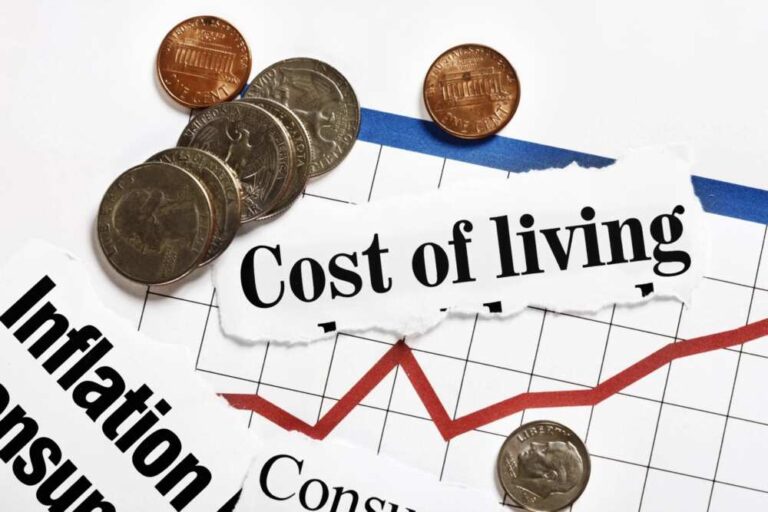
Nevertheless, these are desperate times that require desperate measures that will reduce poverty and misery among the populace. According to a recent World Bank report, Nigeria has one of the highest inflation rates in the world, which has pushed an estimated four million people into poverty between January and May this year. It also predicts that the inflation rate will hit 25 per cent by the end of this year. Inflation rate for May was 22.4 per cent.
The World Bank also says that 7.1 million more Nigerians will become poor if the federal government fails to provide palliatives following the recent removal of fuel subsidy. About 89.8 million Nigerians were reported to be in the poverty hole since the beginning of 2023. Nigeria’s Gross Domestic Product (GDP) is weak and fragile. It slowed to 2.31 per cent in the Q1 2023 from 3.5 per cent in the Q4 2022.
Key sectors that contracted included agriculture, which contracted by 0.9 per cent, the worst in 10 years. Livestock subsector was the worst hit, as it contracted by 30.6 per cent, just as the oil and gas sector contracted by 35.8 per cent. Government at all levels should initiate concrete economic policies that will improve the development of infrastructure, transportation, agriculture and job creation.
On the debt side, as of Q1 2023, according to the Debt Management Office (DMO), Nigeria’s total debt stock was N49trillion. The DMO has warned that further borrowing will worsen the already existing debt burden. It has been projected that 73 per cent of revenue to be generated this year will be spent on debt servicing.
Last year, government was reported to have spent 96 per cent of the revenue generated on debt servicing. The projected 73.5 per cent of revenue on debt servicing this year, according to DMO is very high and unsustainable. It cannot support higher levels of borrowing.
The binge borrowing is a serious threat to the economy. To attain a sustainable debt-to-revenue ratio will require increasing federal government’s revenue from N10.49trillion projected in the 2023 Appropriation Act to about N15.5trillion. Presently, this is not feasible. Rising national debt and low revenue generation have attendant higher risks profile and cost for international debt issuances.
The Tinubu administration should fix the economy before it collapses. Although President Bola Tinubu has projected an ambitious six per cent annual growth rate, addressing the identified economic challenges is a task that must be done. It calls for strategic thinking and creative measures without increasing the suffering of the citizens.
There is much work to do to revamp the economy. Good enough, the President has admitted that the task ahead is tough. Since he asked for the job, he should tackle the challenges confronting the country. The economy is a key component of the task that must be done. The sacrifice for rebuilding the economy should start with political office holders through a drastic reduction of the cost of governance.