Follow Us on Google
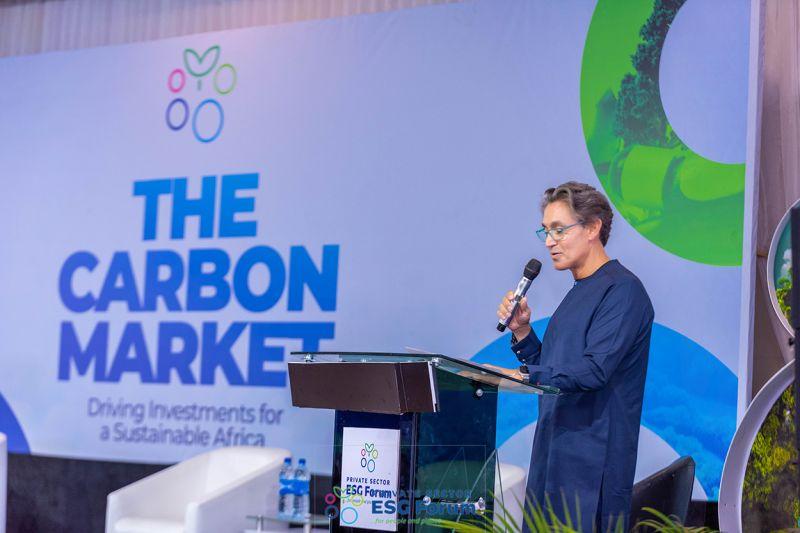
BAT Nigeria is setting a new standard for corporate responsibility with an inspiring mentorship program launched in partnership with the ESG Forum. This visionary initiative is designed to nurture Africa’s next generation of sustainability leaders through hands-on training, expert guidance, and exposure to global best practices. The Director of External Affairs for BAT West & Central Africa and Chairman of the 2024 Private Sector ESG Forum Technical Committee, Odiri Erewa-Meggison announced the launch of the ESG Forum Mentorship Program.
This program aims to empower the next generation of sustainability leaders.
Odiri emphasized the importance of this initiative: “We believe that fostering young talent and equipping them with the skills and knowledge to drive change is crucial for the long-term success of our continent.”
Through this innovative program, BAT Nigeria is actively collaborating to develop a pipeline of sustainability champions by providing hands-on training, industry insights, and access to global best practices. By investing in the development of these young changemakers, this initiative ensures that the sustainability torch is passed on to the next generation, solidifying BAT’s legacy as a true trailblazer in the field.
The mentorship program exemplifies BAT’s comprehensive approach to sustainability by collaborating with the ESG Forum. This collaboration extends beyond operational and environmental practices. By nurturing the next wave of sustainability leaders, the company demonstrates its commitment to building a robust, future-ready workforce capable of tackling the complex challenges facing Africa’s sustainable development.
Speaking at the ESG Forum, Hasnain Ishtiaq, Operations Director at BAT West and Central Africa, addressed the topic “Understanding the Problem Statement: Impact of Climate Change on Business in Africa,” emphasizing BAT’s commitment to carbon neutrality. “Companies should prioritize ESG; at BAT, we have sustainability at the forefront of everything we do. We have set a target to achieve net zero by 2050 with an ESG focus on water preservation and recycling, renewable energy, and waste management at the Ibadan factory.”
One of the most tangible manifestations of BAT Nigeria’s commitment to sustainability and green energy is its state-of-the-art 1.4 MW solar plant commissioned in 2023 at the company’s facility in Ibadan. This landmark investment serves as proof of BAT Nigeria’s steadfast resolve to transition towards renewable energy sources and reduce its carbon footprint.
Other News
“This solar plant is more than just an investment in renewable energy; it is a physical manifestation of our unwavering dedication to sustainability. It demonstrates our conviction that responsible business operations and environmental stewardship are fundamental pillars for long-term prosperity and the well-being of the communities we are committed to supporting,” said Ishtiaq.
The solar plant, one of the largest of its kind in the region, is expected to generate over 2.1 million kWh of clean energy annually, significantly reducing the company’s reliance on fossil fuels and contributing to its goal of achieving net-zero emissions.
Furthermore, the solar plant aligns with Nigeria’s broader renewable energy targets and the country’s commitment to the Paris Agreement. By taking a leading role in transitioning to clean energy, BAT Nigeria positions itself as a corporate sustainability champion, inspiring other organizations to follow suit and contribute to national sustainable development goals.
However, the company’s sustainability journey extends far beyond its own operations. Through its acquisition of International Renewable Energy Certificates (IRECs) for its hydropower operations, BAT Nigeria has offset a staggering 4,500 tons of carbon dioxide—the equivalent of planting 113 trees. This strategic move has resulted in a remarkable 29 percent increase in renewable electricity consumption by showcasing its ability to seamlessly embrace a cleaner energy mix.
Recognizing the urgency of decarbonization, BAT Nigeria has implemented a pioneering Power Purchase Agreement (PPA) to generate power from compressed natural gas (CNG) generators. This innovative approach has enabled the company to transition from full dependence on fossil fuels for power generation to a hybrid system, further reducing its carbon footprint and paving the way for a more sustainable future.
At the heart of BAT Nigeria’s transformative journey lies a deep-rooted commitment to Environmental, Social, and Governance (ESG) principles. The company’s unwavering dedication to sustainable development has not only reshaped its operations but has also inspired a ripple effect of positive change throughout the region.