Follow Us on Google

By Chinwendu Obienyi
The Nigeria Deposit Insurance Corporation (NDIC) has stated that the banking sector is now immune to shocks that may impact the economy and financial system.
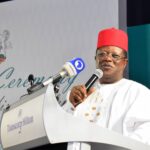
Its Managing Director, Bello Hassan, stated this at a retreat for members of the Senate Committee on Banking, Insurance and other Financial Institutions with the NDIC in Lagos.
Hassan, who was represented by Mustapha Ibrahim, NDIC’s Executive Director (Operations), stated that effective risk-based management remained critical to a safe and sound financial system.
“The NDIC and the Central Bank of Nigeria have a very robust supervisory framework under the risk-based supervisory format; the risk-based approach is actually proactive. For the most part, we try to anticipate all these risks – Macro, micro, domestically and globally – to address them continuously.
“So, it is so dynamic that we also are constantly on a real-time basis, monitoring the industry continuously and fine-tuning our supervisory tools, both onsite and offsite, to mitigate some of the challenges the banks may be facing,” he said.
He further added that he was relieved that the Nigerian banking industry was currently resilient to most of these difficulties, particularly external shocks over which the Corporation had no control.
For his part, Senator Uba Sani, Chairman of the Senate Committee on Baking, Insurance and Other Financial Institutions, said the retreat demonstrated progress in creating lasting and workable relationship in the national interest.
He said, “The National Assembly and NDIC are key institutions critical to the growth and development of the Nigerian economy. While we provide the legal and institutional frameworks, NDIC carries out its regulatory or supervisory responsibilities in order to safeguard the banking sector.”
Sani said “Engagement of this nature gives us the platform to deeply look into our activities and responsibilities and also examine how far we have gone in carrying out our mandate as required.It helps in injecting fresh ideas into our operations which will materialise into an improved, effective and efficient service delivery to Nigerians”.