Follow Us on Google
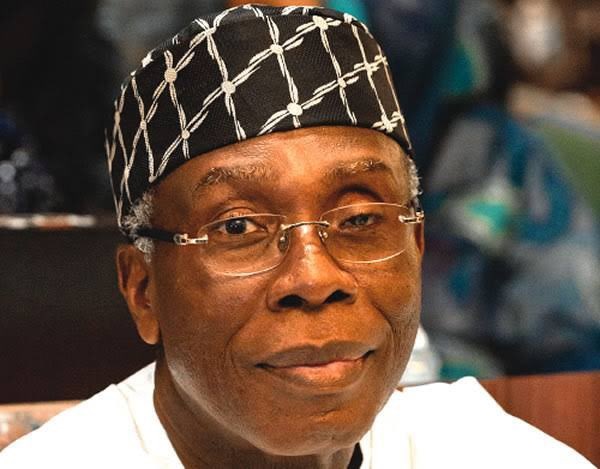
Former Minister of Agriculture and erstwhile National Chairman of the Peoples Democratic Party (PDP), Chief Audu Ogbeh, died on August 9 at the age of 78. The elder statesman and one of the best Nigerian politicians, was a peacemaker and bridge builder. Ogbeh was a committed Nigerian patriot, who played politics of conviction. He believed in the unity of Nigeria despite our diversity. The late politician served Nigeria with great passion, dedication and integrity. In his death Nigeria has lost an eminent politician, astute administrator and a team player. No doubt, he contributed immensely to the development of our democracy and nation-building. He was a great mentor to many Nigerian politicians. He was equally a great farmer.
Ogbeh was born on 28 July 1947, in Benue State. He was of Idoma extraction. He attended King’s College, Lagos from 1967 to 1969. He later studied at the Ahmadu Bello University, Zaria, from 1969 to 1972 and the University of Toulouse, France, from 1973 to 1974. He also lectured at the Institute of Education, Ahmadu Bello University, Zaria, from 1972 to 1976, and headed the department of humanities, Murtala College of Arts, Science and Technology from 1977 to 1979.
He was elected to the Benue State House of Assembly in 1979, where he served as Deputy Speaker. He was subsequently appointed Federal Minister of Communications (1982–1983) and Minister of Steel Development in the Second Republic, until the military coup of December 1983 led by Major-General Muhammadu Buhari toppled the Shehu Shagari administration and halted his tenure.
After a brief interlude, Ogbeh went into agriculture and established rice mills, a cashew plantation, community agricultural projects, and consultancy service. He later returned to national service, with his appointment as a member of the National Constitutional Conference Commission (1993) and the National Reconciliation Committee (1995).
At the dawn of the current civilian dispensation in 1999, Ogbeh joined forces with like minds and founded the Peoples Democratic Party (PDP). On November 11, 2001, he was appointed the National Chairman of the party. He took over from Barnabas Gemade. During his tenure as the chairman of the PDP, Ogbeh worked with the then President Olusegun Obasanjo to make the party great. Although he supported the president on some national issues, he also criticized him on others. For instance, he criticized the president’s handling of the abduction of former governor of Anambra State, Dr. Chris Ngige, in July 2003.
He equally stood against Obasanjo’s third-term agenda. In the ensuing tension, his resignation was announced by the presidency. Ogbeh explained his resignation as an attempt to avoid conflict within the party, and due to his desire to return to farming. Many Nigerians suspected that Ogbeh’s resignation was because of his stand on the Anambra political crisis and his opposition against Obasanjo’s tenure elongation gambit. Following his resignation, President Obasanjo appointed Ogbeh as his Special Adviser on Agriculture. In December 2005, he formally resigned from the PDP.
Ogbeh later joined the Action Congress of Nigeria (ACN), which later merged with other political parties to form the All Progressives Congress (APC). He later returned as Agriculture Minister from November 2015 to May 2019 during the first term of former President Muhammadu Buhari. Thus, Ogbeh was appointed to serve as minister three times under different administrations.
Since his exit, prominent Nigerians have applauded him for his numerous contributions to the political development of the country. Former President Obasanjo described the late minister as peace-loving, unassuming, committed, and a firm believer in democracy. He acknowledged that Chief Ogbeh will be missed for his unwavering commitment to politics, governance, and democracy, as he made significant contributions to the re-establishment of democracy in Nigeria. According to Obasanjo, “his place will be very difficult to fill within his community, the state, the party, and the nation.”
On a similar note, President Bola Tinubu lauded Ogbeh’s intellectual contributions to policy formulation and his articulation of practical solutions to complex national challenges. “He was always ready with facts and figures to support his propositions. The nation will sorely miss his insightful perspectives and wealth of experience,” the President stated. He regretted that Ogbeh’s place will be very difficult to fill within his community, the state, the party, and the nation.
We urge politicians in the country to emulate the politics of principles and commitment with which the late Ogbeh was associated with. Let them and their supporters play by the rules and see access to power as a call to service rather than opportunity for self-aggrandizement and primitive accumulation of wealth. We commiserate with his family, the government and people of Benue State and the political class over his passage.